
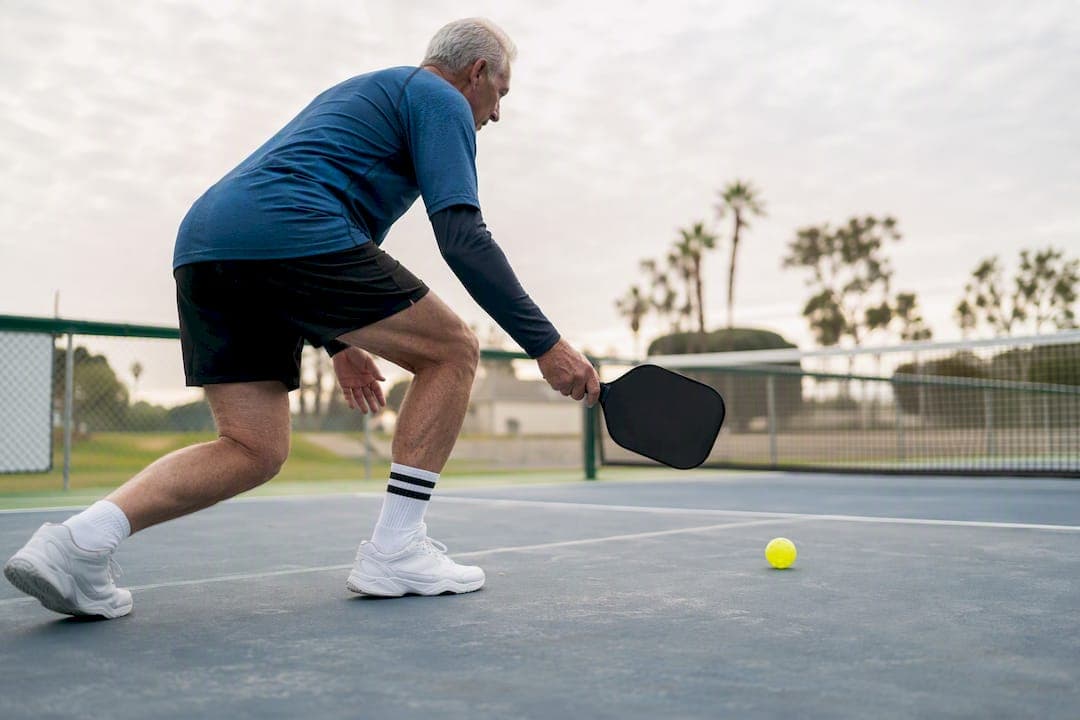
If you feel Achilles pain during or after pickleball, stop playing that day. Sharp pain, a pop, or sudden weakness pushing off means you need urgent evaluation, not a wait-and-see approach. Dull, gradual tenderness that eases as you warm up usually points to overuse and responds to rest, ice, and a progressive calf-loading plan started within days.
TL;DR:
- Achilles injuries are most common in players over 50, with ruptures rising sharply since 2018, especially in those in their 60s and 70s.
- Sudden pain, weakness, or a pop after pickleball indicate urgent evaluation for possible rupture, while gradual pain responds to rest and rehab.
- Hard outdoor courts, improper footwear, and rapid resumption of play after inactivity significantly increase the risk of injury.
- Proper warm-up, calf strengthening, and correct stance can greatly reduce tendon strain and prevent injuries over the long term.
- Movement analysis and tailored exercises help identify mechanical stress points, especially for older or recreational players ramping up their game.
Table of Contents
- Why Pickleball Puts So Much Strain on the Achilles Tendon
- Tendon Irritation, Insertional Pain, or a Rupture: How to Tell the Difference
- What To Do Right After You Feel Achilles Pain
- Building a Pickleball Warm-Up and Strength Routine That Protects the Achilles
- Recovering From Achilles Pain: Stages and Realistic Timelines
- Where Movement Analysis Fits Into Achilles Injury Prevention
- What Actually Prevents Achilles Injuries in Pickleball
- Turn Prevention Advice Into a Personalized Plan
- Sources
Why Pickleball Puts So Much Strain on the Achilles Tendon
Pickleball asks the Achilles to do things it rarely does in daily life: explosive starts, sudden stops, and constant lateral shuffling to cover a small court. Add in staying up on your toes at the kitchen line, ready to react, and you've got a tendon under near-constant eccentric load. That posture matters more than most players realize. Standing upright with feet roughly parallel puts the ankle in a stiffer, less absorbent position. A lower, wider "duck-footed" stance, with feet slightly turned out and knees bent, spreads force more evenly across the calf and tendon and may lower rupture risk.
Age plays a real role here too. Tendons lose elasticity and blood supply over the decades, so a 62-year-old's Achilles simply tolerates sudden loading differently than a 30-year-old's. Clinical reports from Cedars-Sinai describe a sharp rise in pickleball-related Achilles ruptures, with a disproportionate share hitting players in their 60s and 70s. A separate review found more than 80% of pickleball-related ruptures occurred in patients older than 50, with a median age around 60, and that surgical repairs climbed between 2018 and 2021, according to orthopaedic research from OrthoCarolina.
A few other factors stack the deck:
- Jumping into three matches a week after months of inactivity, with no ramp-up period.
- Playing on hard outdoor courts, which absorb far less shock than grass or a padded gym floor.
- Wearing running shoes or old sneakers instead of court-specific footwear built for lateral cutting.
Tendon Irritation, Insertional Pain, or a Rupture: How to Tell the Difference
Achilles problems from pickleball fall into a few distinct categories, and the difference changes what you should do next.
- Mid-portion tendinopathy. Pain sits two to six centimeters above the heel, feels stiff first thing in the morning, and often loosens up once you warm up. Tenderness is focal, meaning you can point to one spot along the tendon.
- Insertional Achilles pain. Tenderness centers right where the tendon attaches to the heel bone. This type is more aggravated by stiff-heeled shoes and tends to flare with any pushing motion, including simply walking up stairs.
- Partial or complete rupture. This announces itself. Players often describe an audible pop or the sensation of being kicked in the calf, followed by immediate weakness, an inability to push off, and sometimes a visible dent or gap above the heel.
A simple home check can help you sort the first two categories from the third: try a slow single-leg heel raise on the sore side. If you can lift your heel with some discomfort, that's consistent with tendinopathy. If you can't lift it at all, or it gives out, stop immediately and treat it as a possible rupture until a clinician says otherwise.
What To Do Right After You Feel Achilles Pain
The first hour after Achilles pain shows up matters more than most players think, and the instinct to "walk it off" is exactly wrong if there's any chance of a rupture.
On the court, stop playing immediately. If you can't bear weight or the pain is severe, avoid walking on it and get help. A makeshift crutch, or even a paddle partner's shoulder, beats limping to the car.
For the next 48 hours:
- Rest the leg and avoid any pain-triggering movement, especially calf stretching that pulls into pain, and consider adding massage therapy to support recovery.
- Ice for 15 to 20 minutes at a time if swelling is present; some players find gentle heat more comfortable for pure stiffness once swelling has settled.
- Use over-the-counter NSAIDs cautiously and only as directed, since they can mask symptoms you need to track.
- If pain is mild and stable, gentle pain-free isometric holds (pressing the foot down against resistance without movement) can start within a day or two.
Go to urgent care or an emergency department for a pop, sudden weakness, or a visible gap. See your primary care doctor or a sports medicine clinic within a few days for pain that's persistent but stable.
Pro Tip: Write down exactly when the pain started, what movement triggered it, and whether you heard or felt a pop. That two-line note saves your clinician time and often speeds up an accurate diagnosis.
Building a Pickleball Warm-Up and Strength Routine That Protects the Achilles
Prevention starts before you ever step on the court, and it's less complicated than most players assume.
A proper warm-up runs five to ten minutes: brisk walking or light jogging to raise tissue temperature, calf raises to activate the tendon, ankle circles for mobility, then a few minutes of sport-specific movement like lateral shuffles and short lunges. Stanford Medicine's sports medicine team frames it simply: you condition your body before play, not the other way around, since baseline fitness prevents sudden tendon overload.
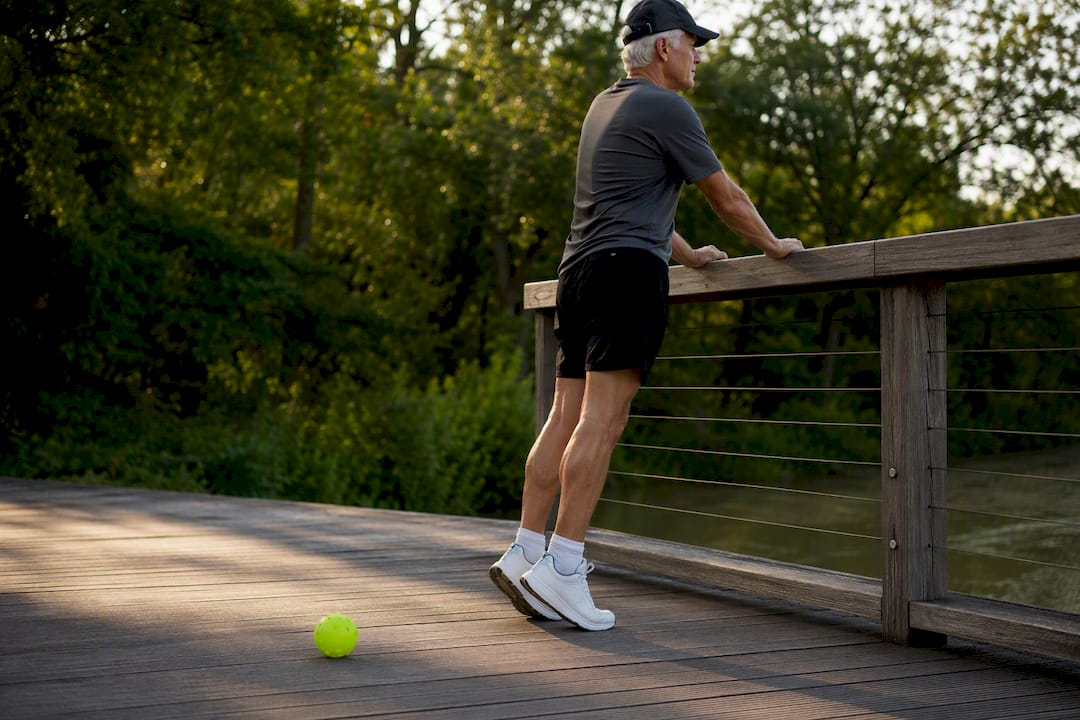
Footwear matters more than most players budget for. Court shoes built for pickleball or tennis offer lateral stability and a firmer heel counter that running shoes, designed for straight-line motion, simply don't provide. Replace them once the tread flattens or the sides start collapsing, typically after 45 to 60 hours of play.
Strength work follows a logical progression:
- Pain-free isometric calf holds, 3 sets of 45 to 60 seconds.
- Slow eccentric and concentric calf raises, 3 sets of 8 to 15 reps, adding weight as tolerated.
- Higher-rep endurance work and tempo raises.
- Small plyometric drills, like gentle hopping, once heel-raise strength returns.
Aim for this two to three times a week, and cap increases in playing volume at 10% to 20% per week. Keck Medicine of USC notes that playing through repetitive pain is a primary driver of chronic overuse injuries, so a quick next-day symptom check after a hard session tells you whether to push forward or pull back.
Recovering From Achilles Pain: Stages and Realistic Timelines
Rehab follows a staged path, and skipping ahead is the most common way players re-injure themselves.
- Stage 1: Pain control and isometric holds, focused on calming the tendon without stressing it further.
- Stage 2: Progressive strengthening, moving from double-leg to single-leg calf raises as tolerance improves.
- Stage 3: Endurance and sport-specific drills, reintroducing shuffles and light directional changes.
- Stage 4: Plyometrics and full court tolerance, including hopping, cutting, and match-intensity play.
Clinicians typically track progress with benchmarks like heel-raise rep counts, hop tolerance, and whether a full practice session stays symptom-free the next day.
Mild tendinopathy often improves within weeks to a couple of months with consistent loading. Insertional and chronic cases take longer, and surgically repaired ruptures generally involve several months of structured rehab before a return to full play; outcomes data on pickleball-related repairs, tracked in a peer-reviewed review on PMC, support that longer arc while noting most patients regain solid function. A physical therapist or sports medicine specialist should guide this progression, and a podiatrist or orthopedist becomes relevant if pain persists despite proper loading or imaging shows structural damage.
Where Movement Analysis Fits Into Achilles Injury Prevention
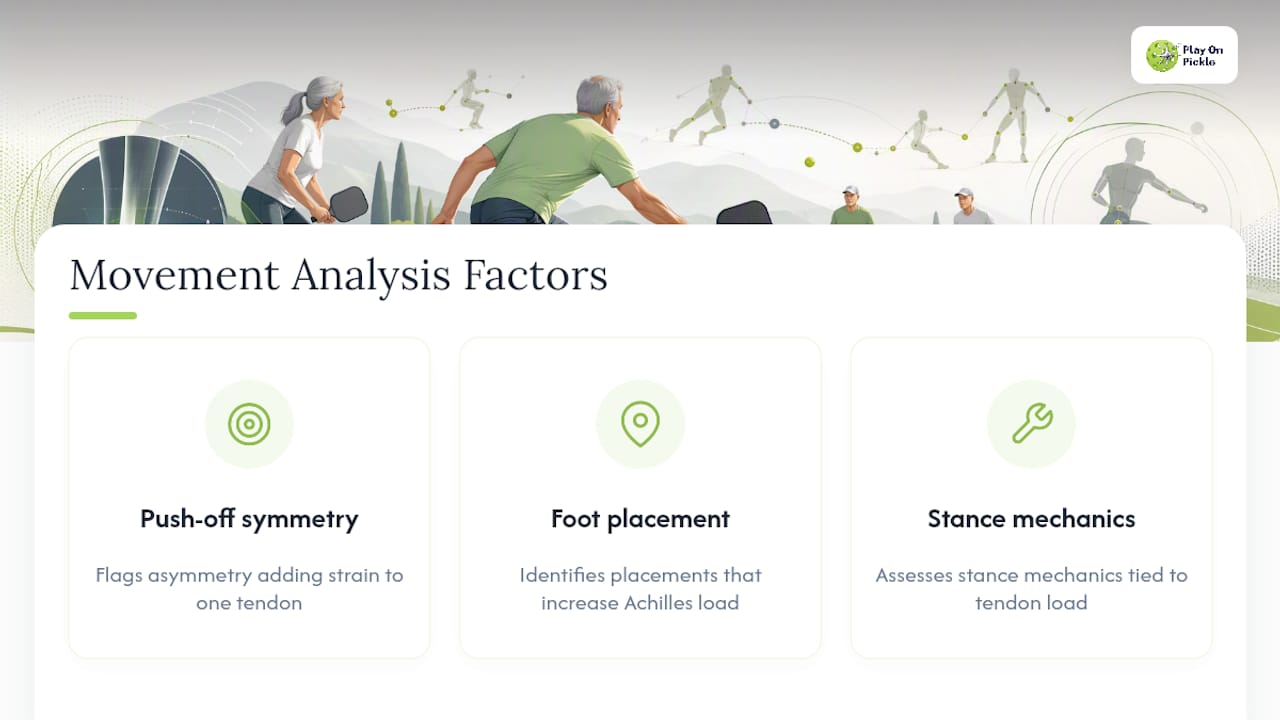
Progressive loading only works if you know what's actually driving the stress on your tendon in the first place. Playonpickle's video-based movement analysis looks at push-off symmetry, foot placement, and stance mechanics, the exact factors tied to Achilles load discussed above, and flags where your movement pattern is putting extra strain on one side.
That kind of feedback is most useful for the players this article is written for: recreational players ramping up play volume, anyone managing recurring tendon sensitivity, and players returning to the court after a layoff who need a structured way to reintroduce load. It's a companion to the staged rehab work your physical therapist prescribes, not a replacement for their clinical judgment.
What Actually Prevents Achilles Injuries in Pickleball
Most players treat warm-ups as optional and strength work as something for "serious" athletes. That's backward. The players showing up in orthopedic clinics with ruptured Achilles tendons aren't usually the ones training hardest. They're the ones who played twice a week for a decade without ever building calf capacity, then suddenly upped their schedule to five days after retiring.
The fix isn't complicated, but it does require consistency most players skip: a few minutes of real warm-up, calf strength work twice a week, and honest attention to how your body feels the day after a hard session. None of that is glamorous. It's also the difference between a season of good pickleball and a summer in a walking boot. If something feels off beyond normal soreness, don't wait it out. Get it checked.
— Drona
Turn Prevention Advice Into a Personalized Plan
Everything above tells you what to watch for and how to build tendon capacity, but generic advice can't tell you whether your push-off is lopsided or your stance is quietly overloading one Achilles more than the other. That's the gap Playonpickle closes.
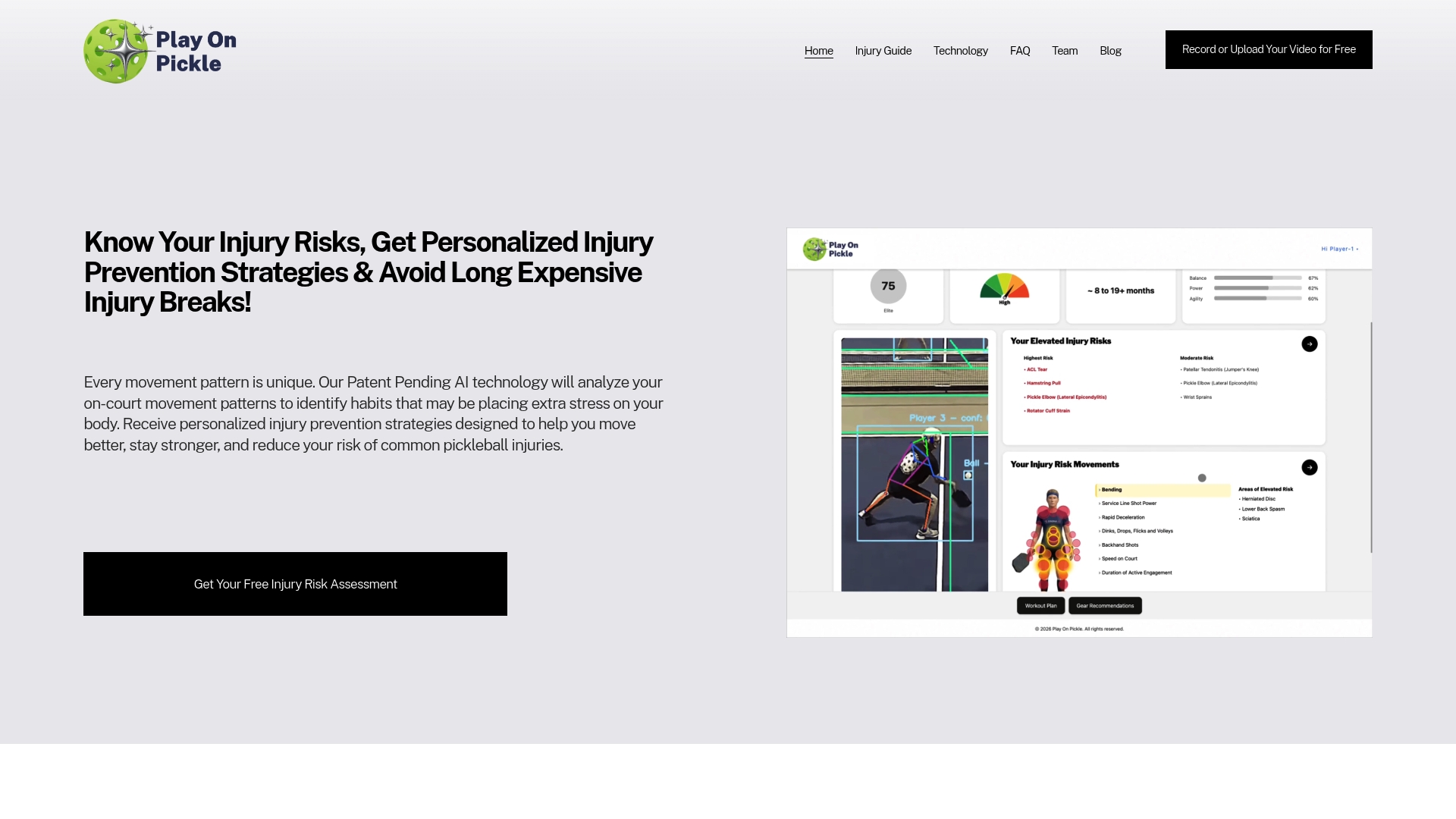
Upload a video of your play, and Playonpickle's movement analysis flags the specific stress points in your mechanics, then builds a personalized exercise plan around them, the same isometric-to-plyometric progression covered above, tailored to what your body actually needs. It's built for exactly the players most at risk: recreational and older players increasing their court time without a matching increase in conditioning. It works alongside your physical therapist or doctor, not instead of them. If a clinician has cleared you to return to loading, Playonpickle helps you build the calf capacity that keeps you there. Start a free trial at Playonpickle and get your first movement assessment before your next match.
This article is general information, not a substitute for advice from a qualified doctor. Consult a qualified healthcare professional about your own circumstances before acting on anything here.
Sources
- The Achilles’ Heel of Pickleball: Sharp Rise in Tendon Injuries — Cedars-Sinai
- Pickleball injuries — Stanford Medicine insights
- How to prevent pickleball injuries — Keck Medicine of USC
- What research shows about pickleball and Achilles injuries — OrthoCarolina Research
- Paper 17: Outcomes After Achilles Tendon Ruptures while Playing Pickleball — PMC