
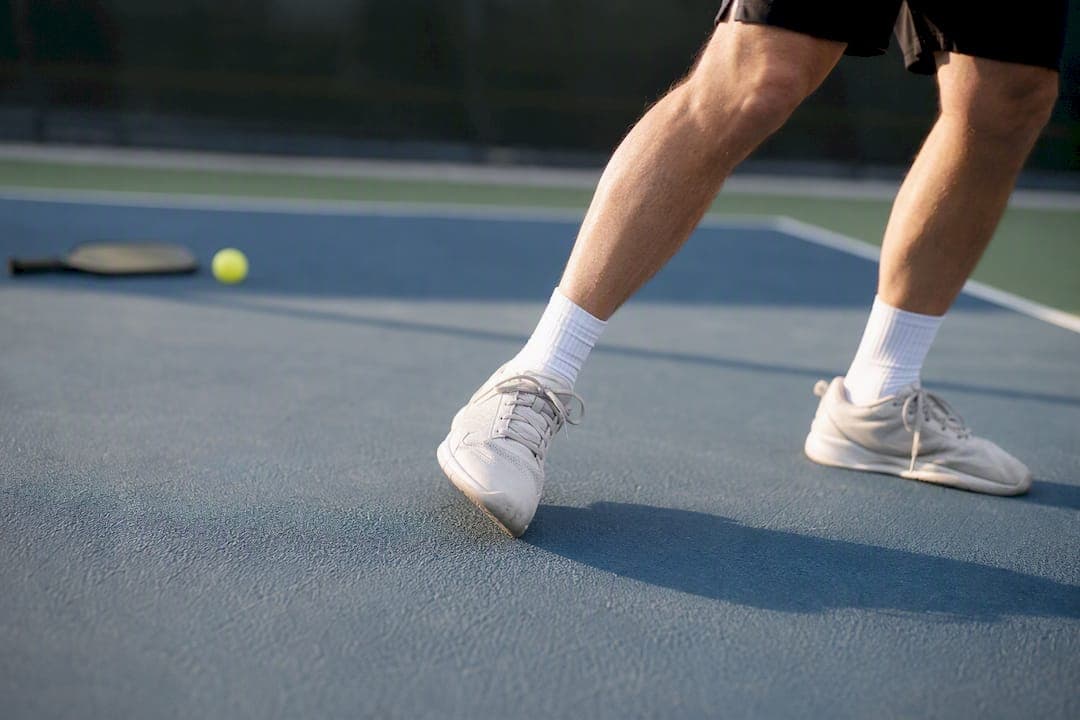
A pickleball ankle sprain is a stretch or tear of the ligaments on the outside of the ankle, and in almost every case on the court it happens when the foot rolls inward as you plant, lunge, or change direction. The single most important thing to do the moment it happens is stop playing and protect the joint. Do not "walk it off." Do not finish the point.
For the first hour, follow a short version of R.I.C.E: rest the ankle, ice it for 15 to 20 minutes, wrap it with a compression bandage, and elevate it above heart level when you can.
- Stop play immediately, even if the pain feels minor at first.
- Get the shoe off before swelling makes that impossible later.
- Ice in short intervals, not one long session.
- Avoid putting weight on it until you know how it responds.
Red flag: if you cannot bear weight or take four steps unassisted, that is the threshold clinicians use to decide whether imaging is warranted. Skip the wait-and-see approach and get it evaluated.
Key Takeaways
A pickleball ankle sprain heals fastest and most completely when the first 48 hours follow R.I.C.E, red flags trigger prompt imaging, and rehab builds proprioception and peroneal strength before any return to full-speed play.
| Point | Details |
|---|---|
| Act fast after a roll | Stop play immediately and start R.I.C.E within the first hour to limit swelling and tissue damage. |
| Know the four-step rule | Inability to bear weight or walk four steps signals imaging is likely needed. |
| Respect the timeline | Grade I sprains often heal in 1 to 2 weeks, Grade III can take 8 weeks or more; rushing back raises re-injury risk. |
| Rehab in sequence | Range of motion, then peroneal strengthening, then balance drills, then gradual lateral movement. |
| Screen before you get hurt again | Playonpickle's video-based movement analysis flags inversion-prone patterns and builds a targeted exercise plan around them. |
This article is general information, not a substitute for advice from a qualified doctor. Consult a qualified healthcare professional about your own circumstances before acting on anything here.
Table of Contents
- How Ankle Sprains Happen on the Pickleball Court
- What to Do in the First 48 Hours
- When an Ankle Sprain Needs Imaging or a Specialist
- Rehab Timeline and What Getting Back to Play Actually Requires
- Building an Ankle That Doesn't Roll: Warm-Up, Shoes, and Balance Work
- Chronic Ankle Instability: When It's More Than a Bad Sprain
- How Play On Pickle Turns Movement Analysis Into Prevention
- What Actually Changes Player Behavior After a Sprain
- A Practical Next Step for Players Tired of Rolling the Same Ankle
- Sources
How Ankle Sprains Happen on the Pickleball Court
Most pickleball ankle sprains follow the same script: your foot rolls inward while your body weight continues moving sideways. This is called an inversion mechanism, and it typically stresses the anterior talofibular ligament (ATFL) first, then the calcaneofibular ligament (CFL) if the roll is more severe. Lateral lunges toward a dink or a quick recovery step after an overhead are the usual triggers, since the foot often plants at an angle rather than flat.
A smaller but nastier category is the high-ankle, or syndesmotic, sprain. Pain sits higher, above the ankle joint line, rather than on the outside bump of the bone. These take noticeably longer to heal because the injured tissue connects the two lower leg bones instead of just stabilizing the joint.
Risk climbs with a few specific factors:
- A previous sprain that never got fully rehabbed.
- Jumping into play with no dynamic warm-up.
- Being an older recreational player with reduced ankle mobility and slower reaction time.
A retrospective clinic review tracking pickleball-related foot and ankle injuries found incidence increased significantly between 2019 and 2023, with running, lunging, and inversion mechanisms showing up again and again. That trend lines up with the sport's explosive growth among players who never built the lateral strength tennis or basketball demands.
What to Do in the First 48 Hours
The first two days set the tone for everything that follows. Rushing this window is how a two-week sprain turns into a six-week one.
- Stop play and get off the foot. If it hurts to bear weight, use crutches rather than limping through your day.
- Apply ice for 15 to 20 minutes every two to three hours, keeping a thin cloth between ice and skin.
- Wrap with a compression bandage snug enough to control swelling, not so tight it numbs your toes.
- Elevate the ankle above heart level whenever you're sitting or lying down.
- Take an over-the-counter NSAID like ibuprofen if your doctor has no reason to advise against it, following label dosing.
Pro Tip: Avoid heat, alcohol, running, and massage in the first 48 to 72 hours. All four increase blood flow to a joint that needs the opposite right now.
When an Ankle Sprain Needs Imaging or a Specialist
Most sprains don't need an X-ray. Some absolutely do, and waiting is the mistake people regret most.
- You can't bear weight or complete four steps without significant pain, which meets the four-step rule clinicians use to decide on imaging.
- The ankle looks visibly deformed or shifted.
- You have numbness, tingling, or a cold, pale foot.
- Pain sits high above the joint line and doesn't ease, a marker of possible syndesmotic injury.
If any of those apply, go to urgent care or a foot and ankle specialist rather than sitting on it. Early specialist evaluation catches syndesmotic and fracture cases that general rest simply won't fix, and it shortens the timeline to real recovery.
Rehab Timeline and What Getting Back to Play Actually Requires
Recovery ranges widely depending on how much ligament damage occurred, but rough benchmarks help set expectations. A Grade I sprain (mild stretch) often settles in 1 to 2 weeks. Grade II (partial tear) tends to run 3 to 6 weeks. Grade III (complete tear) can take 8 weeks or longer, sometimes longer still if instability lingers. These are ranges, not guarantees. Two players with the same "grade" can heal at very different speeds.
Rehab works best in a sequence rather than all at once:
- Restore range of motion first with gentle ankle circles and alphabet tracing with the toes.
- Add peroneal strengthening using a resistance band for eversion, since these muscles on the outer lower leg are the primary dynamic stabilizers against inversion.
- Layer in balance and proprioception work: single-leg stands, progressing to eyes-closed stands, then a wobble board.
- Reintroduce lateral movement gradually, starting with slow shuffle steps before anything resembling a real lunge.
Clinical guidance on structured rehab and controlled mobilization consistently outperforms rest-and-immobilize approaches, which is why physical therapists lean so heavily on progressive loading rather than a boot and a couch.
Return-to-play readiness isn't about a calendar date. Look for pain-free single-leg balance for 30 seconds, the ability to do lateral cut drills at half speed without hesitation, and a fading need for tape or a brace as your own proprioception comes back online.
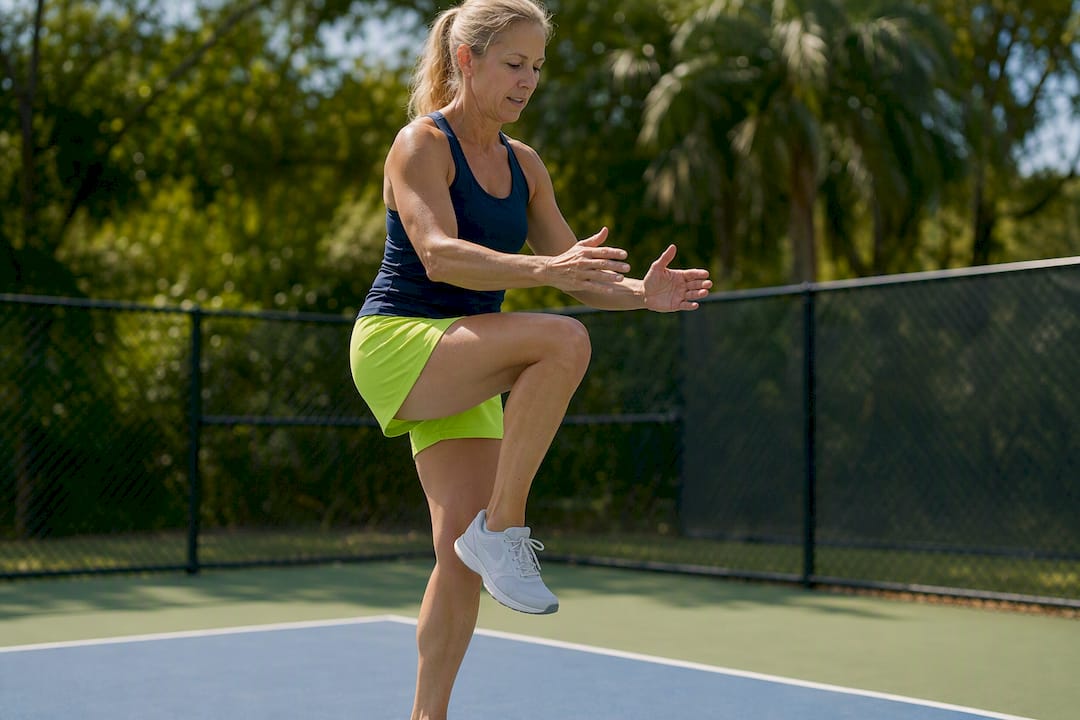
Pro Tip: If you still feel the ankle "waiting to roll" during a cut, you're not ready for full-speed points yet, no matter how many weeks have passed.
Building an Ankle That Doesn't Roll: Warm-Up, Shoes, and Balance Work
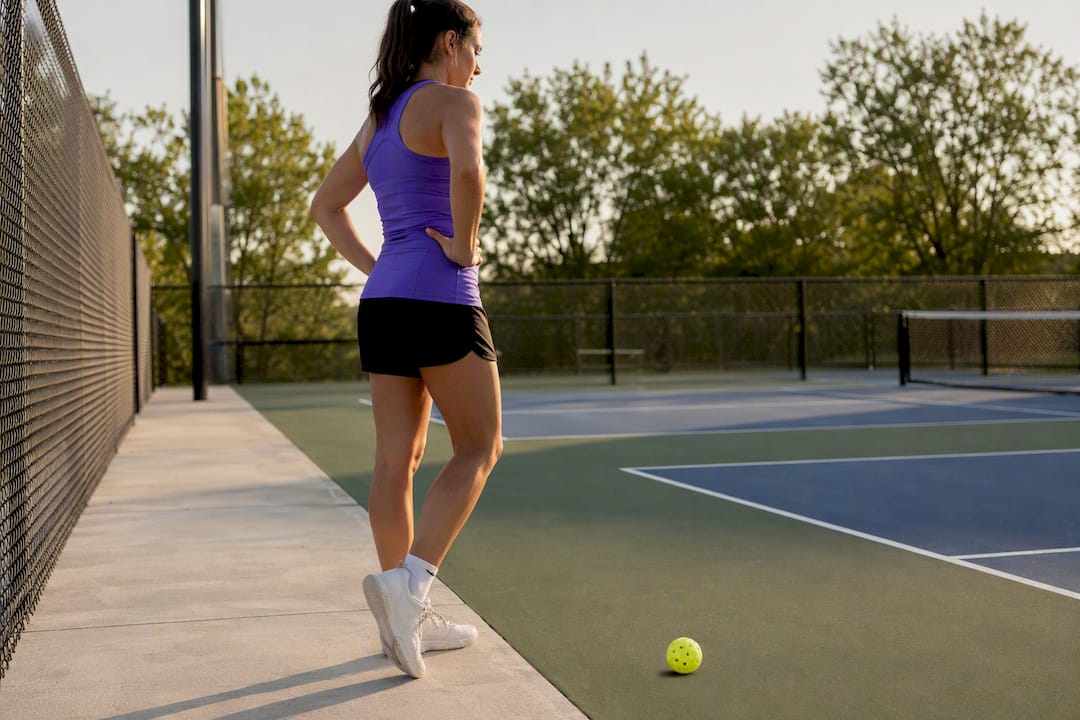
Prevention here isn't complicated, and it doesn't take long. A dynamic warm-up before you ever hit a ball, five minutes of ankle circles, lateral shuffles, and light bounding, primes the joint for the sideways loading pickleball demands.
Footwear matters more than most recreational players assume. Running shoes are built for forward motion and offer little lateral support, which leaves the ankle exposed during side-to-side plants. Look for:
- A court shoe rated for lateral movement, not a running shoe.
- A wider, more supportive outsole for stability on quick direction changes.
- A snug heel lock with no more than a thumb's width of space at the toe.
For ongoing prevention, a short weekly balance routine goes a long way. Proprioceptive balance training measurably reduces ankle sprain rates, and it takes about ten minutes:
- Single-leg stands, 30 seconds per side, three rounds.
- Progress to eyes closed once the basic version feels easy.
- Add resistance-band eversion for two sets of 15.
- Finish with light wobble-board work if you have access to one.
Pro Tip: If you've sprained the same ankle twice, a lace-up brace during play isn't a sign of weakness. It's a bridge while your proprioception rebuilds, not a permanent crutch.
Reviewing your court shoe and warm-up choices alongside the basics covered in this guide to pickleball gear and fitness is a reasonable next step before your next session.
Chronic Ankle Instability: When It's More Than a Bad Sprain
Chronic instability means the ankle keeps giving way, usually because an earlier sprain never got fully rehabbed or because repeated sprains stacked up without enough recovery between them.
- Non-surgical management comes first: structured physical therapy, bracing during the return to play, and progressive loading. Long-term reliance on a brace without rehab work behind it just delays the real fix.
- Surgery, often a modified Broström procedure with newer internal-brace techniques, gets considered only when mechanical laxity persists despite genuine rehab and imaging confirms the instability.
How Play On Pickle Turns Movement Analysis Into Prevention
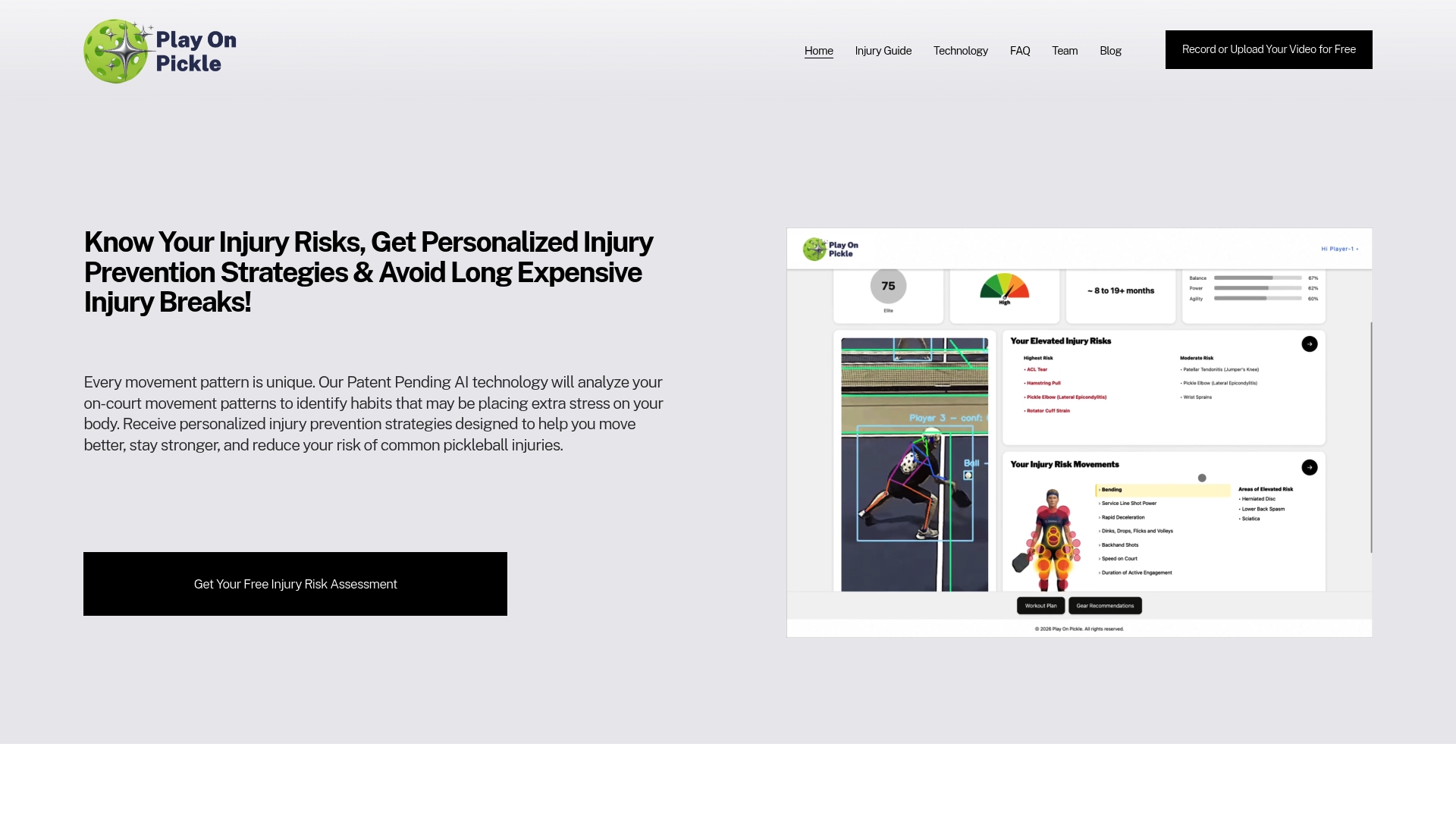
Recreational players rarely know their ankle is at risk until it's already rolled. That's the gap Playonpickle's patented computer vision technology is built to close, analyzing your movement on video to flag stress points, like an inversion-prone landing pattern, before they turn into a sprain.
Instead of generic advice, you get a scientifically validated assessment paired with specific, doable exercises: peroneal strengthening if your video shows lateral drift on plants, or targeted balance drills if your single-leg stability looks shaky.
Consider a screening if any of these apply:
- You've sprained the same ankle more than once.
- Recovery from your last sprain has dragged on longer than expected.
- You want to identify risk before it becomes an injury, not after.
For more on how movement patterns connect to specific injuries, the breakdown of common pickleball injuries and rehab is worth a look.
What Actually Changes Player Behavior After a Sprain
The mistake I see most isn't ignorance, it's impatience. Players know they should rest, then play through the ache anyway because the group needs a fourth. Others skip balance work entirely because it feels too simple to matter, or lean on a brace indefinitely instead of rebuilding the strength the brace was supposed to bridge.
The players who avoid a second sprain build three habits: a weekly ten-minute balance check, a real look at whether their shoes still have lateral support, and getting a proper assessment early after any sprain instead of guessing.
— Drona
A Practical Next Step for Players Tired of Rolling the Same Ankle
If you've sprained an ankle once, you already know how disruptive it is to your season. Playonpickle is built for exactly that moment: instead of guessing at generic ankle exercises, you upload video of your own play and get a breakdown of the specific movement patterns putting your joints at risk, plus a plan built around your own biomechanics rather than a one-size-fits-all sheet.
It fits players returning from a sprain, players who've rolled the same ankle more than once, and anyone who wants a real answer before an injury forces one. The free trial gets you a first assessment with no upfront commitment, so there's no reason to keep playing on a guess. Head to the Play On Pickle landing page and start your screening before your next match.
Sources
- Ankle injuries and imaging guidance (NCBI Bookshelf)
- Short report on pickleball foot and ankle injuries (PubMed entry)
- Proprioceptive training evidence (PMC article)
- Diagnosis and Management of Common Musculoskeletal Injuries in the Pickleball Athlete (Springer)
Recommended
- Blog | Improve Your Game Now — Play On Pickle - Smart Pickleball Fitness
- Celebrate National Pickleball Day: Play Harder, Move Smarter, and Stay Injury-Free — Play On Pickle - Smart Pickleball Fitness
- Pickle Elbow, FOOSH… — Play On Pickle - Smart Pickleball Fitness
- The Dink Movie — Play On Pickle - Smart Pickleball Fitness