
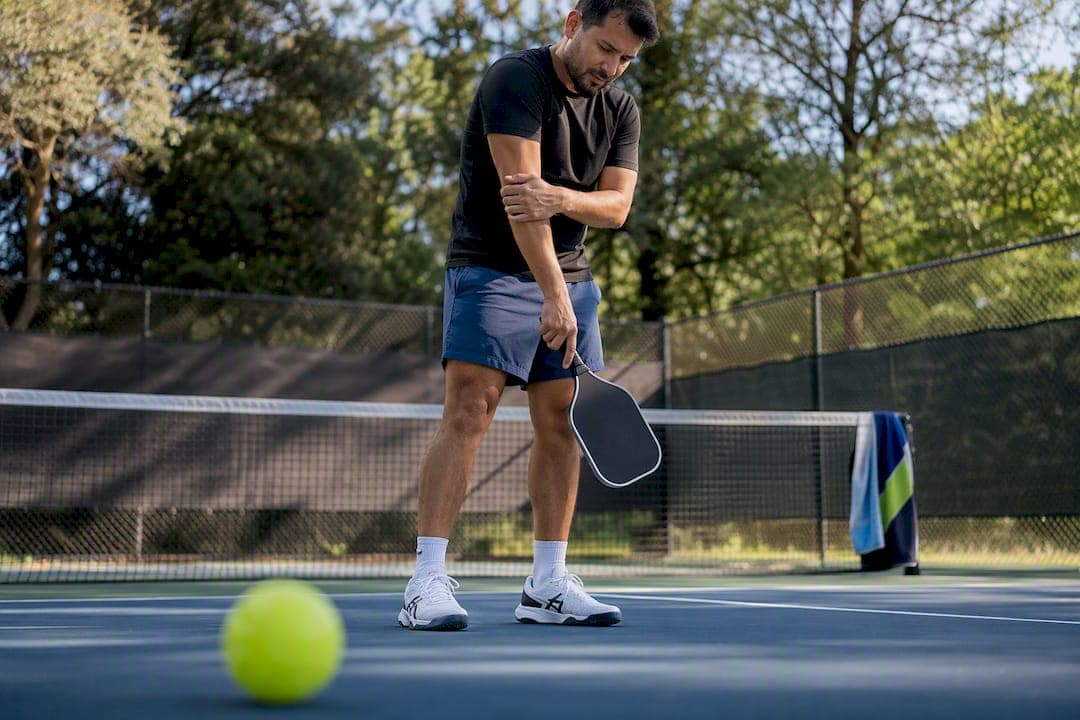
Pickleball elbow is lateral epicondylitis, an overuse injury to the tendons that attach at the bony bump on the outside of your elbow. The single most important thing you can do right now is stop playing through it. Continuing to swing on an inflamed tendon just extends your timeline.
Most cases respond well to conservative care, and surgery is rarely needed. But left unmanaged, symptoms can drag on for up to a year. Here's what to do in the first 24 to 72 hours:
- Stop or significantly cut back on play until sharp pain subsides.
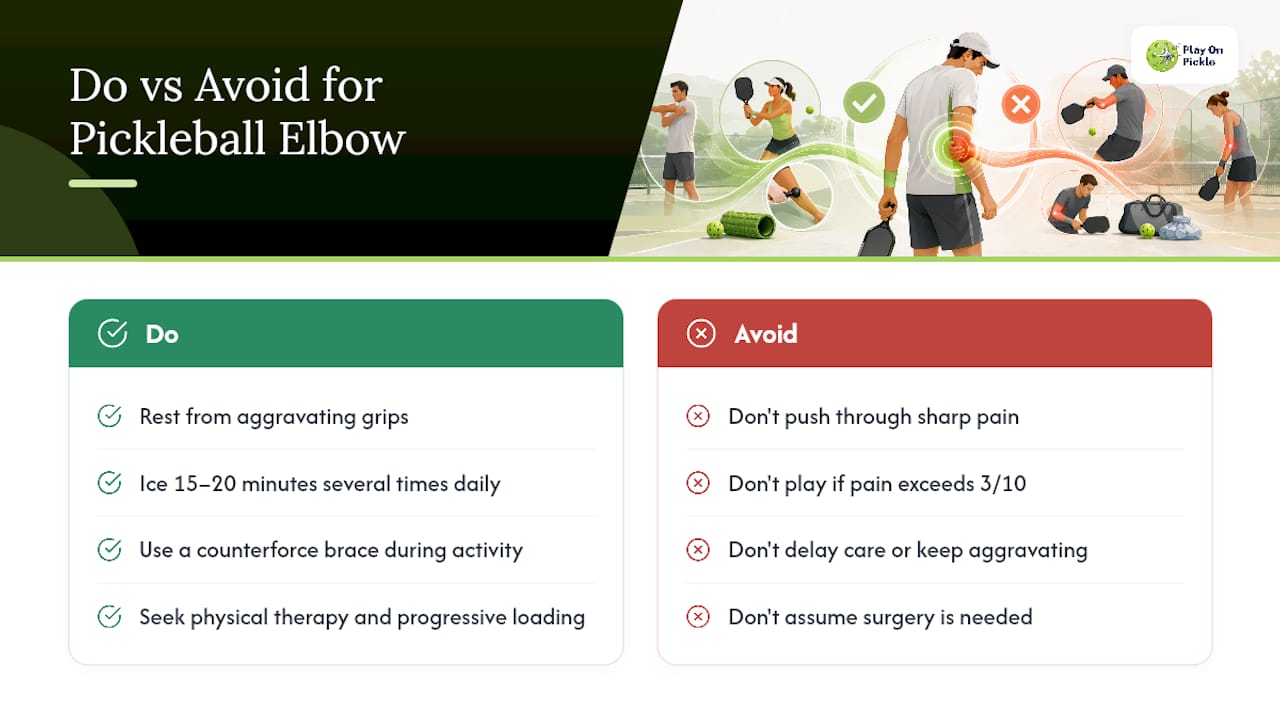
- Ice the outer elbow for 15 to 20 minutes, several times a day.
- Avoid heavy gripping tasks (jars, luggage, a too-tight paddle grip).
- Modify your swing or sit out drills that load the wrist repeatedly.
Continuing to play through active symptoms increases inflammation and prolongs recovery. Clinicians at Rochester Regional Health specifically warn against pushing through elbow pain instead of backing off early.
See a doctor promptly if you notice numbness or tingling in your hand, progressive weakness, or severe pain that hasn't eased after two to three weeks of rest.
Key Takeaways
Pickleball elbow pain resolves fastest when players stop painful activity early, follow a phased loading program, and correct the mechanics that caused the overload in the first place.
| Point | Details |
|---|---|
| Definition | Pickleball elbow is lateral epicondylitis, an overuse injury to the wrist extensor tendons at the outer elbow. |
| Act on early signs | Outer elbow pain, weak grip, and pain with wrist extension mean it's time to modify play immediately. |
| Recovery timeline | Mild cases often improve in six to twelve weeks; untreated cases can persist up to a year. |
| Fix the mechanics | Use legs and core for power, warm up properly, and check paddle weight and grip size. |
| Personalized prevention | Playonpickle's movement analysis flags individual stress points like wrist load and hip rotation to guide targeted exercises. |
Table of Contents
- What Happens Inside Your Elbow When Pickleball Elbow Pain Starts
- Recognizing Pickleball Elbow Pain: Six Signs and a Simple Test
- What Causes Pickleball Elbow Pain and Who's Most at Risk
- A Practical Prevention Checklist for Pickleball Players
- Treating Pickleball Elbow Pain at Home: First Steps and Timeline
- When to See a Doctor and What Treatment Looks Like
- Rehab Exercises That Rebuild the Tendon
- Frequently Asked Questions
- Sources
What Happens Inside Your Elbow When Pickleball Elbow Pain Starts
The tendons responsible are the wrist extensors, a group that attaches at the lateral epicondyle, the bony knob on the outside of your elbow. One muscle in particular, the extensor carpi radialis brevis (ECRB), tends to take the brunt of the damage because of how it's positioned relative to the elbow joint during a backhand or a quick wrist flick.
Pickleball's mechanics make this tendon vulnerable in a specific way. The game involves short, fast exchanges. Dinks, resets, and volleys all demand a quick wrist snap rather than a big shoulder-driven swing, and players hit far more shots per minute than they would in tennis.
- Every short-range flick loads the same small tendon fibers.
- A lighter paddle can tempt players into using more wrist and less arm/body rotation.
- High shot frequency means micro-damage accumulates faster than it can repair.
Picture the tendon like a rope that gets nicked a little more with each tug. One nick heals fine. Thousands of tiny nicks without rest start to fray the whole thing. Orthopedic guidance on the sport notes that this kind of repetitive micro-loading at the tendon's origin is what drives the degeneration, not one bad shot.
This is a classic overuse pattern. It's rarely a single traumatic swing, but rather hundreds of small, repeated loads on a tendon that never gets to fully recover between sessions.
Recognizing Pickleball Elbow Pain: Six Signs and a Simple Test
Tendon pain builds gradually, and most players brush off the early signs as normal soreness. Watch for these six patterns:
- Pain on the outer elbow, right over the bony bump, especially with activity.
- Discomfort when gripping your paddle, a coffee mug, or a doorknob.
- Noticeably weaker grip strength compared to your other hand.
- Pain that radiates down the top of the forearm toward the wrist.
- Soreness that worsens hours after play, not just during it.
- Tenderness you can pinpoint by pressing directly on the lateral epicondyle.
A quick self-test: extend your wrist backward against resistance, like lifting the back of your hand up while someone (or a table edge) pushes down. Pain during this motion strongly suggests tendon involvement, since it directly stresses the extensor tendons that attach at that origin point.
If the pain sits on the inside of your elbow instead, that's more likely golfer's elbow, a related but different tendon. Numbness or tingling pointing into your fingers suggests nerve involvement, not tendon strain, and deserves its own evaluation.
What Causes Pickleball Elbow Pain and Who's Most at Risk
The injury almost always traces back to a mix of mechanics and habits, not bad luck:
- Sheer repetition: playing several days in a row without a break.
- Poor stroke mechanics that rely on the wrist and forearm to generate power.
- Skipping the legs and core, so the arm absorbs force that the hips should handle.
- Skimping on warmup before jumping into competitive points.
- A grip that's too small, or a paddle that's heavier than your arm can handle for volume play.
- Ramping up court time too fast, like going from once a week to daily sessions.
Beginners are especially prone to this because they haven't grooved efficient mechanics yet, and enthusiasm often outpaces conditioning. Players squeezing in three or four sessions a week with zero rest days carry similar risk, as do anyone with underused forearm or core muscles.
Pro Tip: Increase your weekly court time by no more than 10 to 15 percent, and build at least one full rest day between sessions during your first few months of regular play.
A Practical Prevention Checklist for Pickleball Players
Prevention isn't complicated, but it does need to be consistent. Run through this before and during play:
- Warm up for real. Five minutes of light cardio, then wrist circles, forearm stretches, and shoulder rolls before your first competitive point.
- Lead with your legs and core. Technique coaching that shifts power generation away from the wrist is one of the most effective changes a recreational player can make.
- Keep your wrist stable through contact instead of snapping it, and get your feet set early so you're not reaching.
- Strengthen forearm extensors with light eccentric work and grip squeezes, plus basic shoulder and core maintenance, once or twice a week.
- Check your equipment. A paddle that's too heavy or a grip that's too small forces your forearm muscles to overcompensate on every shot.
- Pace your volume. Cap daily court sessions, build in rest days, and swap in softer practice balls during high-repetition drilling.
Pro Tip: Test your grip size by holding the paddle normally. If there's more than a finger's width of space between your fingertips and palm, the grip is too big; if your fingers overlap your palm, it's too small. A simple overgrip can correct a handle that's slightly undersized.
For more on how shot selection affects joint load, a breakdown of dinking mechanics is worth a look if resets are a big part of your game.
Treating Pickleball Elbow Pain at Home: First Steps and Timeline
Once symptoms show up, conservative home care is your first move, and it works for most players:
- Modify or pause activities that reproduce the pain, especially heavy gripping.
- Ice the area for 15 to 20 minutes, three to four times a day during flare-ups.
- Use topical or oral anti-inflammatories as directed on the label.
- Try a counterforce brace just below the elbow to offload the tendon during activity.
- Add gentle range-of-motion work once acute pain settles.
Recovery timelines vary, but structured care typically gets mild cases resolved in six to twelve weeks. Ignored or repeatedly aggravated cases can stretch toward the one-year mark referenced by Harvard Health.
A rough rule of thumb: if a shot causes pain above a 3 out of 10, stop. Pushing past that threshold delays healing more than it builds tolerance. Seek evaluation if you notice progressive weakness, pain that hasn't budged after several weeks of rest, or new numbness and tingling.
When to See a Doctor and What Treatment Looks Like
Most players never need more than rest, ice, and a loading program. But if symptoms persist past four to six weeks of consistent home care, it's time to bring in a professional. The typical pathway looks like this:
- Primary care or physical therapy evaluation to confirm the diagnosis and rule out nerve involvement.
- A focused loading program with technique coaching, correcting the mechanics that caused the overload in the first place.
- Injections or shockwave therapy for cases that don't respond to loading alone.
- Surgery, reserved for the rare cases that fail everything else.
Corticosteroid injections can bring fast, welcome relief, but some research links them to higher recurrence rates compared to structured loading therapies. Ask your provider about that tradeoff before choosing an injection as a first step.
Physical therapy typically focuses on correcting the stroke mechanics that overloaded the tendon, then rebuilding strength progressively before clearing you to return to full-speed play. Imaging or a specialist referral makes sense when conservative care stalls or the diagnosis is unclear. For general background on tendon injuries, the clinical overview from The Tx Room covers the broader tendinitis picture beyond pickleball specifically.
Rehab Exercises That Rebuild the Tendon
Recovery works best in phases, moving from calming the tendon down to loading it back up:
- Isometric wrist extension (pain relief phase): press the back of your hand against a table edge, hold 30 to 45 seconds, 3 to 4 reps.
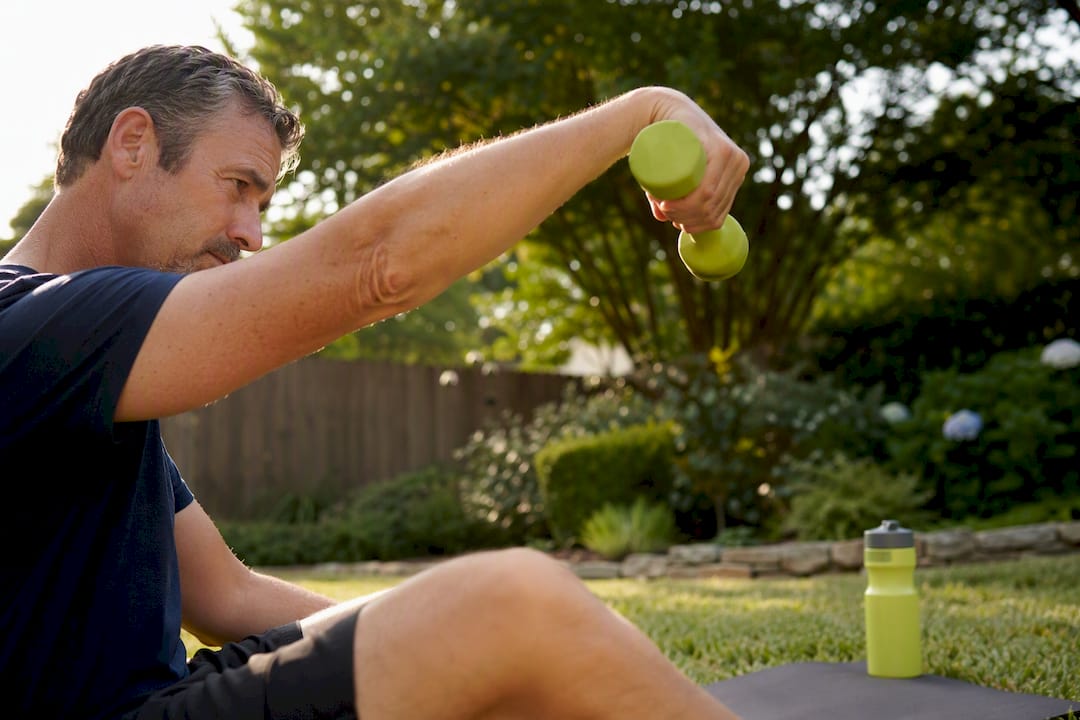
- Eccentric wrist extension (tendon remodeling): use a light dumbbell, lift with both hands, lower slowly with the affected arm alone, 3 sets of 12 to 15.
- Grip squeezes with a soft ball, 2 sets of 15, to rebuild forearm endurance.
- Shoulder and scapular stabilizers, like band pull-aparts, to reduce compensation through the arm.
- Sport-specific return drills, gradually reintroducing dinks and volleys before full-pace rallies.
Progress load only when the previous phase feels pain-free at daily activities. Sport-specific drills belong in the plan once you can complete eccentric work without discomfort the next day, a pattern consistent with the phased loading protocols physios recommend for tendinopathy.
Pro Tip: Stop immediately if you feel sharp, catching pain during any exercise. Dull muscle fatigue is fine; sharp tendon pain is not.
How Movement Analysis Pinpoints What's Really Going Wrong
A biomechanical assessment looks at things you can't feel in the moment: trunk rotation timing, how much your wrist compensates for a short backswing, and footwork patterns that leave you reaching. That data often points to fixable habits.
- Recommendations might include increasing hip rotation, shortening a wrist-heavy backswing, or adjusting grip size.
- This kind of analysis complements medical care. It doesn't replace evaluation when red-flag symptoms like numbness or persistent weakness show up.
For a real-world example of how overlooked mechanics contribute to injury, see what Jeff Webb's injury revealed about staying game-ready.
What Recovery Actually Looks Like Day to Day
Players who catch this early and commit to a real loading program almost always get back to full-speed pickleball. The pattern that works is boringly consistent: back off fast, rebuild slow, don't skip the boring exercises.
A Smarter Way to Catch Elbow Strain Before It Sidelines You
Most players find out their mechanics are the problem only after the pain shows up. Playonpickle flips that order: upload a video of your play, and its computer vision technology flags the exact stress points, like excessive wrist load or limited hip rotation, driving the strain before it becomes an injury. You get a personalized set of exercises and equipment recommendations built around your own swing, not a generic checklist.
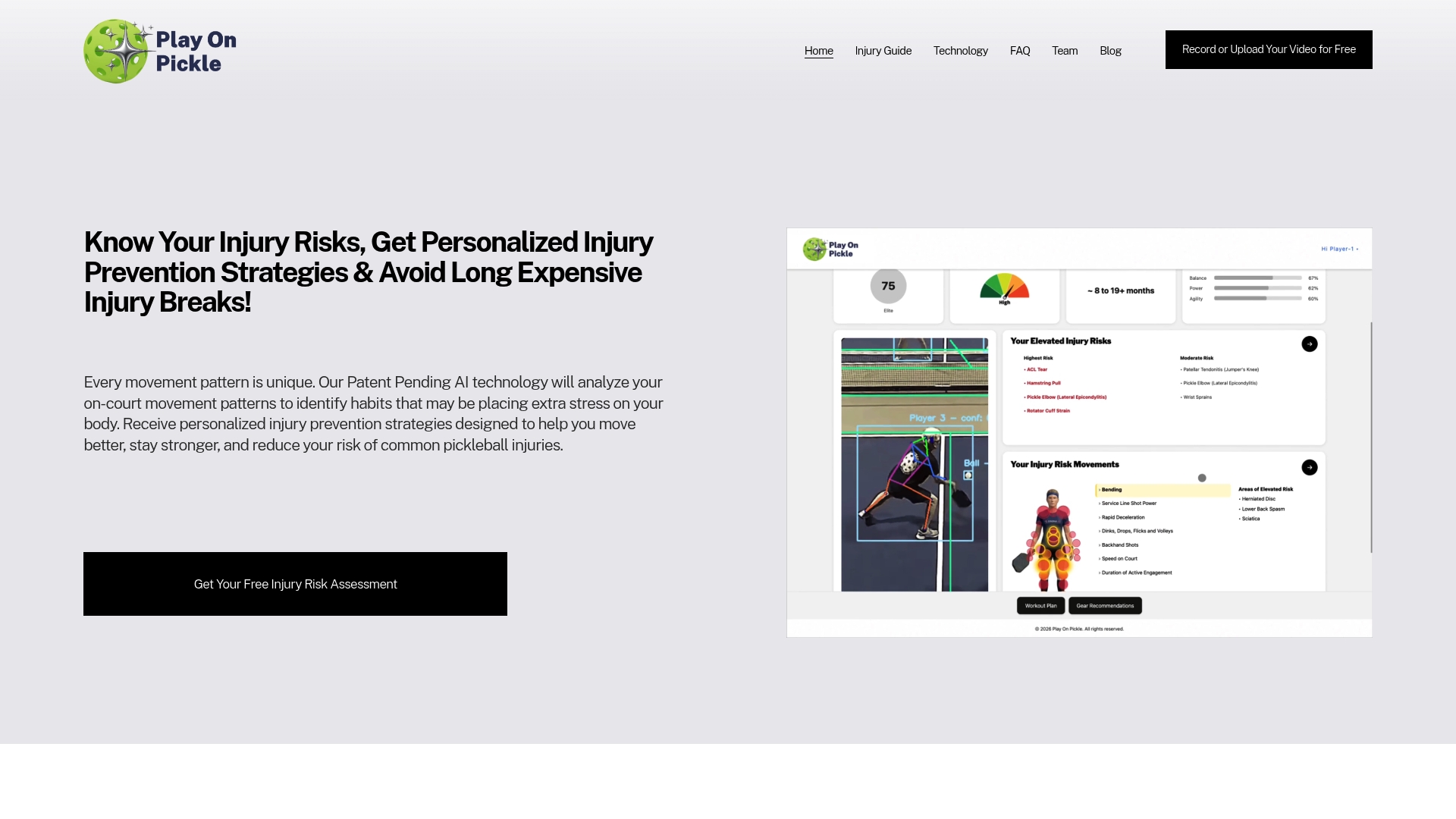
This isn't a substitute for medical evaluation. If you're already dealing with numbness, progressive weakness, or pain that won't quit, see a clinician first. But if you're looking to catch problems early or fine-tune your mechanics after recovering from a flare-up, a personalized assessment is worth trying. Start a trial at Playonpickle and see what your own movement pattern is telling you.
Frequently Asked Questions
Is pickleball elbow the same as tennis elbow? Yes. Both terms describe lateral epicondylitis, inflammation and micro-damage to the wrist extensor tendons at the outer elbow. The name changes based on the sport, not the underlying injury.
Can I keep playing pickleball with elbow pain? Light play with minimal discomfort is usually fine, but stop if pain crosses a 3 out of 10 during shots. Pushing through sharp pain typically extends recovery rather than building tolerance.
How long does pickleball elbow pain usually last? Structured care resolves many mild cases in six to twelve weeks. Cases left untreated or repeatedly aggravated can drag on for up to a year.
What's the fastest way to relieve pickleball elbow pain at home? Rest from aggravating grips, ice for 15 to 20 minutes several times daily, an OTC anti-inflammatory, and a counterforce brace during activity cover most early-stage relief.
Do I need surgery for pickleball elbow? Rarely. The overwhelming majority of cases respond to conservative care, physical therapy, and progressive loading exercises long before surgery becomes a consideration.
This article is general information, not a substitute for advice from a qualified doctor. Consult a qualified healthcare professional about your own circumstances before acting on anything here.
Sources
- How to avoid this common pickleball injury
- How to Prevent Tennis Elbow When You Play Pickleball
- Tendinitis - Symptoms and causes - Mayo Clinic
- Pickleball Elbow - Treatment, Recovery, and Return to Play
- Corticosteroid injections and tendinopathy outcomes (PMC article)
Recommended
- Pickle Elbow, FOOSH… — Play On Pickle - Smart Pickleball Fitness
- Pickleball 101: Understanding the Game, Rules, and Essential Fitness and Gear — Play On Pickle - Smart Pickleball Fitness
- Blog | Improve Your Game Now — Play On Pickle - Smart Pickleball Fitness
- Celebrate National Pickleball Day: Play Harder, Move Smarter, and Stay Injury-Free — Play On Pickle - Smart Pickleball Fitness