
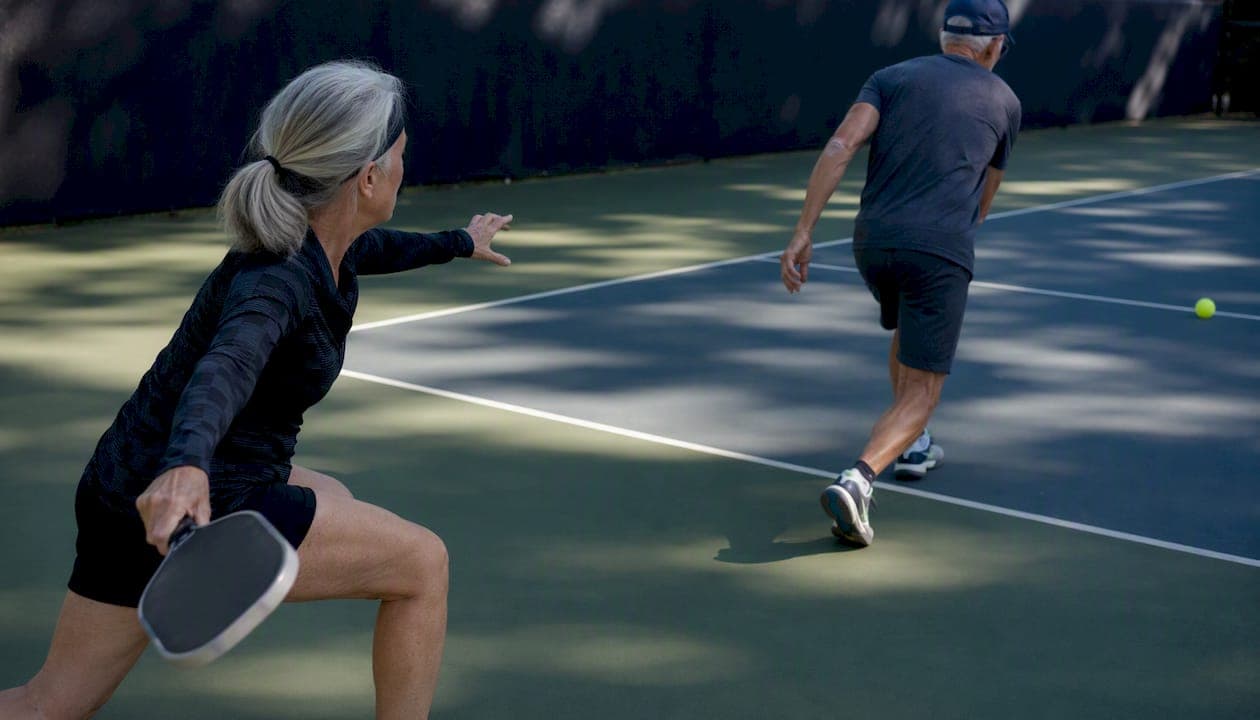
Preventing most pickleball injuries starts with a 5 to 10 minute dynamic warm-up, court-specific shoes, and two or three weekly strength sessions targeting the shoulders, hips, and calves. Add gradual progression instead of jumping into back-to-back games, and stop playing the moment pain becomes repetitive instead of one-off soreness.
- Do a 5 to 10 minute dynamic warm-up before every session, not a static stretch.
- Wear court-specific shoes built for lateral movement, not running shoes.
- Build strength and balance a few times per week, off the court.
- Increase play time gradually, capping weekly increases around 10 to 20 percent.
- Stop and rest at the first sign of repetitive pain lasting more than a day or two.
Clinics from Scripps Health to Keck Medicine of USC back this same core formula, and it's the same logic behind how Play On Pickle builds its personalized prevention plans: warm up right, condition your body, and don't ignore pain that keeps coming back.
Key Takeaways
Preventing pickleball injuries comes down to a short dynamic warm-up, court-specific shoes, gradual load progression, and consistent strength and balance training.
| Point | Details |
|---|---|
| Warm up dynamically | Spend 5 to 10 minutes on movement-based drills like shuffles and lunges before every session. |
| Train strength off-court | Build shoulder, hip, and calf strength 2 to 3 times weekly to handle repetitive court loading. |
| Fix your footwork | Avoid backpedaling and favor sideways or forward movement to cut fall risk. |
| Respect pain signals | Stop and rest at persistent pain rather than playing through it, and know the red flags for a doctor visit. |
| Personalize when needed | Play On Pickle's AI movement analysis flags individual stress points general advice can miss, useful after recurring pain or a significant injury. |
This article is general information, not a substitute for advice from a qualified doctor. Consult a qualified healthcare professional about your own circumstances before acting on anything here.
Table of Contents
- What Injuries Are Most Common in Pickleball and Why
- How Long Should a Pickleball Warm-Up Be, and What Should It Include?
- Strength, Balance, and Flexibility Work That Lowers Injury Risk
- Movement Habits on the Court That Cut Acute Injury Risk
- Does Footwear and Equipment Really Affect Injury Risk?
- When Should You See a Doctor for a Pickleball Injury?
- How Should Older or Less-Conditioned Players Adjust Their Prevention Plan?
- A 6 to 8 Minute Pre-Play Routine Plus Three Core Exercises
- When a Personalized Movement Analysis Makes Sense
- Sources
What Injuries Are Most Common in Pickleball and Why
Pickleball injuries split into two categories: sudden acute injuries and slow-building overuse injuries. Acute injuries happen in an instant, usually from a bad step or an awkward landing. Overuse injuries build over weeks of repetitive motion without enough recovery.
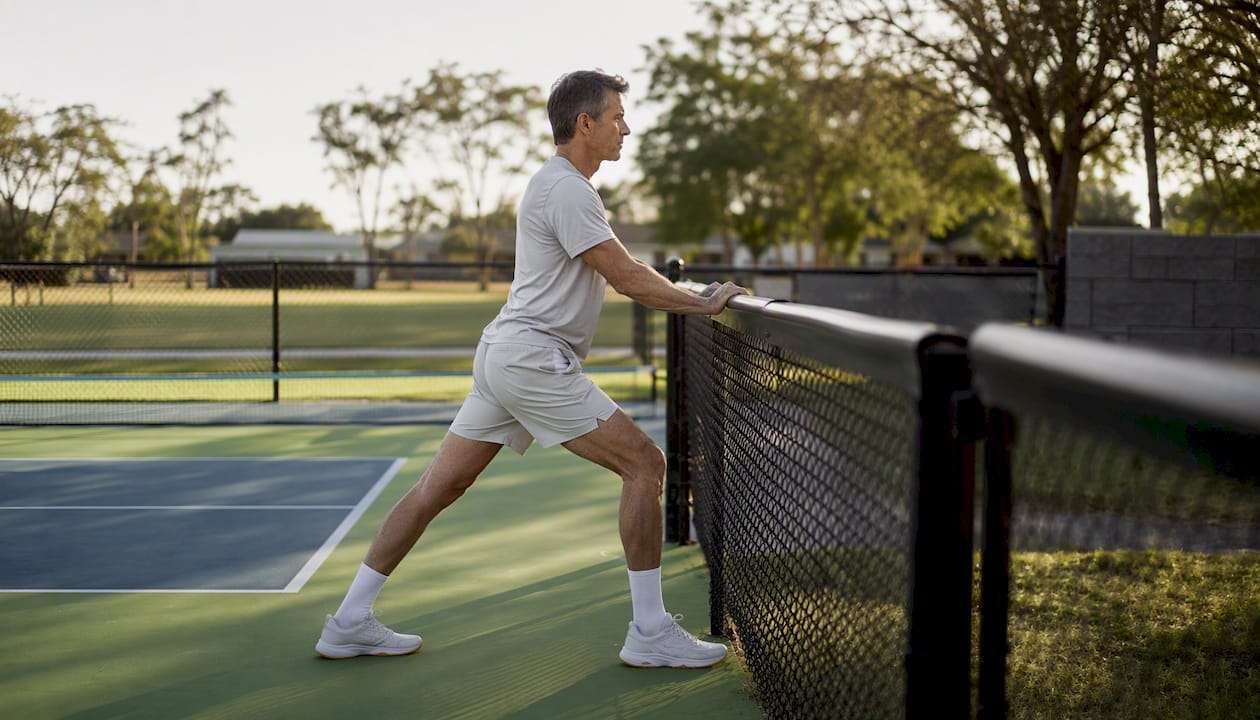
The most common acute injuries include ankle sprains, calf and hamstring strains, Achilles tendon injuries, and knee sprains, including meniscus and ACL risk during hard pivots. On the overuse side, rotator cuff tendinitis, tennis elbow (often called "pickle elbow" in this sport), wrist strain, and low back pain show up most often in players who log a lot of court time without conditioning.
The mechanisms behind these injuries are almost always the same few movements repeated over and over:
- Sudden lateral shuffles that overload the ankle and outer hip.
- Quick lunges toward the kitchen line that strain the calf and hamstring.
- Fast deceleration when chasing a dink, which loads the knee.
- Repetitive paddle strokes that stress the elbow and wrist tendons.
- Backpedaling to return a lob, a common setup for falls.
Health systems tracking emergency room visits have flagged a sharp rise in pickleball-related fractures among older adults, a group far more likely than younger players to suffer a break rather than a sprain from the same fall, according to Yale Medicine.
That single distinction, sprain versus fracture, is why prevention advice for a 65-year-old weekend player looks different from advice for a 30-year-old tournament competitor.
How Long Should a Pickleball Warm-Up Be, and What Should It Include?
Clinical guidance is consistent on this point: spend 5 to 10 minutes on a dynamic warm-up before you pick up a paddle. The key word is dynamic. You want movement that mimics what you'll actually do on the court, not a held stretch that leaves muscles loose but unprepared for explosive changes of direction.
Here's a routine you can run through in well under 10 minutes:
- Light jogging or high-knee marching in place (60 to 90 seconds) to raise your heart rate and body temperature.
- Jumping jacks or a low-impact step version (60 seconds) to activate the whole body.
- Side-to-side shuffles across a short distance (60 to 90 seconds) to prime the exact lateral pattern you'll use constantly during play.
- Leg swings, front-to-back and side-to-side, 10 per leg, to open up the hips.
- Walking lunges, 8 to 10 per leg, to load the calves, hamstrings, and glutes the way a court sprint will.
- Arm circles and shoulder rolls (30 to 45 seconds each direction) to loosen the rotator cuff.
- Practice strokes, dinks, drives, and serves, without a ball, for 60 seconds to groove the paddle motion before it matters.
Dynamic movement beats static stretching before play because it raises tissue temperature and rehearses the actual patterns you're about to repeat under game speed. Static stretching has its place, but that place is after you play, or as part of a separate mobility session. If you've been off the court for some time, stretch that routine into a longer movement prep session, layering in the shuffle and cross-step drills Rush recommends for rebuilding lower-body coordination.
Pro Tip: Sequence your warm-up in three phases: general aerobic movement first to raise your heart rate, then dynamic mobility to open the joints, then sport-specific activation like practice strokes. Skipping straight to paddle swings without the first two steps is how cold shoulders end up strained.
Strength, Balance, and Flexibility Work That Lowers Injury Risk
Warming up before you play matters, but what you do between sessions matters more for long-term durability. Yale Medicine points to shoulder, core, and hip strength combined with balance and reflex training as the highest-value off-court investment for pickleball players.
Six qualities deserve regular attention:
- Shoulder and rotator cuff strength, to handle repeated overhead and reaching motions.
- Forearm eccentric control, to blunt the tendon overload behind pickle elbow.
- Hip and glute strength, which stabilizes the lateral shuffle.
- Calf and hamstring eccentric capacity, since explosive lateral movement loads these muscles eccentrically every time you decelerate.
- Core stability, the anchor for nearly every other movement on the court.
- Single-leg balance and reactive agility, which cuts fall risk during quick direction changes.
A practical weekly plan, done several times per week, might look like this:
- Banded external rotation for the rotator cuff, 2 sets of 12 to 15 reps per arm.
- Single-leg deadlift for hip and hamstring control, 2 sets of 8 per leg.
- Lateral band walks for glute activation, 2 sets of 10 steps each direction.
- Calf raises with a slow eccentric lowering phase, 3 sets of 12.
- Single-leg balance holds, progressing to standing on a pillow or with a partner gently pushing you off balance, 3 rounds of 20 to 30 seconds per leg.
Low-impact cross-training, swimming, cycling, or an elliptical machine, builds aerobic capacity and supports recovery without piling on more lateral joint stress.
Movement Habits on the Court That Cut Acute Injury Risk
How you move between points affects your injury risk as much as anything you do in the gym. A few technical habits, drilled until they're automatic, meaningfully lower your odds of a bad fall or a joint tweak.
- Avoid backpedaling. Turning and moving forward or sideways instead of running backward removes the trip-and-fall risk that comes with running blind toward a lob.
- Land softly on cuts and stops. A stiff-legged landing sends shock straight into the knee and ankle; bending the knee on impact spreads that load across the whole leg.
- Keep your knees soft on returns. Locked knees transmit far more force to the joint than a slightly bent stance absorbing the same shot.
- Use small ready steps, not big lunges. Compact adjustment steps keep your center of gravity controlled; a big lunge for a wide ball often overextends the hip or groin.
Each of these cues does the same underlying job: it keeps force traveling through muscle rather than slamming into a joint or a tendon. Taking lessons focused on footwork and positioning speeds up how quickly these habits become instinct instead of something you have to think about mid-rally.
Pro Tip: If you're playing a marathon session, rotate partners and take shorter bouts rather than grinding through ten straight games. Fatigue is when technique breaks down and overuse injuries start accumulating.
Does Footwear and Equipment Really Affect Injury Risk?
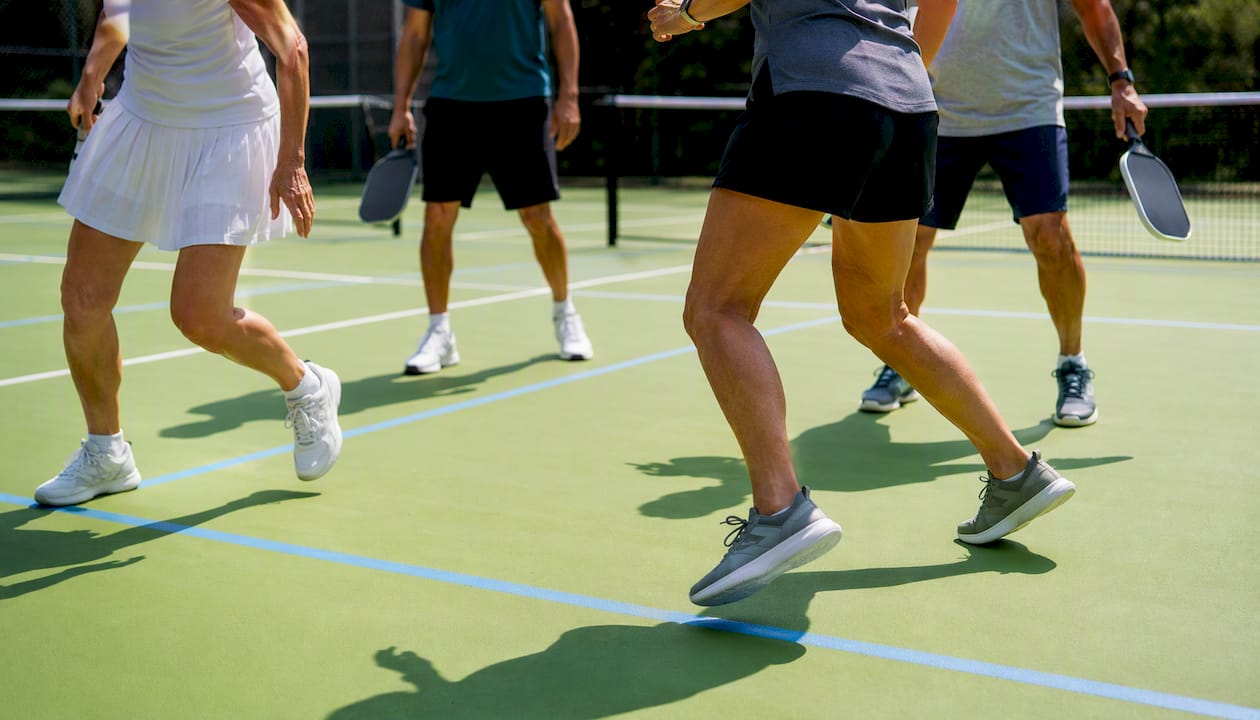
Yes, and shoes matter more than most players assume. Running or walking shoes are built for forward motion. Pickleball demands constant side-to-side cutting, and court-specific shoes provide the lateral stability and outsole traction that a running shoe's tall, soft heel simply doesn't offer.
- Choose a shoe rated for court sports, with a low, stable heel and a tread pattern matched to your surface, indoor or outdoor.
- Match paddle grip size to your hand. A grip that's too small forces extra forearm effort on every swing, a major contributor to pickle elbow.
- Replace shoes once the outsole tread flattens, and replace worn paddle grips before they get slick.
- Using indoor shoes outdoors, or vice versa, wears tread unevenly and quietly erodes your traction over a season.
For outdoor courts, don't overlook sun protection and hydration. Heat fatigue degrades reaction time and footwork just as much as tired legs do.
When Should You See a Doctor for a Pickleball Injury?
Most minor tweaks respond to basic first aid. But certain signs mean you need a clinician, not another day of rest and hoping it improves on its own.
Seek medical attention right away if you notice:
- Visible deformity or a joint that looks out of place.
- Inability to bear any weight on the injured leg or ankle.
- Severe, rapid swelling.
- Signs of a possible fracture, sharp pain concentrated at one point on a bone.
- Any signs of a head injury or concussion after a fall.
For minor sprains and strains, RICE, rest, ice, compression, and elevation, in the first 24 to 48 hours usually controls swelling and pain. Give the injury several days before testing it again on the court, and don't rush back just because the swelling looks better.
Playing through repetitive pain is the single biggest driver of chronic overuse injuries in pickleball, according to Keck Medicine of USC, and it's exactly the pattern a physical therapist can interrupt before it becomes a season-ending problem.
If pain returns every time you play, or recovery keeps stalling, a sports medicine evaluation or a course of physical therapy addresses the underlying movement fault instead of just masking the symptom.
How Should Older or Less-Conditioned Players Adjust Their Prevention Plan?
Older recreational players carry a disproportionate share of severe pickleball injuries, fractures especially, so the smartest approach is conservative rather than aggressive.
- Start with shorter sessions and build rest time between games rather than stacking match after match.
- Add balance and proprioception work before you add more court time, since falls carry higher stakes at this stage of life.
- Get medical clearance first if you've been sedentary or manage a chronic condition like heart disease or osteoporosis.
- Increase weekly play time gradually, roughly 10 to 20 percent per week, rather than jumping from once a month to four times a week.
Pro Tip: Check your shoes every few weeks for tread wear, not just when they look obviously worn. A slick outsole on an older player is a much higher fall risk than the same shoe on someone with faster reflexes.
A 6 to 8 Minute Pre-Play Routine Plus Three Core Exercises
Here's a routine short enough that you'll actually do it before every session, built on the same warm-up guidance from Scripps and Yale:
- March or light jog in place, 60 seconds.
- Jumping jacks or low-impact step version, 45 seconds.
- Side-to-side shuffles, 60 seconds.
- Leg swings, 30 seconds per leg.
- Walking lunges, 8 per leg (about 60 seconds).
- Arm circles and shoulder rolls, 45 seconds.
- Practice dinks and drives without a ball, 60 seconds.
That's roughly 6 to 8 minutes, done before every single time you step on the court.
For the deeper conditioning work, three exercises carry the most benefit for the time invested:
- Lateral band walks, 2 sets of 10 steps each direction, for hip and glute stability.
- Single-leg Romanian deadlifts, 2 sets of 8 per leg, for hamstring strength and balance.
- Rotator cuff band external rotations, 2 sets of 12 to 15 per arm, for shoulder durability.
Run the pre-play routine before every session. Save the three strength exercises for a separate 2 to 3 times per week block, ideally on non-playing days or well before you head to the court.
When a Personalized Movement Analysis Makes Sense
General advice covers most players well, but it can't catch what's specific to your own body. A tight right hip, a shoulder that internally rotates less than it should, a habit of overloading one leg on every lunge, these show up as asymmetries and faulty loading patterns that a checklist simply won't flag.
- Identifies which joints are absorbing more stress than they should during your actual swing and footwork.
- Flags movement compensations that generalized warm-up advice can't detect.
- Produces exercise and equipment recommendations matched to your own biomechanics rather than a generic template.
A review supporting multi-modal prevention strategies notes that combining warm-up, training load management, equipment choice, and technique coaching produces better outcomes than any single intervention alone.
Consider this kind of assessment if you've had recurrent pain in the same spot, if general prevention advice hasn't moved the needle, or if you're returning to play after a significant injury and want a more precise plan for feeling confident on the court again, which is where a tool like Play On Pickle's video-based movement analysis fits in.
A Practical Note From the Editorial Team
This guide leans on orthopedic and sports medicine sources because recreational players deserve advice that holds up under scrutiny, not gym folklore passed between partners at the net. Every recommendation here traces back to guidance from health systems that see these injuries walk through their doors every week. If you play regularly and want to go deeper, our full library of injury prevention articles covers specific conditions like pickle elbow in more detail.
Get a Movement Plan Built Around Your Own Body
Generic warm-up checklists help every player. What they can't do is tell you that your left knee absorbs more force than your right, or that your shoulder is losing range of motion three sets into a session. Play On Pickle closes that gap with AI-powered video analysis: upload footage of your play, and the system maps your specific stress points and hands you a personalized exercise and equipment plan built around how you actually move.
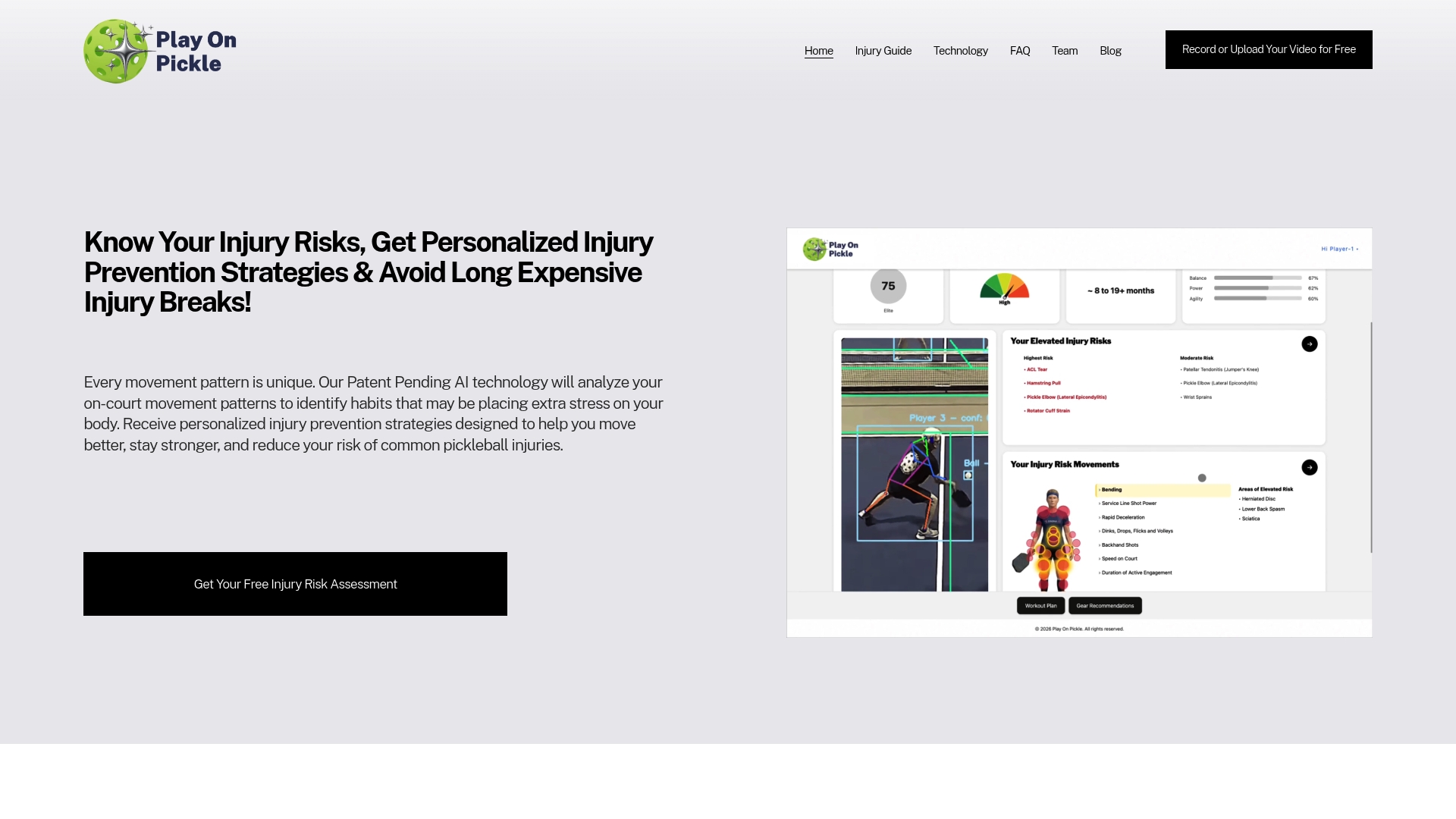
The service is built for exactly the players this guide is written for, recreational and older adults who want targeted, simple exercises that fit into a normal week rather than a full-time training regimen. It's not a replacement for a doctor when you're dealing with a red-flag injury like a suspected fracture or persistent joint pain that hasn't improved with rest. For everything short of that, it's a way to turn general prevention advice into a plan built for your own biomechanics. Start with a free trial at Play On Pickle and see what your own movement analysis reveals.
Sources
- 7 Ways to Prevent Pickleball Injuries on the Court — Scripps Health
- Pickleball Injuries: Causes and Prevention | Cedars-Sinai
- How to prevent pickleball injuries | Keck Medicine of USC
- How to Prevent Pickleball Injuries | Yale Medicine
- Pickleball: Injury Considerations in an Increasingly Popular Sport
Recommended
- Blog | Improve Your Game Now — Play On Pickle - Smart Pickleball Fitness
- Pickle Elbow, FOOSH… — Play On Pickle - Smart Pickleball Fitness
- Celebrate National Pickleball Day: Play Harder, Move Smarter, and Stay Injury-Free — Play On Pickle - Smart Pickleball Fitness
- The Dink Movie — Play On Pickle - Smart Pickleball Fitness