
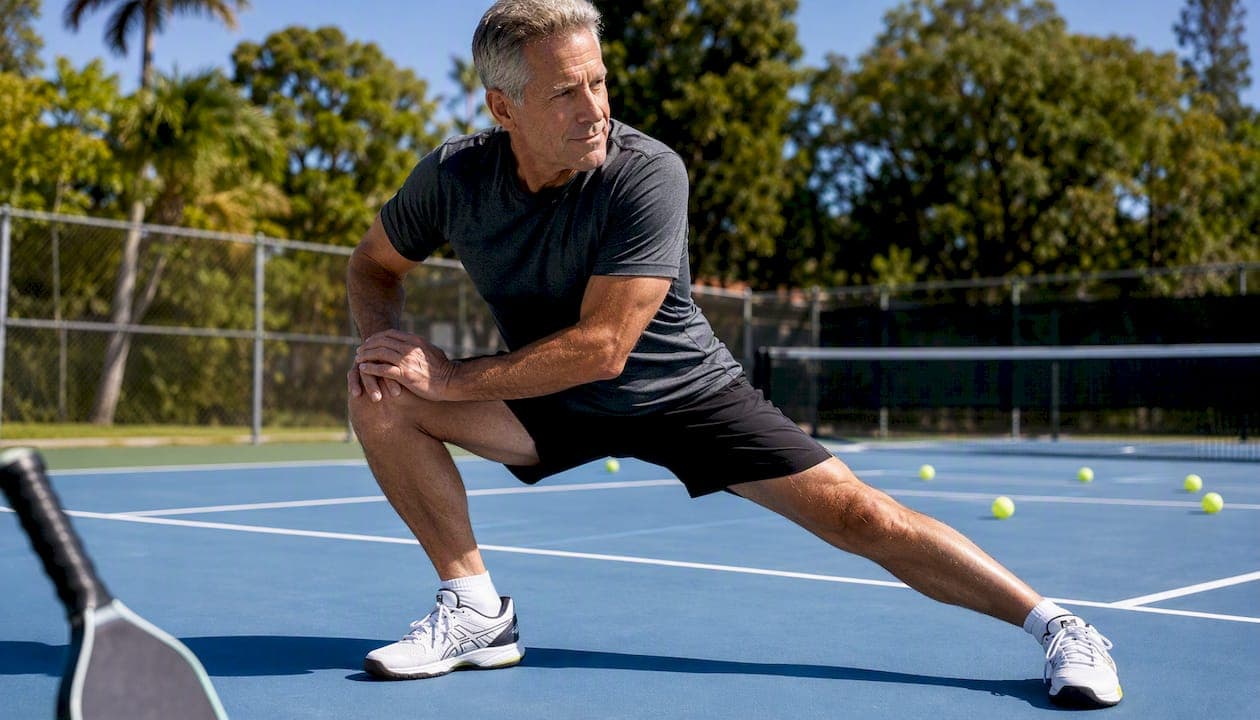
Pickleball injuries are common and rising fast. A nationwide survey of nearly 1,800 players found that about 69% report at least one injury complaint in a 12‑month period, and national emergency department estimates built from the Consumer Product Safety Commission's surveillance system show an increase from roughly 1,300 cases in 2014 to an estimated 24,461 in 2023.
Those two numbers come from different angles on the same problem. One measures how many players say they got hurt. The other measures how many people ended up in an ED because of it. Both point the same direction: up.
Quick stats:
- A sizable share of surveyed players reported an injury complaint within 12 months, and many lost playing time to it
- NEISS-derived national ED estimates rose to an estimated tens of thousands of visits annually by the early 2020s
Here's what the rest of this data means for you:
- The knee, lower leg, and shoulder take the brunt of it
- Emergency department counts miss a lot of care that happens in outpatient orthopedic clinics
- Most of what causes these injuries is preventable with the right conditioning work
Key Takeaways
Pickleball injury rates are rising nationally, and survey data suggests the true burden is far higher than any single emergency department count implies.
| Point | Details |
|---|---|
| Injury prevalence is high | Nearly 69% of surveyed players report an injury within 12 months, and around two-fifths lose playing time. |
| National ED trend is climbing | NEISS-derived estimates rose from about 1,300 in 2014 to roughly 24,461 by 2023. |
| ED data understates total burden | 71% of initial injury encounters happen in outpatient orthopedic clinics, not emergency rooms. |
| Age and experience drive risk | Players over 60 and those with fewer than five years of experience show the highest injury odds. |
| Prevention starts with movement screening | Tools like Playonpickle analyze individual biomechanics to flag stress points before they become acute injuries. |
Table of Contents
- How Common Are Pickleball Injuries? The National Numbers
- Where Pickleball Injury Data Actually Comes From
- What Injuries Are Most Common in Pickleball?
- Pickleball Injuries by Age: Who's Most at Risk
- How Pickleball Injuries Actually Happen
- How Severe Are Pickleball Injuries, and Where Do People Get Treated?
- More Evidence Behind the Pickleball Injury Numbers
- Where the Data Falls Short
- What Players and Facilities Should Do With This Data
- Frequently Asked Questions
- Sources
How Common Are Pickleball Injuries? The National Numbers
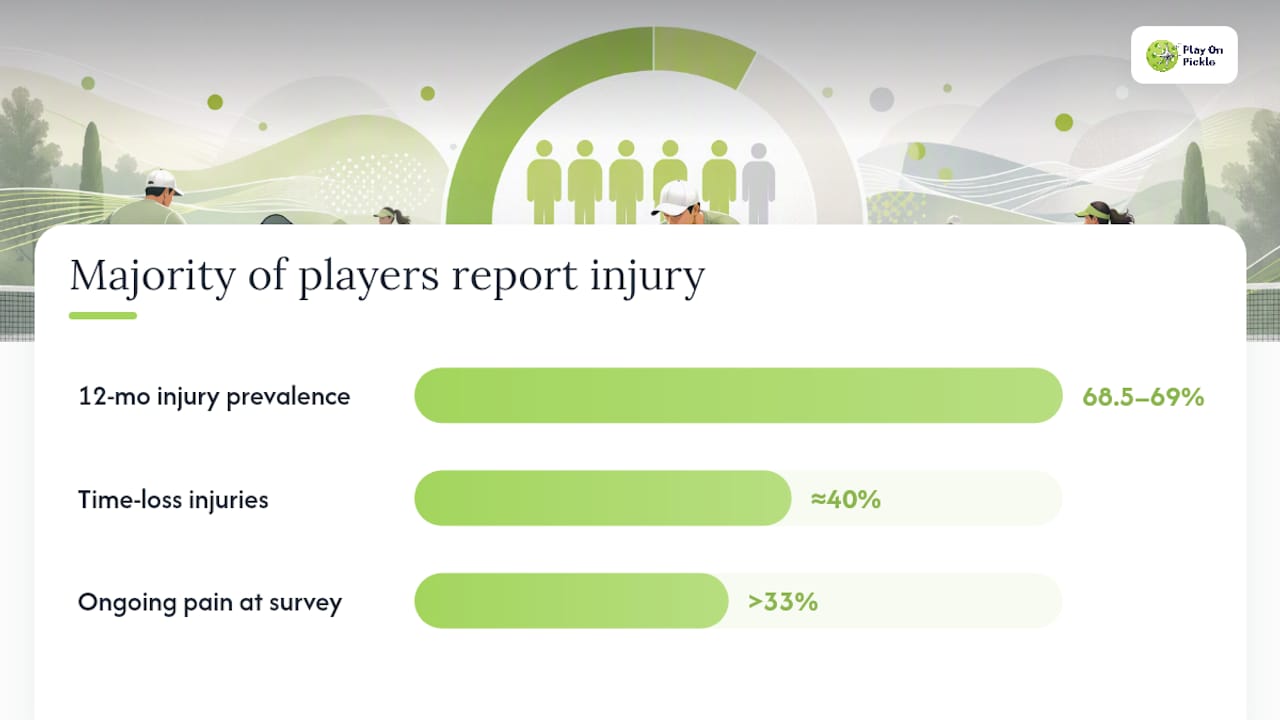
The clearest survey-based answer comes from a nationwide study of 1,758 pickleball players, which found a 12‑month all‑complaint injury prevalence between 68.5% and 69%. Of those, A substantial percentage reported time‑loss injuries, meaning they had to sit out play, and more than a third said they were dealing with ongoing pain at the time they were surveyed. That last figure is worth sitting with. More than a third of active players are simply playing hurt.
The emergency department picture tells a parallel but distinct story. A 10-year epidemiologic analysis of NEISS data found a statistically significant rise (P < .001) in national estimates of pickleball injuries treated in EDs, climbing from a few thousand cases in the early 2010s to an estimated 24,461 by 2023. That's not a gradual creep. It tracks almost exactly with the sport's explosive growth in participation over the same window.
A separate analysis focused specifically on extremity injuries found something even starker: a a dramatic increase in NEISS-coded extremity injuries between 2012 and 2022. Upper and lower extremity injuries didn't just increase alongside participant growth. They outpaced it, and the same analysis flagged real age-related differences, with older patients showing more upper-extremity injuries and higher odds of hospitalization.
Health system data adds another layer. A large urban healthcare system tracked its own pickleball-related orthopedic caseload and found a a significant jump in presentations between 2022 and 2023 alone, with a parallel rise in surgical volume. That single-system spike lines up with the national ED trend, and it also captures something NEISS doesn't: outpatient visits, which turn out to be the majority of where these injuries actually get treated.
| Data Source | Metric | Reported Figure |
|---|---|---|
| Nationwide player survey (n=1,758) | 12-month all-complaint injury prevalence | about two-thirds |
| Nationwide player survey (n=1,758) | Time-loss injury rate | around two-fifths |
| NEISS 10-year analysis | National ED estimate, 2023 | ~24,461 |
| NEISS 10-year analysis | National ED estimate, 2014 (sample year) | approximately 1,300 |
| NEISS extremity-injury analysis | Increase in extremity injuries, 2012 to 2022 | a very large increase |
| Urban health system review | Increase in presentations, 2022 to 2023 | a large increase |
There's a pandemic wrinkle worth flagging too. Pickleball's participation curve dipped briefly during COVID-related closures, then accelerated hard once courts reopened, and injury counts followed that same shape with a lag. The years since 2021 show the steepest climbs in nearly every dataset cited here, which tracks with anecdotal reports from orthopedic clinics of a marked uptick in new pickleball patients starting around that period.
Where Pickleball Injury Data Actually Comes From
Numbers this different in scale (69% survey prevalence versus 24,461 estimated ED visits) come from measuring completely different things, and understanding that gap is the key to reading any pickleball injury report correctly.
The National Electronic Injury Surveillance System, run by the Consumer Product Safety Commission, samples a representative set of U.S. emergency departments and uses statistical weighting to produce national estimates. It's a strong tool for tracking trends over time, but it only captures injuries that show up in an ED. Someone who twists a knee, skips the ER, and goes straight to an orthopedic clinic never enters the NEISS count.
That's precisely the gap the survey and single-system studies fill. The 1,758-player survey captured self-reported injuries regardless of where (or whether) someone sought care. The urban health system review tracked actual clinic and hospital records across a decade, which is why it could report that most patients never went through an ED at all.
How to read any pickleball injury statistic:
- Check the denominator: is it players surveyed, or ED visits sampled?
- Check the setting: ED-only data undercounts total injury burden
- Check the time window: a 2023 single-year estimate isn't comparable to a 5-year cumulative count
- Check whether the study counts a "presenting encounter" (first visit) or total burden (all follow-up care, surgery, rehab)
Pro Tip: When you see two very different injury numbers for the same sport, don't assume one is wrong. Check whether one is counting emergency visits and the other is counting all self-reported injuries. They're usually measuring different slices of the same problem.
Double-counting is another quiet issue. Some retrospective reviews count each visit, not each patient, so someone with three follow-up appointments for the same fracture can inflate a raw count if the methodology isn't clear about it.
What Injuries Are Most Common in Pickleball?
The data converges on a fairly consistent pattern, even across studies that measure things differently.
- Strains and sprains top the list in survey data, driven largely by lateral movement and quick direction changes
- Overuse and chronic conditions, including tendinitis and osteoarthritis flare-ups, show up disproportionately given the sport's repetitive nature
- Fractures, particularly of the wrist, are common in fall-related mechanisms
- Meniscus tears and other soft-tissue knee injuries appear frequently enough to warrant their own diagnostic category in several studies
By body region, the nationwide survey found the knee leads at 29.1% of reported injuries, followed by the combined thigh, leg, and foot category at 26.9%, and the shoulder at 22.2%. The urban health system review found similar patterns in its clinic population, listing osteoarthritis exacerbation (16%), meniscus tear (11%), and wrist fracture (5.7%) among the most common specific diagnoses.
Less common but more serious events still matter for risk awareness. Achilles ruptures, while rarer, show up repeatedly in orthopedic case series, often in players over 40 who haven't done sport-specific conditioning in years. Fractures requiring surgical fixation, particularly distal radius fractures from outstretched-hand falls, represent a meaningful share of the more severe end of the injury spectrum.
Pickleball Injuries by Age: Who's Most at Risk
Age is the single strongest predictor in nearly every dataset. Multiple analyses show that a majority of ED-treated pickleball injuries involve players 60 and older, and the extremity-injury analysis found that older patients face higher odds of hospitalization once injured, likely reflecting both fall mechanics and slower recovery capacity at older ages.
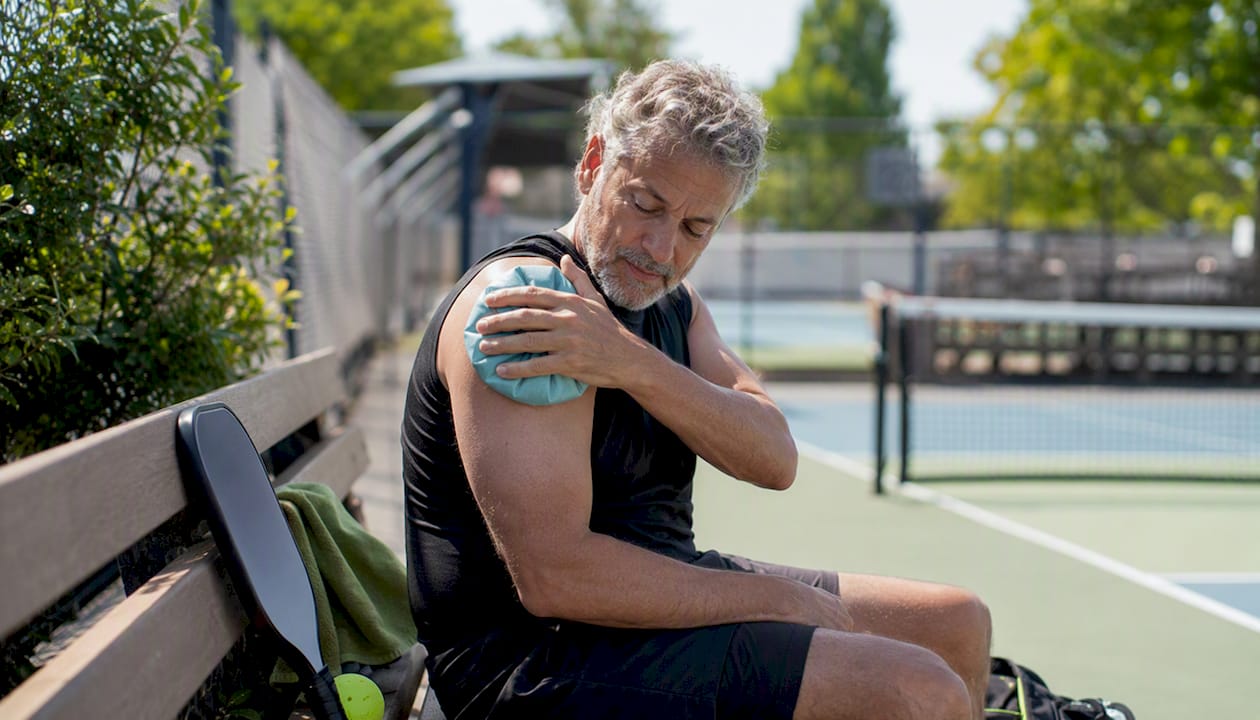
That said, the nationwide player survey drew from a broader age range and still found injury prevalence near 69% across the sample, which tells you younger and middle-aged players aren't exempt. They just tend to end up in outpatient clinics rather than EDs, and their injuries skew toward overuse and soft-tissue strain rather than fracture.
A few other patterns worth knowing:
- Sex differences show up in mechanism and injury type, with some datasets reporting more upper-extremity injuries in one sex and more lower-extremity strain patterns in the other, though the effect sizes vary by study
- Experience level matters more than age alone. Players with less than five years on the court, regardless of age, show elevated injury odds in several analyses, likely because movement patterns and court awareness haven't fully developed
- Play frequency compounds risk. Higher weekly session counts correlate with higher injury odds, which tracks with an overuse mechanism rather than a single acute event
- Session duration and BMI showed no consistent significant association with injury risk in the survey data, so don't overweight those factors relative to age, experience, and frequency
How Pickleball Injuries Actually Happen
Most pickleball injuries trace back to a small set of repeatable mechanisms, and recognizing them is half the prevention battle.
- Overuse and chronic strain from repetitive net play, volleys, and dinking motions that load the shoulder and wrist thousands of times per session
- Acute on-court pain events, often a sudden twinge in the knee or Achilles during a fast direction change
- Mechanical falls, frequently from backward movement or overreaching near the non-volley zone
- Being struck by the ball or paddle, which accounts for a smaller but real share of acute injuries
- Slips and trips on uneven court surfaces or from improper footwear
A common real-world example: a player lunges laterally to reach a wide dink, plants awkwardly on a knee that hasn't been trained for that rotational load, and tears cartilage in the meniscus. It's rarely a dramatic collision. It's usually a routine movement performed on a joint that wasn't conditioned for it, which is exactly the kind of stress point neuromuscular screening is designed to catch before it becomes an acute tear.
How Severe Are Pickleball Injuries, and Where Do People Get Treated?
Emergency department data significantly understates the real burden. The urban health system review found that the majority of initial pickleball injury encounters happened in orthopedic outpatient clinics, not the ED. That single figure reframes every ED-based national estimate as a floor, not a ceiling.
Surgical trends back this up. The same health system reported rising surgery volume alongside its large increase in presentations, with procedures including Achilles tendon repair, partial meniscectomy, and rotator cuff repair among the more frequently performed operations tied to pickleball injuries.
Time-loss matters as much as severity. The nationwide survey's around two-fifths time-loss figure means a large share of injured players aren't just sore. They're sidelined entirely, which has real consequences for anyone using the sport for cardiovascular health, social connection, or competitive goals.
More Evidence Behind the Pickleball Injury Numbers
Two additional data sources round out the surveillance picture and explain why the "full burden" argument matters. The nationwide 1,758-participant survey wasn't limited to people who sought formal medical care. It captured injury and pain regardless of treatment setting, which is how it landed on that striking 35.9% ongoing-pain figure and the finding that roughly one in three players keeps competing through pain.
The large single-system retrospective review adds the clinical counterweight, confirming that outpatient orthopedic clinics, not EDs, absorb most of the initial caseload, while also tracking real surgical volume growth over nearly a decade of records.
Put together: national ED estimates near 24,461 for 2023 represent only the acute, ED-routed slice of a burden that survey data puts closer to seven in ten active players reporting some injury complaint annually. The true population-level injury count is almost certainly several multiples higher than any single ED-based figure suggests.
Where the Data Falls Short
No surveillance system here is complete, and knowing the gaps keeps you from overreading any single number.
- ED-only capture means NEISS-based estimates miss the majority of orthopedic outpatient visits
- Coding ambiguity in early years meant "pickleball" wasn't always a distinct injury code, likely undercounting pre-2018 estimates
- Regional variation exists since court density and player demographics differ sharply by state
- Small early-year samples make percent-change figures from 2012 to 2014 less statistically stable than recent-year comparisons
Long-term functional outcomes, pediatric injury trends, and randomized prevention trials remain thin in the current literature. The trend direction (rising) is robust across every source. The exact absolute count depends entirely on which data source you're reading.
What Players and Facilities Should Do With This Data
Turn these numbers into action with a short, prioritized list:
- Assess your own risk profile based on age, years of experience, and weekly play frequency, since those three factors predict injury odds more reliably than fitness level alone
- Build a multi-component warm-up into every session, not just stretching
- Schedule dedicated neuromuscular and strength work at least twice weekly if you play more than twice a week
- Inspect footwear and court surfaces before every session, especially on outdoor or converted tennis courts
- Track load, not just pain, since nearly a third of players in the survey data kept playing through symptoms that likely needed rest
Facility managers and coaches should consider standardized injury logging for their programs. Clinicians treating recreational athletes should ask specifically about pickleball participation, since coding ambiguity has historically caused undercounting in medical records.
Pro Tip: Seek medical evaluation for any time-loss injury, persistent pain lasting more than a week, or a sense of joint instability. Waiting it out is exactly the pattern that turns a manageable strain into a surgical case.
Why These Pickleball Injury Trends Matter to Me
These numbers aren't abstract to me. A sport built around accessibility, quick rallies, and multi-generational play only stays that way if the injury curve doesn't outpace the participation curve. What strikes me most is the 35.9% ongoing-pain figure. That's not a story about accidents. It's a story about players quietly normalizing pain because nobody flagged the stress point early enough. Prevention data exists. The gap is application, not evidence.
A Smarter Way to Catch Injury Risk Before It Becomes a Statistic
The data throughout this article points to one consistent theme: most pickleball injuries build up before they show up. Overuse patterns, uneven loading in the shoulder and knee, and repeated stress on joints that never got screened are exactly what turn a routine lateral lunge into a meniscus tear. Playonpickle was built around that gap.
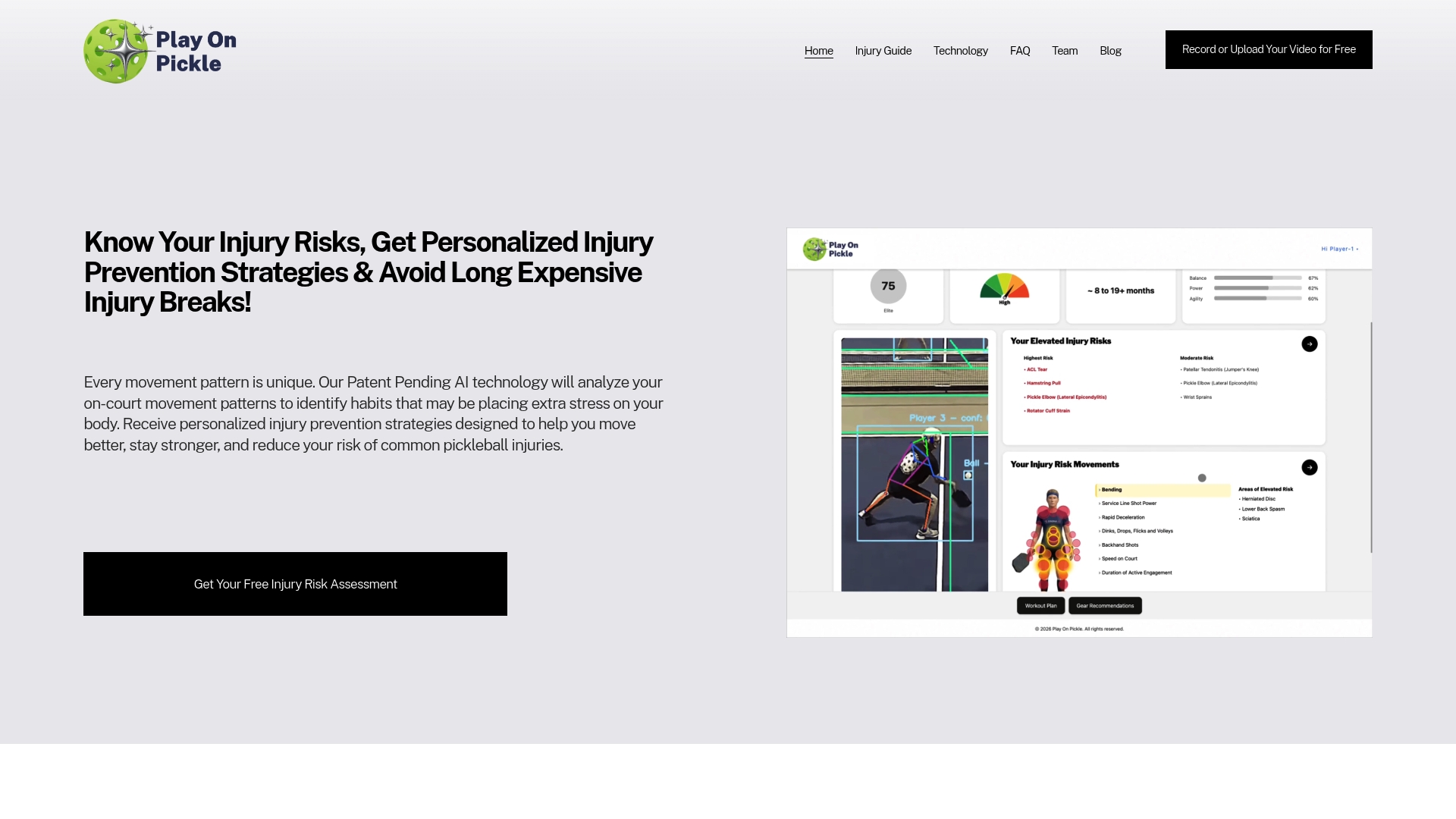
Playonpickle uses AI-powered movement analysis to review video of your own play, flag the specific biomechanical stress points putting you at risk, and generate a personalized exercise plan built around your actual movement patterns rather than generic advice. It's the same neuromuscular and load-management approach the research above recommends, just tailored to your body instead of a population average. If you've read this far and started wondering what your own knee, shoulder, or wrist mechanics look like under that kind of scrutiny, try the free assessment at Playonpickle and see what your movement data actually shows.
Frequently Asked Questions
How common are pickleball injuries? Survey data puts 12-month injury prevalence at nearly 69% among active players, while national ED estimates show a rising but smaller slice of that burden, reaching an estimated 24,461 visits in 2023.
What is the most common pickleball injury?
Are pickleball injuries increasing? Yes. NEISS-derived national estimates show a statistically significant rise over the past decade, and a single health system reported a significant jump in presentations between 2022 and 2023 alone.
Who is most at risk for pickleball injuries? Players over 60, those with less than five years of experience, and anyone playing multiple sessions weekly without conditioning work show the highest injury odds across current studies.
Do most pickleball injuries require surgery? No. Most injuries are strains, sprains, or overuse conditions treated non-surgically, though fractures, meniscus tears, and Achilles ruptures do drive a documented rise in surgical volume at some health systems.
This article is general information, not a substitute for advice from a qualified doctor. Consult a qualified healthcare professional about your own circumstances before acting on anything here.
Sources
- Understanding Injury Patterns and Predictors in Pickleball Players: A Nationwide Study of 1,758 Participants - PMC
- National Electronic Injury Surveillance System (NEISS) - CPSC
- Pickleball-related Orthopaedic Injury Presentations to a Large Urban Healthcare System From 2015 to 2024 - DOI (JAAOS Global)
Recommended
- Pickle Elbow, FOOSH… — Play On Pickle - Smart Pickleball Fitness
- Blog | Improve Your Game Now — Play On Pickle - Smart Pickleball Fitness
- Celebrate National Pickleball Day: Play Harder, Move Smarter, and Stay Injury-Free — Play On Pickle - Smart Pickleball Fitness
- The Dink Movie — Play On Pickle - Smart Pickleball Fitness