
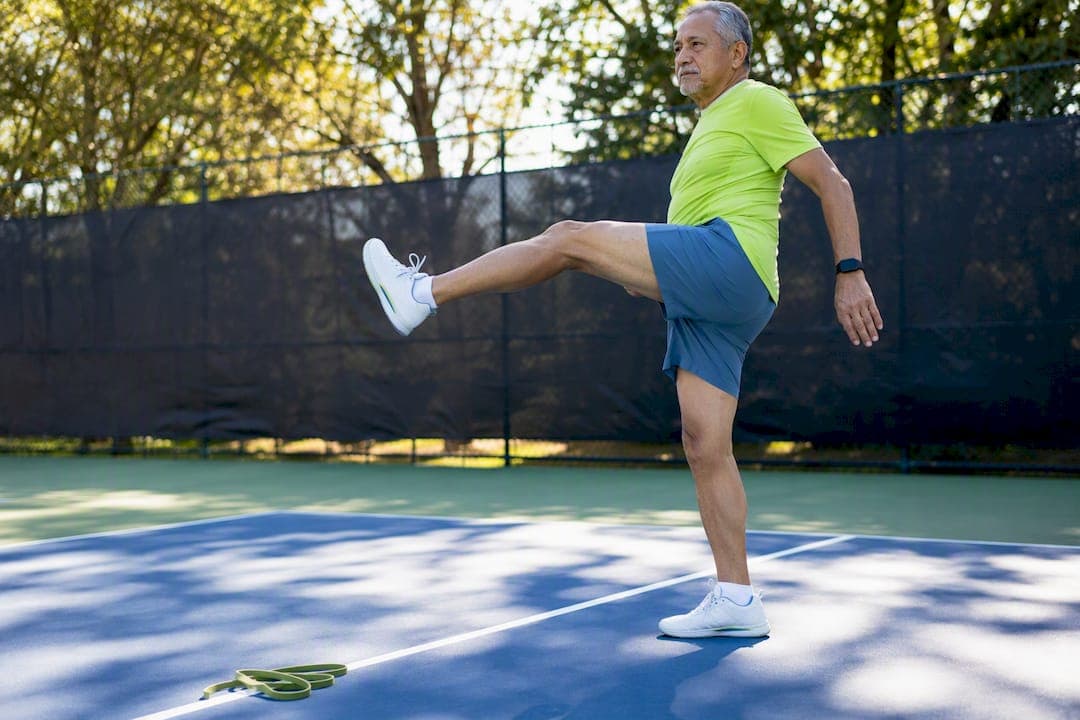
A 5 to 10 minute dynamic warm-up, done before every match, is the single highest-leverage habit for a senior player's joints — see this mobility restoration checklist for athletes for practical drills beyond the courtside warm-up. Pair that with four exercises that show up in almost every injury-prevention recommendation for the sport: lateral band walks, single-leg balance holds with eccentric calf lowers, band external rotations, and glute bridges. Work within a pain-free range, and if you're returning from a recent injury, check with a physical therapist before loading anything new.
TL;DR:
- A 5 to 10 minute dynamic warm-up focusing on full-range movement is essential for preparing aging joints for the demands of pickleball.
- Specific exercises like lateral band walks, glute bridges, external rotations, and eccentric calf raises target common injury-prone joints and should be incorporated regularly.
- Training frequency of two strength sessions and two to three mobility or balance drills weekly can significantly improve joint stability within 4 to 6 weeks.
- Adjust exercises for conditions like arthritis or osteoporosis by favoring low-impact, joint-friendly movements and avoiding deep or twisting loads.
- Personalized movement assessments can identify unique stress points, helping tailor routines that better protect individual biomechanics during play.
Table of Contents
- What is the best senior pickleball exercises warm-up before playing?
- Targeted Exercises for Every Joint Pickleball Puts at Risk
- How Often Should Seniors Train Around Their Pickleball Schedule?
- Safety Modifications and Warning Signs to Watch For
- Cooldown, Hydration, and Recovery After You Play
- Where Play On Pickle Fits Into Your Training
- Cardio Conditioning That Matches How Pickleball Actually Moves
- Sharpening Reaction Time and Hand-Eye Coordination
- Adjusting Your Routine for Arthritis, Osteoporosis, and Other Conditions
- Why Most Senior Fitness Advice Misses the Point
- Sources
What is the best senior pickleball exercises warm-up before playing?
Static stretching, the kind where you hold a hamstring stretch for 30 seconds, doesn't do much to prep aging joints for the sudden lateral cuts and overhead reaches pickleball demands. Dynamic, motion-based warm-ups that keep you moving through a full range work better, because they raise tissue temperature and rehearse the actual movement patterns you're about to use on the court. Think of it as a dress rehearsal, not a stretch session.
A courtside warm-up should take between 5 and 10 minutes. Here's a sequence that covers the joints pickleball stresses most:
- Light aerobic activation (2 to 3 minutes). Brisk walking, marching in place, or easy shuffling to raise your heart rate and body temperature.
- Hip openers and leg swings (1 minute each side). Front-to-back and side-to-side leg swings, holding a fence or paddle for balance if needed.
- Ankle prep and calf raises (1 minute). Ankle circles followed by 10 to 15 slow calf raises to wake up the lower leg.
- Torso rotations and shadow footwork (2 minutes). Gentle trunk twists paired with footwork you'd actually use: split steps, small lateral shuffles, a mock dink motion.
- Band pull-aparts for the shoulders (30 to 60 seconds). A light resistance band pulled apart at chest height, priming the rotator cuff for overhead and volley shots.
This general structure lines up with the pre-match routine SilverSneakers recommends for older players: modified bird dogs, walking lunges, trunk twists, side lunges, and band pull-aparts, all done slowly and continuously rather than in an explosive burst.
If balance is a concern, do the leg swings and lunges next to a chair or fence you can rest a hand on. Shorten the range of motion rather than skipping the movement, and slow the tempo down until it feels controlled.
Pro Tip: If you only have five minutes, don't cut the shoulder or ankle work to save time. Elbow and ankle injuries are two of the most common complaints among recreational players, and both respond well to just 60 seconds of prep.
Stop immediately if you feel sharp pain anywhere, not just soreness. Warming up should feel like priming an engine, not like a workout in itself.
Targeted Exercises for Every Joint Pickleball Puts at Risk
Pickleball asks a lot of the hips, shoulders, wrists, and ankles in ways most recreational players never train for directly. The exercises below map to specific injury patterns common in the sport, and each one connects to a movement you'll recognize from the court.
Hips and knees:
- Lateral band walks: loop a resistance band around your ankles or above your knees, and step sideways for 10 to 15 steps each direction. This directly trains the lateral push-off you use to reach a wide dink.
- Bodyweight or goblet squats: 2 to 3 sets of 10 to 15 reps, building the leg strength you need for the low ready position.
- Step-ups onto a low step or curb: 2 sets of 10 reps per leg, useful for the single-leg loading that happens when you lunge for a drop shot.
Posterior chain and hip hinge:
- Glute bridges: lie on your back, feet flat, and lift your hips while squeezing your glutes. Two to three sets of 12 to 15 reps builds the hip strength that protects your lower back during quick direction changes.
- Standing hip hinges: practice pushing your hips back while keeping a flat spine, rehearsing the position you're in when you reach low for a return.
Shoulders and rotator cuff:
- Band external rotations: elbow tucked at your side, rotate your forearm outward against light band resistance for 12 to 15 reps. This is the single best move for shoulders that take repeated overhead swings.
- Face pulls with a band, targeting the upper back muscles that keep your shoulder blades stable during serves.
Wrist and elbow:
- Eccentric wrist extensions with a 1 to 3 pound weight, lowering slowly over 4 seconds. Eccentric loading like this triggers collagen remodeling in the tendon, which is why it's a go-to for preventing what many players call pickle elbow.
Ankle and balance:
- Single-leg balance holds paired with eccentric calf lowers: stand on one leg, rise onto your toes, then lower slowly over 4 to 5 seconds. Hold a chair back if you need support at first.
Core and anti-rotation:
- Dead bugs and pallof presses: these train your core to resist rotation, which is exactly what happens when you reach for a ball off to one side without losing balance.
The most common form error across all of these is rushing the eccentric (lowering) phase. A fast drop trains almost nothing. Slow it down and you'll feel the difference within two sessions.
Pro Tip: Pick one exercise from each category rather than trying to do all of them every session. Three well-executed moves beat eight rushed ones.
How Often Should Seniors Train Around Their Pickleball Schedule?
Two strength sessions per week, 30 to 40 minutes each, produce measurable improvements in joint stability for older adults, usually within 4 to 6 weeks. Add 2 to 3 short mobility or balance sessions, and you have a routine that supports play without competing with it.
- Beginner plan: play 2 days, strength training 2 days, one dedicated mobility session, and at least one full rest day.
- Intermediate plan: play 3 to 4 days, strength training 2 days, balance work 2 days, layering balance drills on lighter play days or right after warm-up.
- Progression timeline: expect noticeable improvements in balance and joint stability by weeks 4 to 6, with more meaningful gains in on-court agility by weeks 8 to 12.
Schedule strength days on non-consecutive days so muscles have time to recover, and never stack two heavy sessions back to back. Age-related muscle loss, known as sarcopenia, makes consistent resistance training more important with each passing decade, not less.
Safety Modifications and Warning Signs to Watch For
Not every exercise needs to be done at full range or full load. Scale it back instead of skipping it entirely:
- Use a chair or countertop for support during single-leg balance work if you feel unsteady.
- Reduce the range of motion on squats or lunges if a joint feels tight, rather than forcing depth.
- Switch to isometric holds (holding a position without moving) if a joint is acutely sore.
- Loosen band tension on any resistance exercise that causes discomfort partway through.
Stop and check in with a clinician if you notice sharp joint pain, swelling that doesn't go down within a day, or new dizziness and balance loss during training. On the court, avoid backpedaling; pivot and turn instead, since backward sprinting is a common way seniors roll an ankle or strain a hamstring. Supportive court shoes with good lateral stability also matter more than people expect. If pain persists past a week or two of modified training, a movement assessment or physical therapy referral is worth the visit.
Cooldown, Hydration, and Recovery After You Play
A proper cooldown takes just 3 to 5 minutes: move from dynamic to static stretching for the hips, calves, chest, and shoulders once you're off the court. This is the one time static holds make sense, since your muscles are already warm and you're not about to sprint.
Hydration starts before the match, not after. Sip 16 to 20 ounces of water in the two hours leading up to play, and keep drinking through the session. If you're sweating heavily, especially in summer heat, add an electrolyte drink to replace sodium losses. Within 30 to 45 minutes of finishing, eat a snack with 20 to 30 grams of protein, Greek yogurt or a protein shake both work, to support muscle repair. Prioritize sleep that night; recovery happens while you rest, not while you train.
Where Play On Pickle Fits Into Your Training
The exercises above cover the highest-value moves for most senior players, but everyone's biomechanics are different. Play On Pickle analyzes video of your own movement patterns using computer vision technology, flagging specific stress points in your hips, shoulders, or wrists and generating a personalized exercise plan based on how you actually move, not a generic list. If you've had a nagging shoulder ache or keep rolling the same ankle, that kind of targeted feedback catches issues a standard warm-up routine can't.
This piece was written by Drona. For more on movement patterns and injury prevention specific to pickleball, visit the Play On Pickle blog.
Cardio Conditioning That Matches How Pickleball Actually Moves
Pickleball is a stop-start sport, short bursts of sprinting followed by brief recovery, not a steady-state jog. Training your cardio system to match that pattern pays off more than long, slow walks alone.
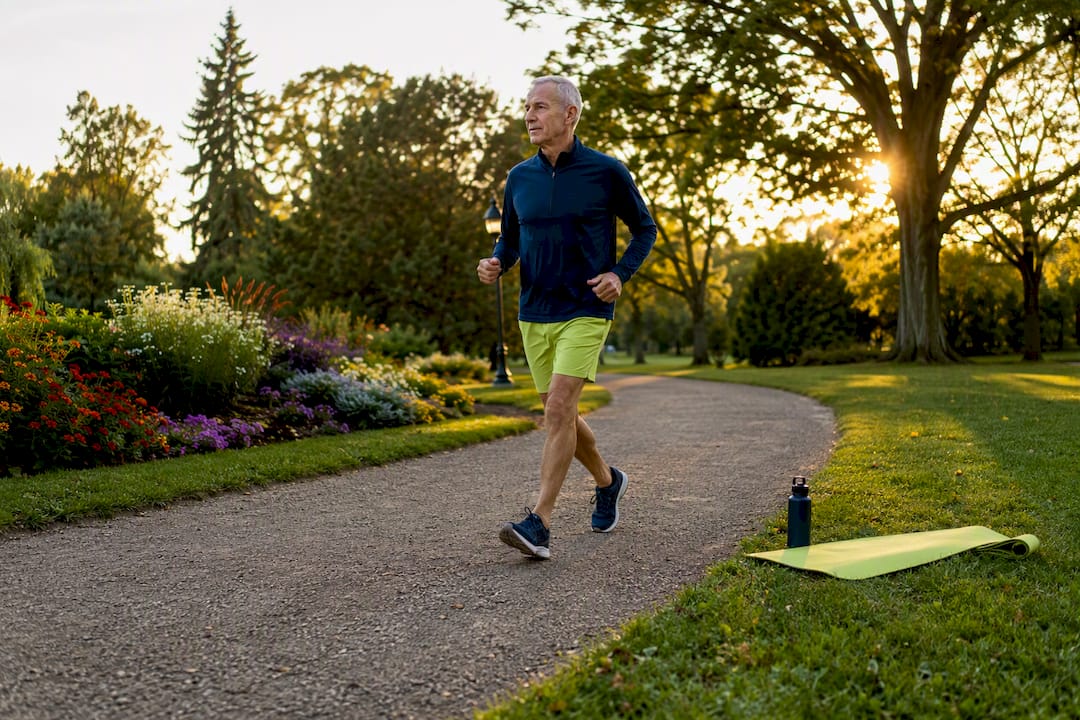
Interval-style walking works well for most seniors: alternate 1 minute of brisk walking with 1 minute of easy walking for 15 to 20 minutes, two or three times a week. Stationary cycling with intervals accomplishes the same thing with less joint impact, which matters if your knees are cranky. Stair climbing, even a few flights at a moderate pace, builds the leg endurance you need for a long third-set rally.
Swimming laps is another low-impact option that builds cardiovascular capacity without pounding your joints, useful on days you want conditioning without the impact of court play. Whatever you choose, the goal is training your heart and lungs to recover quickly between bursts of effort, since that's exactly what happens during a real match: sprint for the ball, brief pause, sprint again.
Two to three cardio sessions a week, separate from your actual playing days, is enough to build a meaningful base. You don't need marathon training. You need a system that can handle repeated 5 to 10 second bursts without leaving you gasping by game three.
Sharpening Reaction Time and Hand-Eye Coordination
Reaction time naturally slows with age, but it responds to training the same way strength does. The skill is trainable, not fixed.
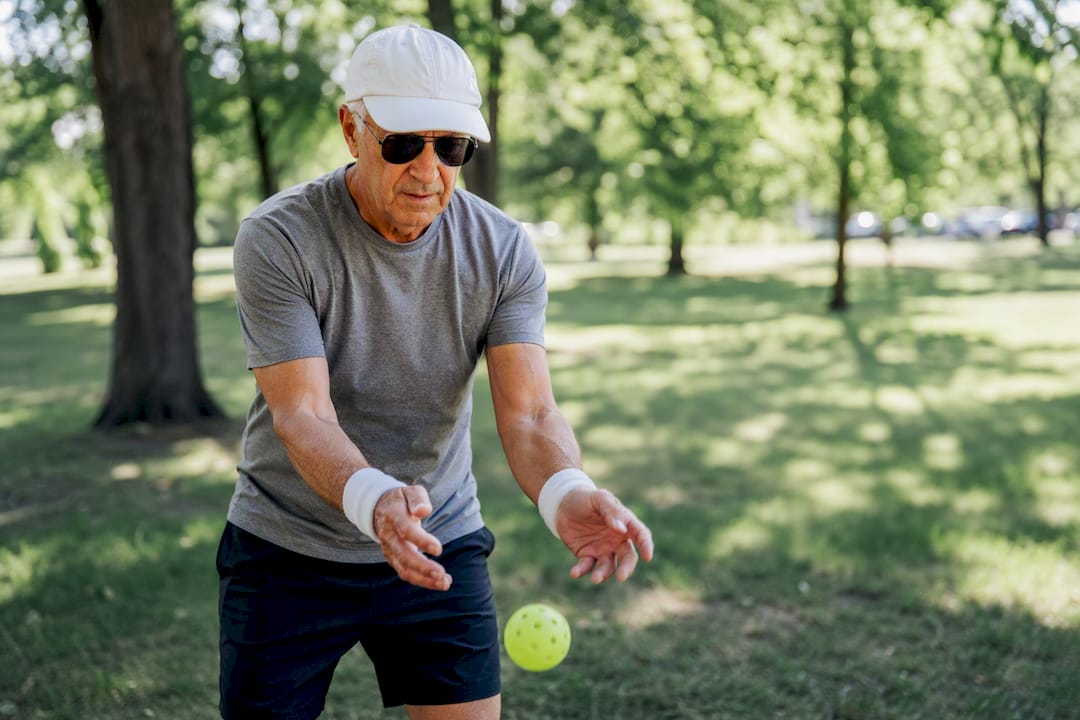
Wall ball drills are the simplest starting point: stand a few feet from a wall and toss a tennis ball or pickleball against it, catching the rebound with alternating hands. This trains the visual tracking and quick-hand response you need for a fast dink exchange at the net. Reaction ball drills, using a small ball with irregular bounces, add unpredictability that mimics how a real pickleball skips off a bad bounce.
Paddle-and-ball tapping, bouncing the ball on your paddle face while walking or shifting your stance, builds the fine hand control that separates a clean dink from a popped-up error. Partner drills where someone calls out a direction and you react by stepping that way combine reaction time with the footwork you'll actually use at the kitchen line.
Even 5 to 10 minutes of these drills, two or three times a week, sharpens the connection between what your eyes see and how fast your hands respond. Older players sometimes assume slower reactions are simply part of aging, but consistent practice narrows that gap noticeably over a few weeks.
Adjusting Your Routine for Arthritis, Osteoporosis, and Other Conditions
Chronic conditions change how you should approach some of these exercises, but they rarely mean you should avoid exercise altogether.
If you have arthritis, favor lower-impact versions of strength moves: swap jumping or high-impact footwork for step-based drills, and use a resistance band instead of a heavy weight for joint-friendly loading. Warm water or a longer warm-up period before training can also ease stiffness in affected joints. Move through pain-free ranges and build tolerance gradually rather than pushing through a flare-up.
For osteoporosis or low bone density, weight-bearing exercises like walking, step-ups, and bodyweight squats are valuable for maintaining bone density, but avoid deep forward-bending or twisting movements under load, since those positions carry higher fracture risk for compromised spines. Balance training becomes especially important here, since a fall is the real threat, not the exercise itself.
If you manage a cardiovascular condition, keep your interval training moderate and check with your doctor about appropriate heart rate ranges before starting anything new. In every case, the safest path forward is working with a physical therapist or your physician to adjust these baseline exercises to your specific diagnosis rather than skipping training out of caution.
Why Most Senior Fitness Advice Misses the Point
Most articles about exercise for older pickleball players hand you a list of moves and call it a day. That's not wrong, exactly, but it skips the part that actually matters: understanding why a specific exercise protects a specific joint during a specific shot. Lateral band walks aren't valuable because they're a good hip exercise in the abstract. They're valuable because they train the exact push-off you use reaching for a wide dink, and that specificity is what gets people to actually stick with a routine.
The conventional advice also treats every senior player the same, as if a 65 year old with a clean injury history and a 72 year old recovering from a rotator cuff strain need identical programs. They don't. That's the gap generic exercise lists can't close, and it's exactly where a personalized movement assessment, like the kind Play On Pickle offers, adds something a blog post cannot: a look at your own biomechanics rather than an average player's.
If you take one thing from this article, let it be this: prioritize the warm-up and the eccentric work before you worry about anything else. Everything else compounds from there.
— Drona
Sources
- HSS: static vs dynamic stretching / move-better
- 6 best exercises to do before pickleball – SilverSneakers