
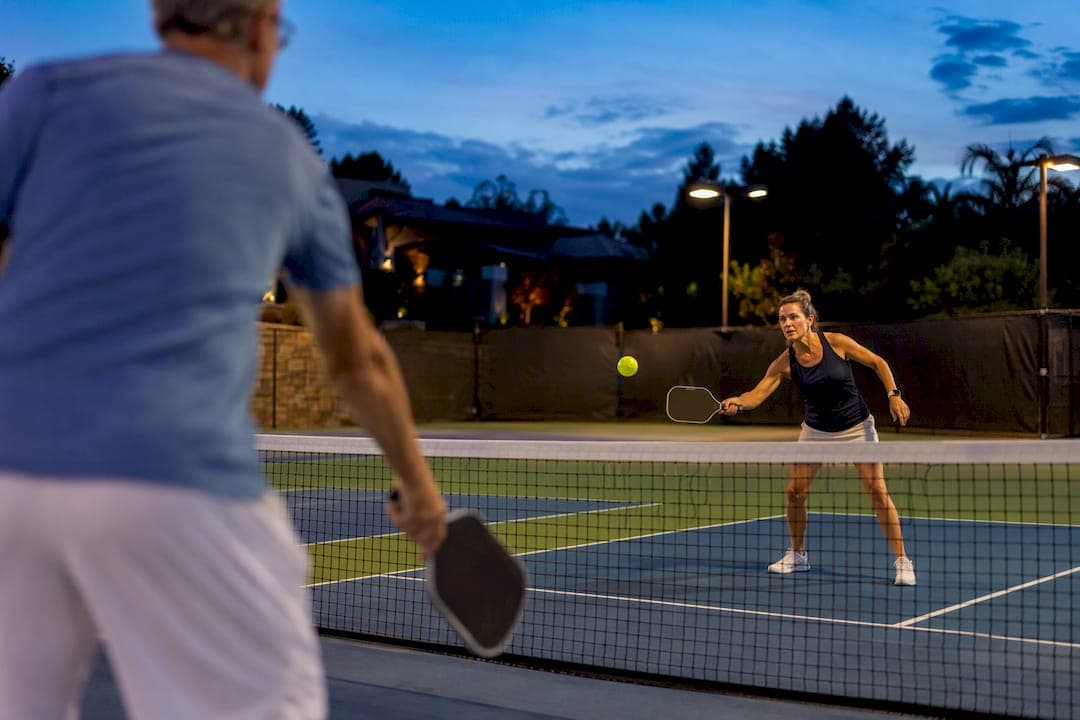
A dink is a soft, controlled shot hit from the kitchen line that lands in the opponent's kitchen, and its whole job is to keep the ball low and unattackable. The single mechanical habit that fixes more dinks than any other adjustment is meeting the ball out in front of your body with a relaxed grip and a short push, not a swing. Preset your paddle face before the ball arrives, then step your feet to the contact point instead of reaching with your arm.
TL;DR:
- Correct contact point out in front of the body and a relaxed grip are crucial to prevent pop-ups and ensure consistent, low, and unattackable shots.
- Proper footwork involves a split-step, small lateral shuffles, and leading with the paddle-side foot to maintain balance and control during dinks.
- Targeting crosscourt dinks two feet inside the sideline with tempo variation and tactical adjustments enhances safety and disrupts opponents' rhythm.
- Breaking down mistakes like late contact or long dinks requires addressing grip tension and foot positioning, often revealed through video analysis.
- Mechanical focus on stance, contact point, and movement beats equipment upgrades for improving dinks and reduces injury risk over time.
Table of Contents
- Why the dink exists and what your paddle needs to do
- Grip, stance, and the exact contact point to aim for
- Footwork patterns that keep contact consistent
- Where to place dinks and when to change tactics
- A drill plan that builds dinks step by step
- Diagnosing your most common dink mistakes
- How video analysis reveals what your eyes miss
- Why mechanics beat gadgets for most players
- Turning your dink data into a training plan
- Sources
- FAQ
Why the dink exists and what your paddle needs to do
The dink exists because of the non-volley zone, the 7-foot area on each side of the net where players cannot volley the ball, as defined in the USA Pickleball official rulebook. That zone forces the ball to bounce or be hit softly enough that neither side can smash it, and net height (36 inches at the sidelines, 34 inches at center) sets the bar the ball has to clear without popping up.

Three checkpoints govern a repeatable dink: a relaxed continental grip, contact out in front of your body, and a compact push-and-lift motion rather than a wristy swing, according to guidance on how to dink in pickleball. Get those three right and pop-ups and long balls mostly disappear, because both errors trace back to late contact or a grip that's too tight to control the paddle face.
Grip, stance, and the exact contact point to aim for
Set a continental grip, the same one you'd use to shake hands with the paddle edge up, and keep your pressure low, around 1 to 3 on a 10 point scale, according to dinking technique guidance. A tight grip stiffens your wrist and sends the ball long or into the net.
Your ready stance should have your feet shoulder-width apart, knees slightly bent, and your paddle held up in front of your chest, standing 1 to 3 feet behind the kitchen line so you have a buffer before the ball arrives, per positioning advice at the kitchen.
- Contact the ball a short distance in front of your lead foot, never behind your hip.
- Keep the paddle face open at a gentle angle at contact to lift the ball without scooping it.
- Preset that paddle angle before the ball crosses the net so your wrist stays out of the shot.
Pro Tip: Freeze your paddle face the moment you see the opponent's contact, then move your feet, not your arm, to get there.
Footwork patterns that keep contact consistent
Good dinks start before the ball arrives. A quick split-step as your opponent makes contact keeps your weight balanced and ready to shuffle in either direction.
- Land your split-step with knees soft, not locked, so you can push off instantly.
- Use small lateral shuffles instead of lunges. A lunge stretches your reach and drags contact behind your hip.
- When you step into the kitchen to take a short ball, lead with your paddle-side foot, then recover back behind the line before the next shot.
- Drill the pattern with a shuffle ladder or a feed-and-shuffle routine where a partner feeds balls to alternating sides.
Lateral shuffling and a low, wide stance also support joint stability, which biomechanical research on movement patterns links to more consistent paddle-sport mechanics.
Where to place dinks and when to change tactics
Crosscourt is the highest-percentage dink because the net is lower at the center and the diagonal gives you more room to clear it. Straight-ahead line dinks and middle dinks are riskier but useful for keeping an opponent from settling into a rhythm.
- Aim two feet inside the sideline rather than at the line itself to build in margin for error.
- Rotate your target every two or three shots so opponents can't anticipate the next dink.
- Only speed up when the ball sits clearly above net height. A ball at or below net level is a low-value attack.
Mixing targets and picking your attack moment turns a mechanically sound dink into a tactical weapon, a pattern covered in more depth in The Dink Movie.
A drill plan that builds dinks step by step
Start each session with a short solo warm-up. Drop-and-dink against a wall or fence checks your preset angle and contact point without the pressure of a live rally, though wall work alone doesn't replicate real trajectory or spin, according to dinking drills guidance.
- Cooperative crosscourt counting: rally dinks with a partner and count consecutive shots, targeting 30 in a row before pushing for 50, a benchmark used to build dink consistency.
- Backhand isolation: hit only backhand dinks down the line for two minutes to remove the temptation to run around the shot.
- Figure-8: alternate crosscourt and middle targets in a continuous pattern to train footwork and direction changes together.
- Triangle zone drill: a partner feeds to three marked zones so you practice adjusting contact point on the move.
- Multi-ball feeding: a coach or partner feeds balls at a steady tempo so you can repeat mechanics without waiting on a rally.
- Pressure games: three-dink-then-any-shot, a tug-of-war rally, or a controlled counter drill where one player must stay behind the line.
A simple session template works for most players: a warm-up, two skill drills, one pressure drill, and a short cool-down, a structure similar to the pacing in a 90-day training plan. Track one number, unforced dink errors per game, and expect it to drop as your crosscourt count climbs toward 50.
Pro Tip: Add movement or a second target zone only after you can string together 30 clean crosscourt dinks; adding difficulty too early just reinforces bad contact habits.
Diagnosing your most common dink mistakes
Pop-ups usually come from a grip that's too tight or contact that's too late, both of which force the ball upward off the paddle face. Loosen your grip pressure and drill drop-and-dink reps to reset your timing.
- Long dinks often mean your paddle face is too open or your wrist is adding lift it shouldn't. Preset the angle at 15 to 30 degrees and keep the wrist still.
- Late contact and reaching trace back to footwork, not arm speed. Move your feet so contact lands 12 to 18 inches ahead of your lead foot, a fix detailed in kitchen positioning coaching.
- Speeding up too early comes from impatience. Hold the height rule as a hard line: don't attack until the ball is clearly above the net.
How video analysis reveals what your eyes miss
Movement analysis reads timing, contact offset, and recovery asymmetry from uploaded video, the same faults that show up as pop-ups, late reaches, or a paddle face that drifts open mid-stroke. Those metrics translate directly into the checkpoints above.
- A side view often shows contact happening behind the hip rather than 12 to 18 inches in front.
- A front view can catch a delayed split-step or a paddle that isn't preset before the ball arrives.
- Both angles help confirm whether a paddle face is drifting past 30 degrees open, a common cause of long dinks.
Filming a short rally from both angles gives you a quick self-check before deciding which drill to prioritize.
Why mechanics beat gadgets for most players
Recreational players chase paddle upgrades before fixing footwork, and it's backward. Contact point and stance produce faster gains than any equipment swap, and they're free to practice. The bigger risk in skipping mechanical work is physical: reaching for dinks with a stiff arm and locked knees adds strain that shows up as forearm or shoulder soreness over a season, a pattern worth understanding through resources on pickle elbow and forearm mechanics. Players who want to see their own movement data rather than guess at it have tools built for exactly that now.
— Drona
Turning your dink data into a training plan
Once you know which checkpoint is breaking down, mechanical cues only go so far without seeing your own movement on screen. Play On Pickle analyzes your uploaded video to flag contact point, timing, and recovery patterns specific to your body, then builds a short exercise plan around what it finds.

A first trial typically surfaces the same faults covered here: late contact, an over-rotated paddle face, or an uneven recovery step, then pairs each one with a targeted drill. The goal isn't just cleaner dinks. It's steadier footwork and fewer of the overuse strains that come from compensating for bad mechanics match after match. Start with the monthly or annual subscription, or check the free tripod offer available with the monthly plan to make filming your first session easier.
Sources
- USA Pickleball official rulebook
- How to Dink in Pickleball: Grip, Stance, and Swing Tips (Pickleball US)
FAQ
How do you improve your dinking in pickleball?
Fix contact point first: meet the ball 12 to 18 inches in front of your lead foot using footwork, not a reaching arm, then keep grip pressure low so the paddle face stays soft on contact. Layer in a crosscourt counting drill and track unforced errors to measure progress over time.
What is the hardest shot to hit in pickleball?
Consistency opinions vary, but the dink is widely considered one of the toughest shots to master because it demands soft hands and precise footwork rather than raw power. Third-shot drops and backhand dinks are frequently cited as the most error-prone variations for recreational players.
What is the 10 second rule in pickleball?
This isn't an official rule defined in the USA Pickleball rulebook and definitions vary by source. If you've heard it referenced locally, check with your league or facility for their specific serving or pace-of-play guidelines.
Is dinking more important than power in pickleball?
For most rallies at the kitchen line, control matters more than power because the non-volley zone rule prevents either side from smashing the ball out of the air. Coaching consensus favors building a reliable dink before adding speed, since contact point and footwork produce bigger gains for recreational players than power ever does.