
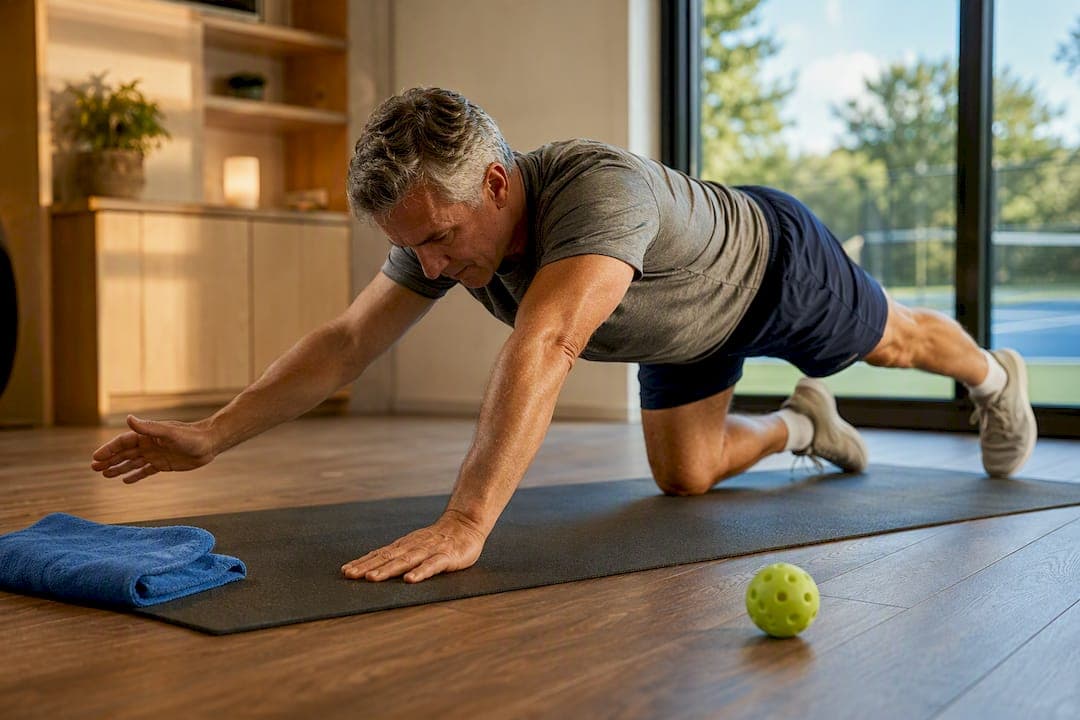
Most back pain after pickleball is a lumbar muscle strain from repeated lateral lunges and twisting reaches, not a structural injury, and it usually settles with a few days of rest and targeted core work. Keep playing through dull, localized soreness that eases with movement. Stop immediately and get evaluated if pain is sharp, radiates down a leg past the knee, or comes with numbness or weakness. Either way, your next move is the same: back off aggravating drills, start gentle mobility work today, and rebuild with core and hip training before you ramp volume back up.
TL;DR:
- Most back pain after pickleball is from muscle strain rather than structural injury and typically resolves within one to two weeks with rest and gentle movement.
- Sharp pain, leg radiation, numbness, weakness, or unchanged symptoms after a week require immediate medical evaluation and potentially imaging.
- Proper warm-up, technique adjustments, and equipment choices can significantly reduce the risk of lumbar strain during play.
- An eight-week rehab program focused on core stabilization and hip mobility effectively restores pain-free function for most players.
- Play On Pickle's movement analysis uses computer vision to identify specific on-court movement faults, enabling personalized injury prevention plans.
Table of Contents
- Why Pickleball Movements Load Your Lower Back
- Soreness Vs. Injury: How to Tell the Difference Fast
- Common Pickleball-Related Back Injuries
- How to Prevent Back Pain Before It Starts
- An 8-Week Rehab Path Back to Pain-Free Play
- When to See a Clinician, and What Imaging Actually Tells You
- How Play On Pickle's Movement Analysis Fits Into This Plan
- Why Playing It Safe Beats Playing Through It
- Try Play On Pickle's Movement Analysis
- Sources
Why Pickleball Movements Load Your Lower Back
Pickleball asks your spine to do things it rarely does in daily life: lunge sideways while rotating your torso to slap a low ball, then reverse direction a second later. That combination of lateral load and rotation creates torsional and shear forces on the lumbar spine that a straight-ahead sport like running almost never produces. Add a wide, off-balance reach for a drop shot, and the disc and facet joints absorb the brunt of it.
A few factors make this worse for certain players:
- A weak core lets the lumbar spine, rather than the hips and abdominals, absorb rotational force.
- Tight hips with limited internal rotation force the low back to compensate during lunges and pivots.
- Worn or unsupportive court shoes reduce lateral stability, increasing sway at the trunk.
- Age-related disc and joint changes lower the threshold for injury during sudden loading.
None of these factors act alone. Skipping warm-ups and playing several intense sessions a week compounds the load session after session, until a joint or muscle that was managing fine starts to fail.
Soreness Vs. Injury: How to Tell the Difference Fast
Normal muscle soreness after a hard pickleball session typically peaks 12 to 48 hours later, feels like a dull ache across the low back, and loosens up as you move around. Something more serious behaves differently, and the signs are worth memorizing:
- Sharp, sudden pain during a specific movement, rather than a gradual ache, points toward a strain or joint irritation rather than simple fatigue.
- Pain that travels down one leg past the knee, especially with numbness or tingling, suggests nerve involvement, not muscle soreness.
- New weakness in a leg or foot, or any change in bladder or bowel control, is a red flag that requires urgent evaluation, not a wait-and-see approach.
- Pain that doesn't improve after a week or two of rest, light stretching, and reduced activity deserves a clinical opinion rather than continued self-treatment.
If none of those apply, a one to two week trial of relative rest, gentle mobility, and light core activation is a reasonable, evidence-supported first move.
Common Pickleball-Related Back Injuries
A 2025 retrospective review of 1,527 orthopedic pickleball injuries found that 135, or 8.8%, involved the spine, and 84% of those were lumbar. Here's what typically shows up:
- Lumbar muscle strain: a localized ache that worsens with bending or twisting and usually resolves in one to two weeks with rest and light movement.
- Herniated disc with radiculopathy: leg pain, numbness, or tingling that follows a nerve pattern, often taking longer to resolve and sometimes requiring physical therapy or imaging.
- Facet joint or degenerative pain: discomfort triggered by spinal extension and rotation, common in players over 40 and prone to recurring flares.
- Sciatica: shooting pain from the low back or buttock down the leg, frequently limiting the ability to lunge, pivot, or sit through a match.
How to Prevent Back Pain Before It Starts
Prevention beats rehab every time, and most of it takes less effort than people assume. Start every session with a five-minute back-specific warm-up: cat-cow stretches, hip swings, and a few gentle bird dogs to wake up the core before you take a single swing.
Technique matters just as much as preparation:
- Step into wide balls instead of reaching for them with your spine.
- Bend at the hips and knees, not the low back, when you go low for a dink.
- Brace your core before lunging laterally, the same way you'd brace before lifting something heavy.
- Rotate from your hips, not your lumbar spine, when you generate power on a groundstroke.
Equipment and scheduling round out the picture. Court shoes built for lateral support reduce the trunk sway that stresses your discs, and capping intense play at three heavy sessions a week while you're rebuilding tolerance keeps cumulative load from outpacing recovery. Clinics frequently cite step-versus-reach and hip-driven rotation as the two most effective on-court corrections for players nursing a cranky back.
Pro Tip: Do your warm-up on the actual court surface, not in the parking lot. Practicing the lateral shuffle and split step on the same footing you'll play on primes your nervous system for the exact movement patterns that cause most strains.
An 8-Week Rehab Path Back to Pain-Free Play
Recovering from a lumbar strain or mild disc irritation isn't about waiting it out. It's about sequencing the right work at the right time. Clinical rehab literature on racket-sport athletes backs a staged approach built around core stabilization and hip mobility work, which plays out over roughly eight weeks for most recreational players:
- Weeks 1 to 2: Rest from the specific movements that aggravate your back (hard lateral lunges, twisting overheads). Focus on pain control and gentle walking or swimming to keep blood flow moving without loading the spine.
- Weeks 3 to 6: Introduce the McGill Big 3, the curl-up, bird-dog, and side plank, alongside hip internal rotation drills and banded clamshells for glute strength. Progressively add load as symptoms allow.
- Weeks 7 to 8: Reintroduce sport-specific movement, retrain lunge and rotation technique on court, and cap play at three days a week while your tolerance rebuilds.
Progress looks like less morning stiffness, longer pain-free rallies, and no flare-up the day after a session. If any stage triggers leg symptoms or sharper pain, drop back a stage rather than pushing through it. The McGill Big 3 combined with hip mobility work is one of the more durable, evidence-backed protocols available for recreational-level lumbar rehab, and it's the same framework physical therapists use well beyond pickleball.
When to See a Clinician, and What Imaging Actually Tells You
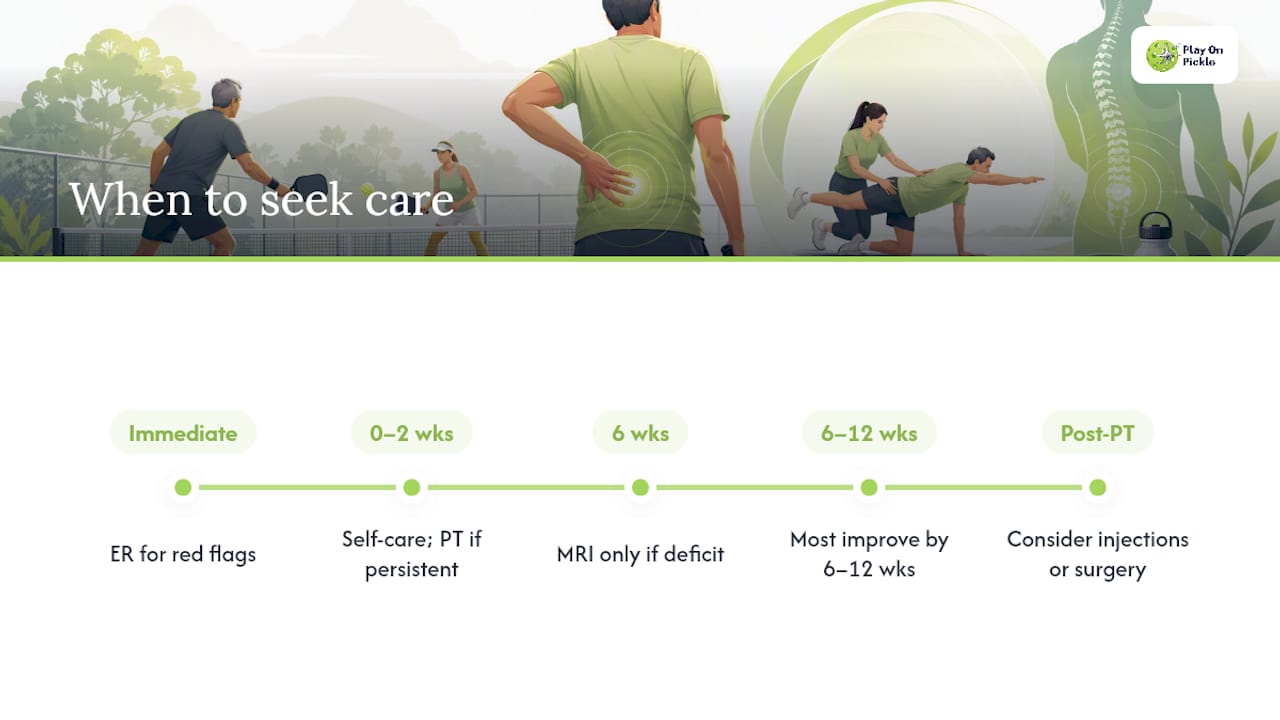
Two situations mean stop reading and get seen: new bladder or bowel changes, or progressive leg weakness. Both warrant an emergency room visit, not a wait-and-see week.
Outside those red flags, most disc herniations and lumbar strains improve substantially within six to twelve weeks of conservative care, and routine MRI in the first six weeks is generally unnecessary unless a clinician spots a progressive neurologic deficit. Physical therapy is the right first referral when pain persists beyond one to two weeks of self-managed rest, and it's often what orthopedic centers recommend before considering injections or surgical consults.
How Play On Pickle's Movement Analysis Fits Into This Plan
Everything above depends on identifying your specific movement fault, which is hard to do by feel alone. Playonpickle uses patented computer vision to analyze uploaded match or drill video and flag exactly where stress concentrates in your kinetic chain, whether that's hip rotation that's too tight, a lunge pattern that overloads one side, or a reach that substitutes for a step.
That maps directly onto the rehab and prevention work covered here:
- It identifies whether your lunges are rotation-deficient at the hip, which forces your lumbar spine to compensate.
- It generates a personalized set of corrective exercises rather than a generic stretching list.
- It gives recreational players, who rarely get access to formal movement screening, a practical entry point into the same kind of assessment a physical therapist would run.
For players working through the 8-week pathway above, that kind of feedback turns guesswork into a targeted plan.
Why Playing It Safe Beats Playing Through It
Rec players consistently underestimate how little prevention work it actually takes to stay in the game. Twenty minutes a week of core and hip training, done consistently, protects your back more reliably than any amount of toughing it out through soreness. Playing through pain doesn't build resilience. It just delays the inevitable rest period and usually extends it.
If you're over 40, accept a slower ramp back after any flare-up and schedule recovery days the same way you schedule matches. Track how your back responds week to week, and loop in a clinician if symptoms persist past a couple weeks of honest conservative care.
— Drona
Try Play On Pickle's Movement Analysis
There are other routes to fixing your back pain, generic stretching apps, a one-off physical therapy visit, guesswork from YouTube warm-up videos, but none of them look at your actual on-court movement. Playonpickle is the alternative to guessing what's wrong: upload a video of your play, and its computer vision technology pinpoints the exact lunge, rotation, or reach pattern loading your lumbar spine, then builds a personalized exercise plan around it.
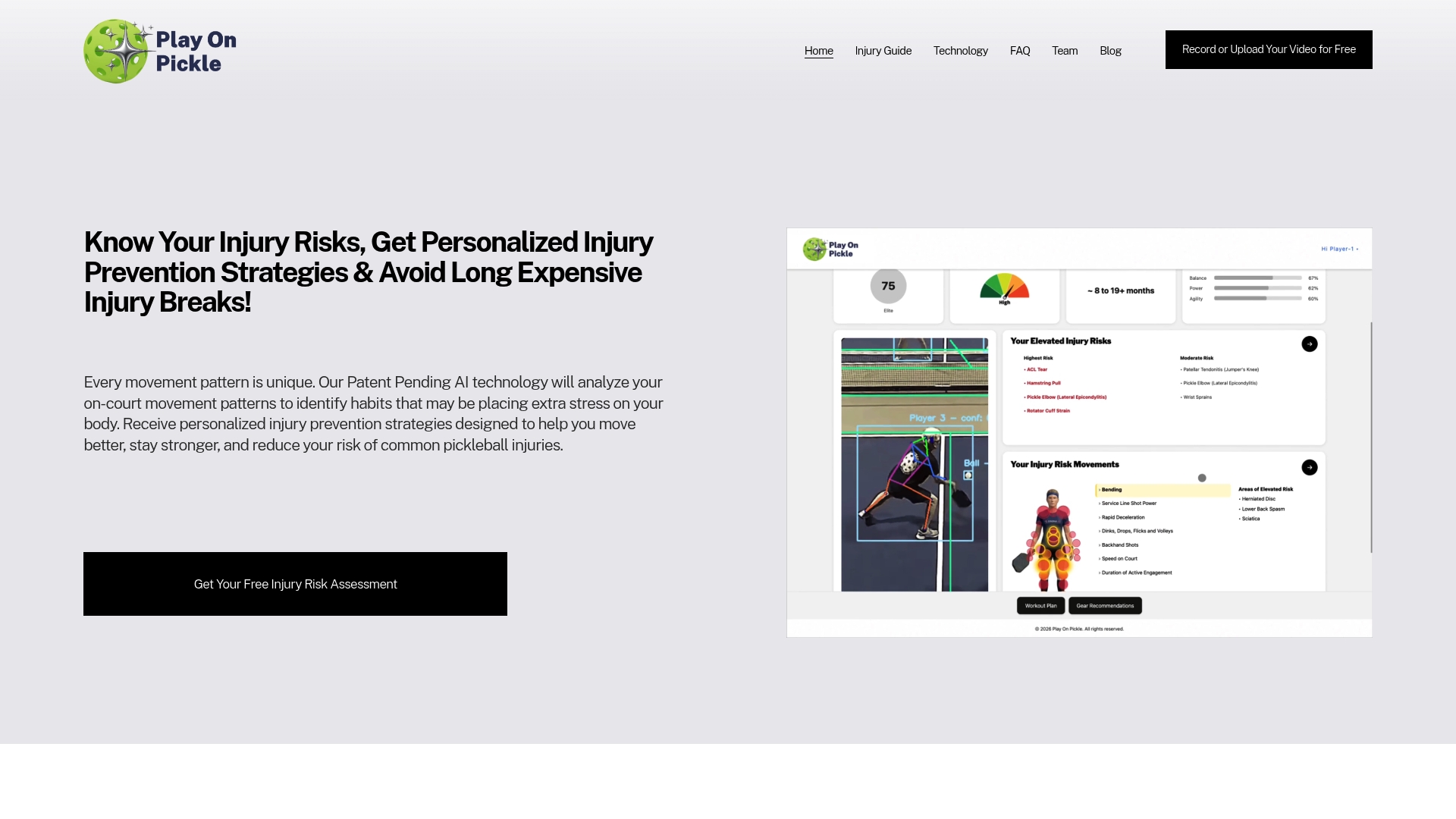
That's the gap between generic advice and a fix that matches your body. Pair it with the prehabilitation strategies and warm-up routines covered above, and you get an evidence-informed system instead of a patchwork of stretches you found online. If you want a deeper look at structured prehab work for players managing joint wear, this practical prehab guide is worth a read too. Start your free trial on the Play On Pickle landing page and get your first movement assessment before your next session.
This article is general information, not a substitute for advice from a qualified doctor. Consult a qualified healthcare professional about your own circumstances before acting on anything here.
Sources
- Introduction to Spine Injuries in the Pickleball Athlete
- Injury prevention and prehabilitation insights for racket-sport and court athletes
- Pickleball back pain: lower-back strain, herniated discs, and the protective playbook