
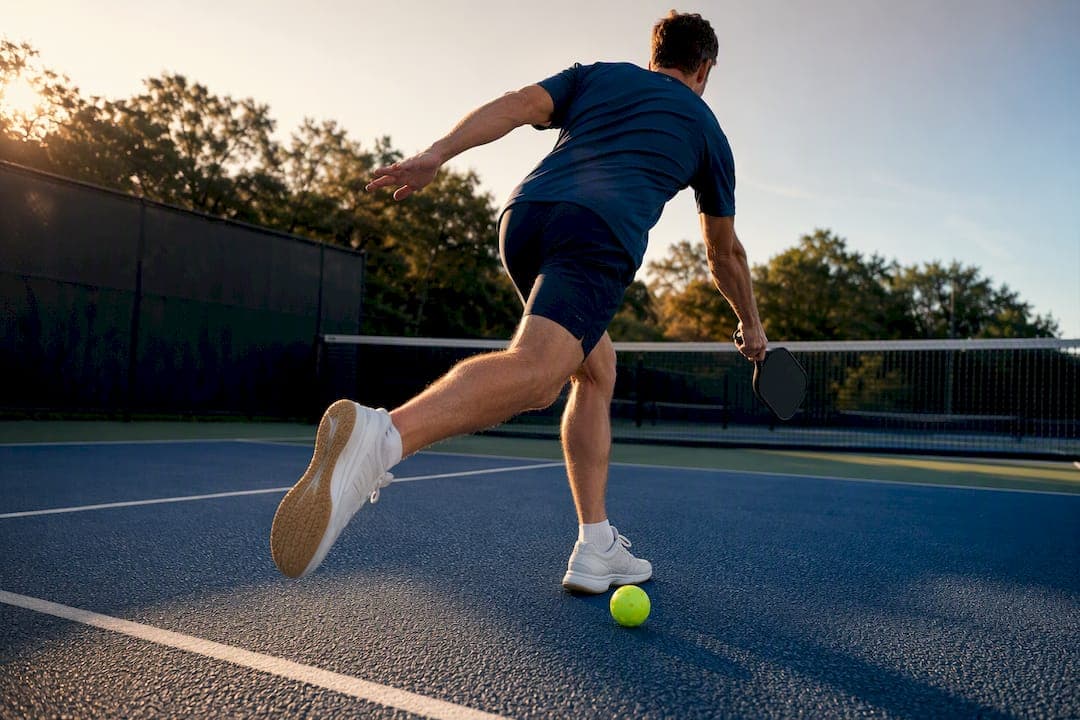
The most effective way to improve balance for pickleball is a short, progressive routine done two to three times a week that combines single-leg holds, multi-directional reaching, and ankle control work. This approach benefits recreational and senior players most, since it directly builds the stability needed for quick lateral moves and safe landings. Programs modeled on Otago and LiFE, along with personalized options like Play On Pickle, can help you structure and track that progress.
TL;DR:
- Improving balance with a short, progressive routine can significantly enhance stability for pickleball players, especially older adults.
- Assessing your balance with simple tests like single-leg stands and tandem walks helps identify weaknesses before progressing to dynamic exercises.
- Practicing static holds, ankle control, and sport-specific drills in a structured eight-week plan boosts on-court performance and reduces injury risk.
- Using safety measures such as supports and gradual difficulty increases prevents falls and ensures consistent progress throughout training.
- Personalized assessments via computer vision technology can identify biomechanical stress points and tailor exercises to individual movement patterns.
Table of Contents
- Why balance matters for pickleball and who is at risk
- How to assess your balance at home and on the court
- Practical balance exercises for pickleball, ordered from easiest to court-ready
- An 8-week progressive balance plan
- Safety, modifications, and tips for older or injured players
- Evidence and expertise behind balance training
- Balance training pays off quietly
- Play On Pickle: personalized assessments made simple
- Sources
- FAQ
Why balance matters for pickleball and who is at risk
Pickleball rewards players who can stop, shift direction, and recover their position quickly, whether they are covering a dink at the kitchen line or lunging for a lob. Every one of those actions depends on balance, not just leg strength. When your balance system lags, you either hesitate on shots you should reach or you overcommit and land awkwardly.
Age changes the risk profile. Epidemiologic reviews describe higher proportions of sprains and fractures among older pickleball players, tying the pattern to the sport's frequent quick starts, stops, and lateral cuts. Balance training is one of the more direct ways to address that mechanism.
Three systems work together to keep you upright on court:
- Vision tracks the ball, your opponent, and the court boundary, feeding your brain constant position updates.
- Vestibular input from your inner ear senses head movement and rotation, which matters every time you pivot for a volley.
- Proprioception, the sense of where your joints and limbs are in space, lets you adjust your stance without looking down at your feet.
A clinical review notes that pickleball's short-burst, multidirectional movement pattern raises injury risk for players who skip off-court balance work, particularly older adults. (Pickleball injury epidemiology and prevention measures) Training all three systems, rather than just building leg strength, is what actually closes that gap.
How to assess your balance at home and on the court
Before you build a routine, it helps to know your starting point. These simple tests take under ten minutes and need no equipment beyond a wall or chair for safety.
- Timed single-leg stand: stand on one leg with eyes open, then closed, timing each side. Thirty seconds eyes open is a solid target for most healthy adults; even ten to fifteen seconds eyes closed is respectable.
- Tandem walk: walk ten steps heel-to-toe in a straight line, watching for wobble or sidestepping to correct.
- Toe-tap protocol: tap your toe on a low step or line twenty times per leg at a steady rhythm, noting any loss of control.
- Reactive catch test: have someone toss a soft ball while you stand on one leg, catching and returning it without stepping down.
Pro Tip: Do these tests near a wall or countertop the first time, so you always have something to grab if you wobble.
If you can't hold a single-leg stance for more than a few seconds, feel persistent dizziness, or notice one side is dramatically weaker than the other, that's a signal to check in with a physical therapist or physician before progressing on your own.

Practical balance exercises for pickleball, ordered from easiest to court-ready
Balance training works best as a ladder: master the static positions before adding movement, and add movement before adding speed or distraction. Trying to skip steps is the most common way players get discouraged or hurt.
Start with static holds. Progress from a double-leg stance with feet together, to a single-leg stance near a wall, to a tandem stance (one foot directly in front of the other), then close your eyes once each position feels stable.
Layer in strength and ankle control:
- Heel raises, double-leg then single-leg, build the calf and ankle strength that stabilizes quick stops.
- Single-leg Romanian deadlifts train hip and ankle coordination together, which mirrors the reach you make for a wide shot.
- Resisted ankle alphabet work with a light band improves the fine control that keeps your ankle from rolling on uneven court surfaces.
Once those feel solid, move to dynamic, sport-specific drills:
- Four-way cone or tape reach: standing on one leg, tap a marker placed front, side, back, and opposite side, without losing your base.
- Step-backs simulate the crossover retreat you make when an opponent lobs deep.
- Lateral skaters, a bounding side-to-side hop landing on one foot, build the explosive control needed for wide dinks.
- Single-leg medicine ball chops add a rotational, upper-body element that challenges your core while your foot stays planted.
The final layer is sensory and dual-task work: catching a ball, counting backward, or naming objects while holding a single-leg position. A 2025 systematic review and meta-analysis found that dual-task training performed three times weekly for at least four weeks meaningfully improves dynamic balance and functional mobility in older adults, more than static balance work alone.
Pro Tip: If your foot arch collapses inward or your knee caves during single-leg work, slow down and shorten the hold. Speed exposes bad form before you're ready for it.
The most common mistakes are rushing to eyes-closed variations before eyes-open ones are stable, and skipping ankle-specific work in favor of only strength moves. Fix both by respecting the progression order and giving ankle drills their own dedicated minutes each session.
An 8-week progressive balance plan
This plan turns the exercise library above into a schedule you can actually follow, whether you play twice a week or five times.
- Weeks 1 and 2, foundation phase: train three times a week for 15 to 20 minutes. Focus on static single-leg holds, tandem stands, and heel raises. Aim for three sets of 20 to 30 seconds per side on each hold.
- Weeks 3 through 5, dynamic phase: extend sessions to 20 to 30 minutes. Add the four-way reach drill, step-backs, and short lateral hops. Introduce one dual-task element, such as catching a tossed ball during a single-leg hold.
- Weeks 6 through 8, court-transfer phase: increase speed and vary the surface, moving from a firm floor to a folded towel or cushion for some drills. Progress only when you meet a clear criterion, such as holding a single-leg stance for 30 seconds with eyes open before adding eyes-closed or a ball toss.
- Throughout all eight weeks: keep sessions two to three times weekly. The CDC's Physical Activity Guidelines for Americans recommend older adults fold balance work into a weekly routine alongside aerobic and strengthening activity, rather than treating it as a separate add-on.
The dosage here isn't arbitrary. The same 2025 meta-analysis identified 30-minute moderate-intensity dual-task sessions, three times weekly, as a commonly effective target for improving dynamic balance, which lines up closely with the schedule above.
Safety, modifications, and tips for older or injured players
None of this needs to feel risky if you build in the right guardrails. A chair back or wall within arm's reach lets you attempt harder variations without fear of a fall, and stepping down to an easier version any session is a normal part of progressing, not a setback.
- Regress before you fail: if a single-leg hold shakes badly, hold a wall or chair back with one finger rather than abandoning the drill.
- Warm up for five to ten minutes with easy walking or marching before balance work, and finish with light stretching.
- Check your footwear and surface: worn-out shoe treads and cluttered floors are common, avoidable causes of slips during home practice.
- Increase difficulty gradually: add one new variable at a time, whether that's closing your eyes, adding a toss, or changing surface, rather than stacking several at once.
Pro Tip: Practice your balance routine on the same days you plan to play, a few hours before, so the neuromuscular activation carries over onto the court.
If you feel sharp joint pain, ongoing dizziness, or a fall risk that feels out of proportion to the exercise, stop and check in with a physical therapist rather than pushing through.
Evidence and expertise behind balance training
The case for structured balance work isn't anecdotal. The CDC STEADI compendium reports that tailored, progressively difficult programs such as Otago and LiFE reduce fall rates by roughly 31% to 35% in the trials it cites, typically delivered as multi-week interventions combining warm-up, structured exercise, and home practice. The 2025 dual-task meta-analysis referenced earlier adds a dosage layer: moderate intensity, multiple sessions weekly, sustained over several weeks.
A related approach involves using computer vision technology to analyze a player's movement patterns from uploaded video and flag biomechanical stress points, generating a personalized plan from that analysis rather than a generic routine.

Balance training pays off quietly
Balance work rarely feels dramatic. There's no personal best to chase, no obvious feeling of progress after one session, which is exactly why most players skip it. But the players who stay upright and injury-free into their sixties and seventies are usually the ones who trained balance deliberately, not the ones who relied on playing alone to build it.
Schedule two short sessions a week before your usual play days, and give it eight weeks before judging the results.
— Drona
Play On Pickle: personalized assessments made simple
Generic balance routines help, but they don't account for how your own body moves. Play On Pickle analyzes your movement from a short video using its patented computer vision technology, flags the specific stress points putting you at risk, and builds a plan around your own biomechanics rather than a one-size-fits-all list.
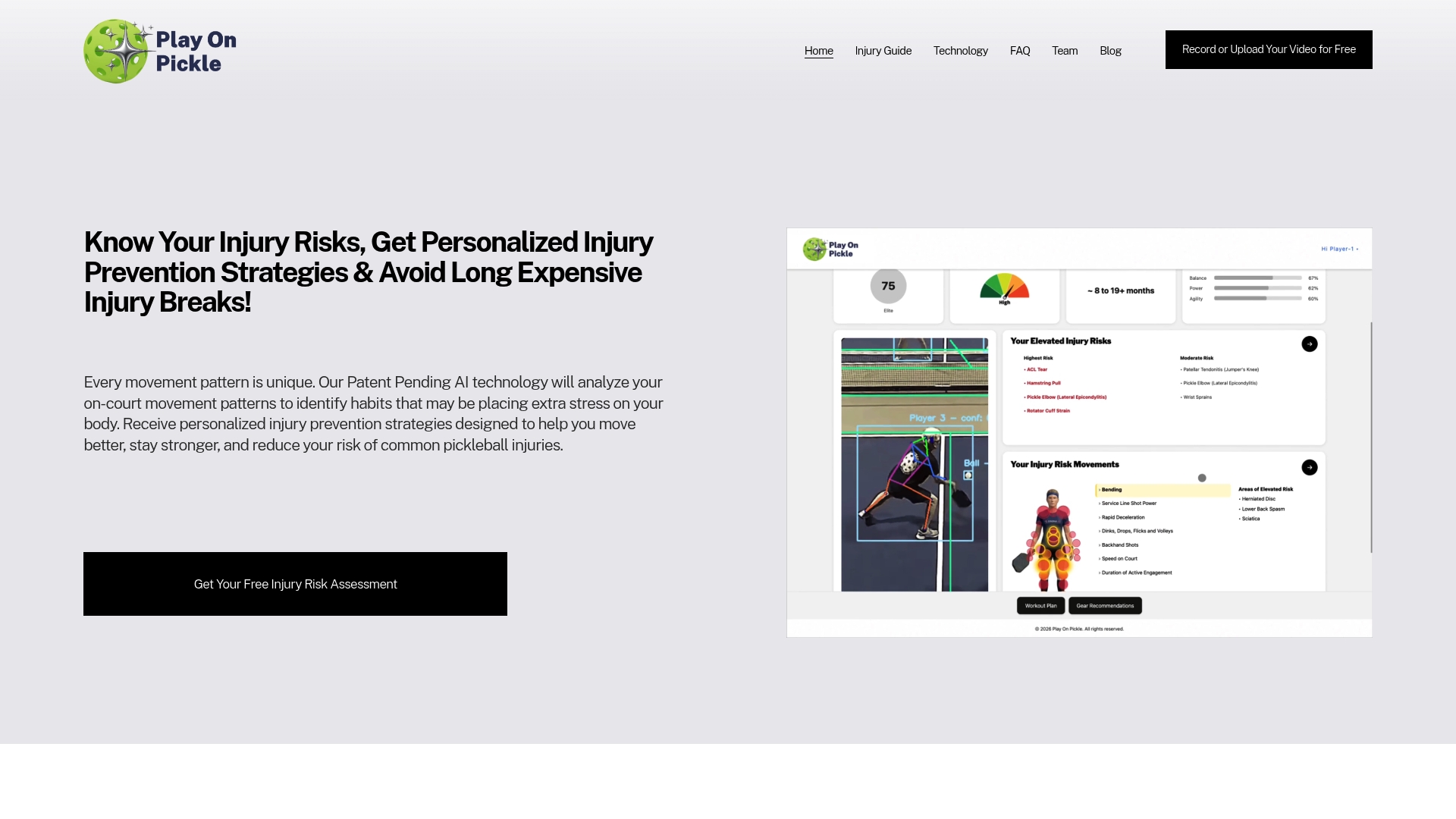
- Upload a short clip of your play and get a personalized injury risk assessment.
- Receive exercise and equipment recommendations built around your own movement patterns.
- Start with the trial, and the current $9.99 monthly plan includes a free tripod to make filming easy.
Check the pricing page to compare the monthly and annual subscription and get your first assessment started.
Sources
- Systematic review/meta-analysis (2025) on dual-task training and balance
- Physical Activity Guidelines for Americans, 2nd edition (CDC)
- Pickleball injury epidemiology and prevention measures (2025)
FAQ
What are 5 exercises for balance?
A solid set includes single-leg stands, tandem stands, heel raises, four-way cone reaches, and single-leg Romanian deadlifts. Progressing from static holds to dynamic, reaching movements builds both stability and the control pickleball demands.
What is the 10 second rule in pickleball?
This isn't a balance or scoring rule; it typically refers to informal guidance about pacing between serves rather than an official balance benchmark. For balance assessment, a more useful reference point is holding a single-leg stance for around 30 seconds with eyes open.
How good is a 2.5 pickleball player?
An early-intermediate player understands basic rules and shot placement but is still developing consistency, particularly on movement and court coverage. Balance training at this stage often improves shot reach and recovery speed as much as any technical drill.
How can a 70 year old improve their balance?
Programs modeled on Otago or LiFE, which combine progressively harder balance and strength exercises, are shown in trials cited by the CDC to reduce fall rates by roughly 31% to 35%. Starting with supported single-leg holds and tandem walks two to three times weekly, then gradually removing support, is a safe way to build that capacity.