
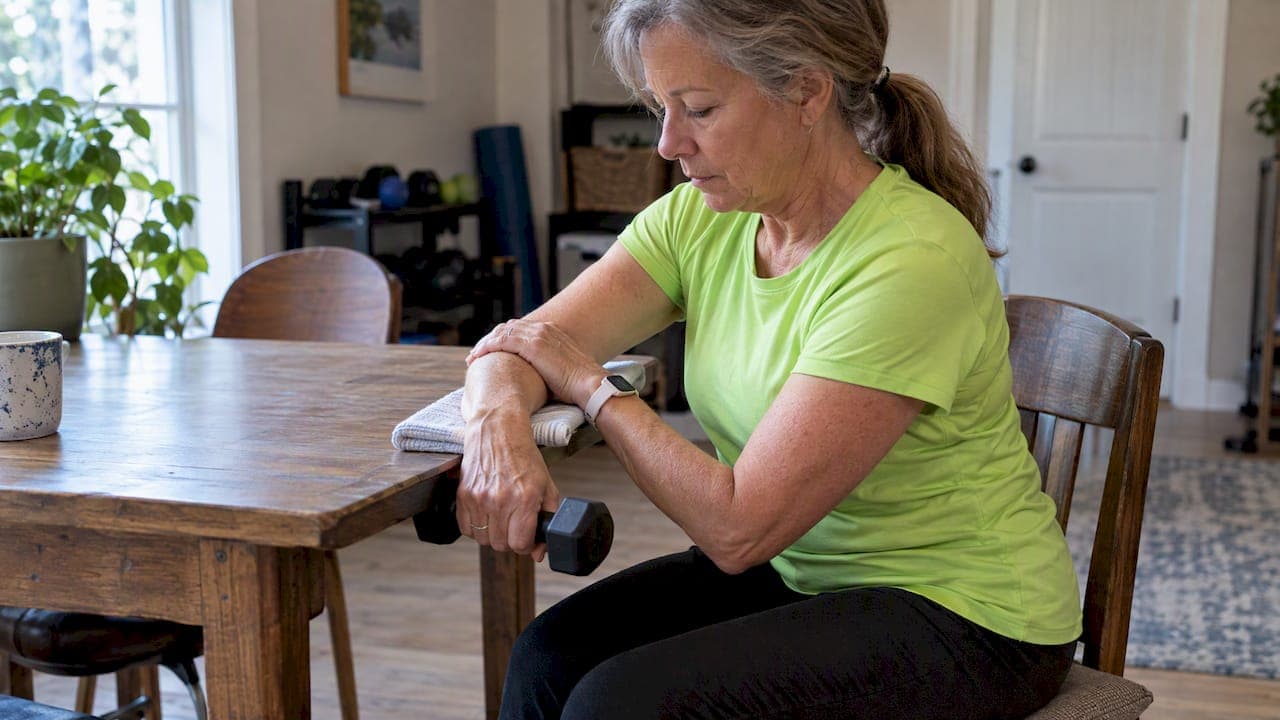
The most effective prevention approach combines a regular eccentric forearm strengthening routine with proper warm-up, sensible load management, and smart equipment choices. Elbow injuries affect 18.4% of players in a nationwide study of 1,758 participants, making prevention worth real attention. Tools like AI-driven movement analysis services can add a personalized layer by flagging the biomechanical patterns behind your own elbow strain.
TL;DR:
- Use a dumbbell weighing 1 to 3 pounds for 3 sets of 10 to 15 slow wrist extensions, three times weekly, then maintain with one or two sessions.
- Warm up for 5 to 10 minutes before play, increase weekly court time gradually, and take a day or two off when early soreness appears.
- Back off if pain is sharp, lasts beyond 24 hours, or changes your grip or swing; mild soreness that fades within a day can be normal.
- Test grip size, grip pressure, and paddle weight one at a time; a counterforce strap may help during play but should supplement strengthening.
- See a clinician if symptoms have not improved after 6 to 12 weeks, or if pain severely limits daily activities.
Table of Contents
- 1. Exercises that build tendon resilience in your forearm
- 2. A warm-up and pacing routine that prevents overuse
- 3. Equipment and technique changes that reduce tendon load
- 4. Self-care steps and when to see a clinician
- 5. Play On Pickle: personalized movement analysis for prevention
- 6. A simple starter week for recreational players
- Try Play On Pickle for a personalized prevention plan
- FAQ
- Sources
1. Exercises that build tendon resilience in your forearm
Tendons adapt to controlled stress, and the forearm extensors that attach near your lateral epicondyle respond best to slow, loaded lengthening work. These exercises form the backbone of any pickleball elbow exercises routine, whether you're preventing a first injury or keeping one from coming back.
- Eccentric wrist extension: Hold a light dumbbell (1 to 3 pounds to start) with your palm facing down, lift the weight using your other hand, then lower it slowly over 3 to 5 seconds. Do 3 sets of 10 to 15 reps, three times a week, and progress weight only when the full set feels easy.
- Isometric wrist extension holds: Press the back of your hand against a table edge or a partner's hand and hold for 10 to 20 seconds without movement. These are gentle enough for a sore elbow and work well as a first step before eccentric loading.
- Pronation and supination drills: Hold a light hammer or weighted bar at one end and slowly rotate your forearm palm up and palm down, which trains the stabilizing muscles that control grip torque.
- Wrist extensor stretch: Extend your arm, point your fingers down, and gently pull your hand toward your body with the opposite hand, holding 20 to 30 seconds.
- Shoulder external rotation and scapular stability work: Use a light resistance band to rotate your forearm outward with your elbow tucked at your side, and add scapular squeezes to improve shoulder control.
Elbow pain rarely starts at the elbow. Clinical experts often point to weak shoulder and scapular stability as the upstream cause, since a wobbly shoulder forces the forearm to absorb more force on every swing. Strengthening that chain takes pressure off the tendon directly.
Progress eccentric loading over 6 to 8 weeks, then shift into a maintenance phase of one or two sessions weekly. Players frequently stop once pain fades, which leaves the tendon unprepared when play ramps back up.
Mild, dull soreness that fades within a day is a normal training response. Sharp pain, pain that lingers past 24 hours, or pain that changes your grip or swing is a signal to back off and reduce load.
Pro Tip: Do your eccentric sets on non-playing days so fatigue doesn't bleed into your match-day mechanics.

2. A warm-up and pacing routine that prevents overuse
A short dynamic warm-up before you pick up a paddle prepares the tendon for repeated impact. Sensible pacing prevents the cumulative overload that causes most elbow problems.
- Spend 5 to 10 minutes on marching in place, arm circles, and light forearm swings to raise tissue temperature and blood flow.
- Add a round of isometric wrist holds right before play as a final activation step.
- Ice the elbow for 10 to 15 minutes after matches, especially on days with extended play.
- Ramp up weekly play gradually rather than jumping from one session a week to daily matches.
- Rest a day or two whenever you notice early soreness instead of playing through it.
One widely cited rule has nothing to do with injury prevention: the 10-second serve rule is a timing requirement for starting your serve after the score is called, not a guideline for managing elbow load. Confusing the two leads some players to skip real recovery steps because they assume the rules already cover safety.
3. Equipment and technique changes that reduce tendon load
Your paddle, grip, and swing mechanics directly affect how much force travels through your forearm tendon on every shot, and this layer of prevention is often overlooked compared to exercise.
- Check your grip size by measuring from the tip of your ring finger to the second-largest crease in your palm; a grip that's too small forces you to squeeze harder, which raises forearm tension.
- If you notice forearm fatigue after a session, test a lighter paddle before assuming you need more strength work.
- Loosen your grip pressure during rallies rather than gripping tightly on every contact, since a relaxed hand absorbs less repetitive strain.
- Favor a two-handed backhand when possible, which distributes load across both arms instead of concentrating it on one forearm.
- Try a counterforce strap positioned a few inches below the elbow, which can reduce tendon strain during play, though it works best alongside exercise rather than as a standalone fix.
Orthopedic guidance from the American Academy of Orthopaedic Surgeons points to grip size, grip tension, and paddle stiffness as modifiable risk factors worth testing one at a time so you can tell what actually helps. For a closer look at specific paddle options, our guide to paddles built for tennis elbow relief walks through weight and flex tradeoffs in more detail.
4. Self-care steps and when to see a clinician
Early elbow soreness responds well to simple, low-cost care. StatPearls clinical guidance recommends rest, ice after activity, oral or topical NSAIDs for symptom control, and a counterforce brace, paired with progressive eccentric strengthening as the core long-term fix.
Physical therapy typically follows a sequence: restoring pain-free range of motion, then isometric holds, then eccentric strengthening, then return-to-play drills that mimic pickleball strokes.

A randomized controlled trial found that combining dry needling with eccentric exercise produced greater short-term pain reduction and functional improvement than NSAID-based approaches, suggesting adjunct therapies can speed early relief, though exercise remains the long-term driver of recovery.
Most cases improve over weeks to months with conservative care. See a clinician or consider imaging if symptoms haven't improved after 6 to 12 weeks, or if pain severely limits daily activities. Our guide to pickleball elbow recovery covers the rehab stages in more depth, and a local provider such as this chiropractic tendonitis recovery plan outlines what hands-on treatment options can look like.
5. Play On Pickle: personalized movement analysis for prevention
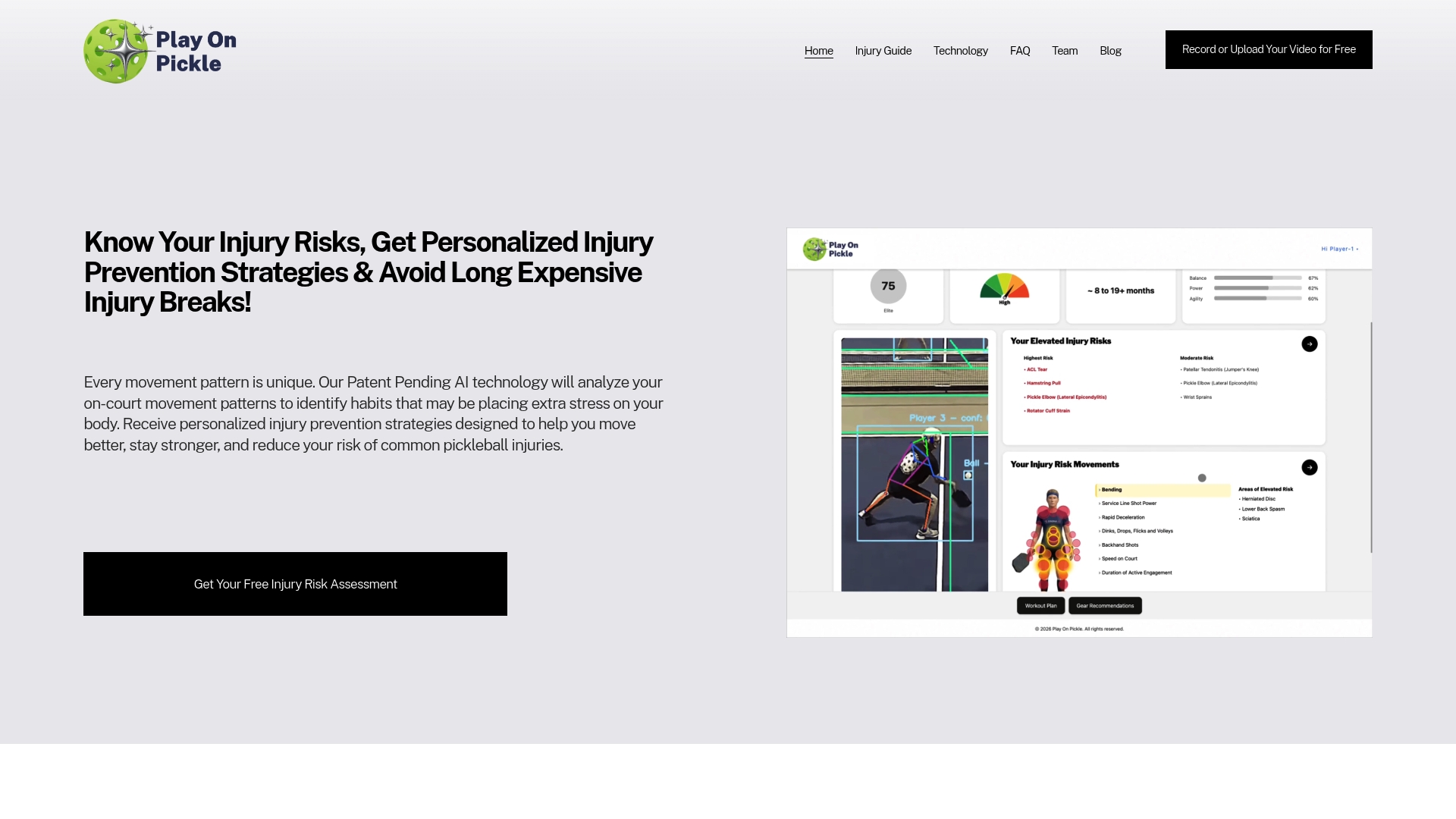
Generic exercise lists help most players, but elbow strain often traces back to an individual quirk in your swing or stance that a standard routine won't catch. Our patent-pending computer vision technology analyzes uploaded video of your play to flag the specific stress points showing up in your mechanics, from wrist angle at contact to shoulder positioning on the backhand.
- Such analyses identify compensatory patterns, like a dropped shoulder or delayed rotation, that quietly shift extra load onto your forearm.
- They translate those findings into a personalized set of exercises that target your actual kinetic chain gaps, not a generic list.
- Recommendations can be grounded in the same eccentric-loading principles covered above, applied to individual movement data.
This kind of assessment complements, rather than replaces, a qualified medical evaluation for diagnosed injuries or persistent pain.
6. A simple starter week for recreational players
Start with two short eccentric sessions this week, a five-minute warm-up before every match, and a quick check of your grip size and paddle weight. Track any soreness in a notes app, and pause progression if sharp pain shows up instead of mild fatigue. Consistency beats intensity: a few focused minutes several times a week outperforms one long session.
— Drona
Try Play On Pickle for a personalized prevention plan
Generic advice gets most players partway there, but your own swing, grip, and shoulder mechanics decide how much strain actually reaches your elbow. We built Play On Pickle to close that gap: upload a video of your play, and our AI-driven analysis flags your specific stress points and builds exercises around them.
- New players can start with a free trial before committing to a plan.
- The Monthly subscription runs $9.99 per month, and the Annual subscription runs $99 per year for ongoing access.
- Sign up through our free tripod offer to get recording gear included with a monthly plan.
Recreational players who want a plan built around their own mechanics, rather than a one-size-fits-all list, get the most out of this approach. Visit our pricing page to get started today.
This article is general information, not a substitute for advice from a qualified doctor. Consult a qualified healthcare professional about your own circumstances before acting on anything here.
FAQ
What causes pickleball elbow?
Pickleball elbow usually comes from repetitive overuse combined with poor grip or stroke technique, often worsened by upstream weaknesses in the shoulder and scapula that shift extra load onto the forearm tendon. Overuse and chronic conditions account for a substantial share of the most serious injuries reported among players.
What is the 10 second rule in pickleball?
The 10-second rule is an official serving requirement stating that a player must serve within 10 seconds after the score is called, as outlined in the USA Pickleball rulebook. It governs game timing and has no connection to injury prevention or recovery.
How long does it take for a pickleball elbow to heal?
Most people see meaningful improvement within a few weeks to several months of consistent conservative care, including rest, ice, and progressive eccentric exercise. Recovery that stalls past 6 to 12 weeks usually warrants a clinical evaluation to rule out a more significant tendon issue.
What is the most common injury in pickleball?
Elbow injuries are notably common, affecting 18.4% of players in a nationwide study of 1,758 participants, alongside other overuse injuries affecting the shoulder, knee, and lower leg. Chronic overuse patterns, rather than single traumatic events, drove over a third of the most serious cases reported.
Can equipment changes really reduce elbow strain?
Yes, adjusting grip size, easing grip tension, and testing a lighter paddle are recognized modifiable factors that reduce forearm stress according to orthopedic guidance from AAOS. These changes work best alongside an eccentric strengthening routine rather than as a standalone fix.
Sources
- Understanding Injury Patterns and Predictors in Pickleball Players: A Nationwide Study of 1,758 Participants - PMC
- Lateral epicondylitis (tennis elbow) - StatPearls - NCBI Bookshelf
- Tennis elbow (lateral epicondylitis) - OrthoInfo - AAOS