
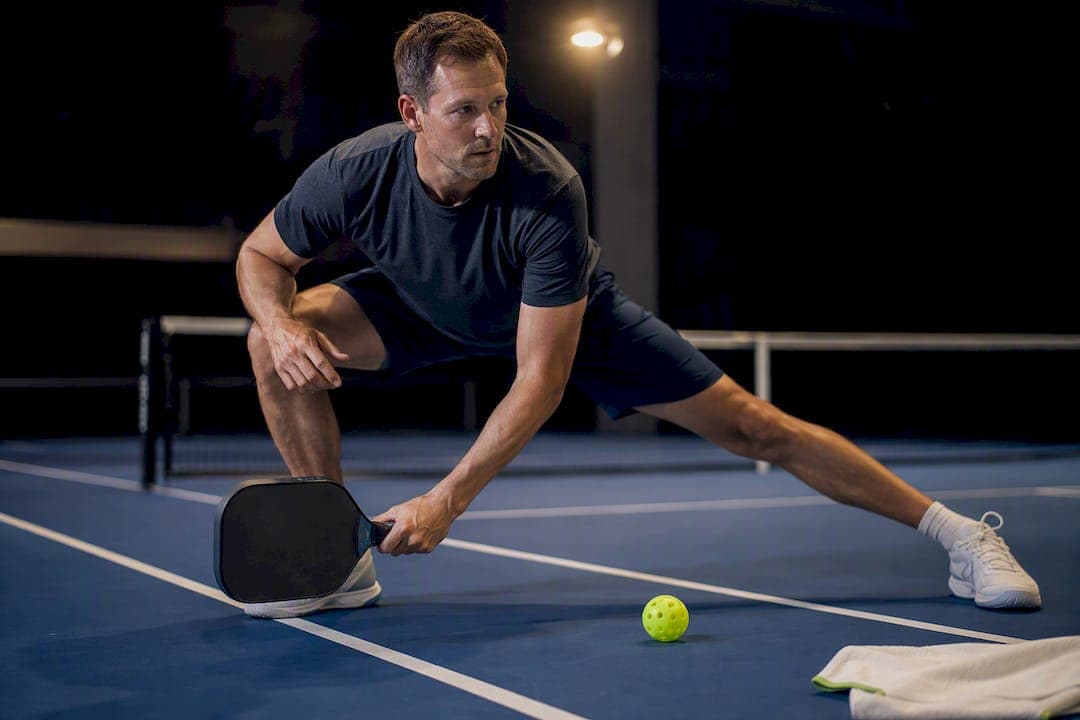
A pickleball groin strain is a tear or overstretch in one of your adductor muscles, usually caused by a lateral lunge or sudden stop at the kitchen line. Stop playing, protect the area, and expect a mild (Grade 1) strain to improve within about three weeks with proper staged rehab. Moderate tears take longer and any sharp pain, major swelling, or inability to bear weight means you need a doctor, not a foam roller.
TL;DR:
- Most groin strains in pickleball are mild injuries that can improve within three weeks with proper rest and staged rehab if there are no severe symptoms.
- Factors such as sudden lateral lunges, quick stops, limited hip mobility, and playing after inactivity increase the risk of microtrauma leading to strains.
- Movement patterns like sharp deceleration and asymmetry can be identified early using AI video analysis, helping prevent future injuries.
- Recovery involves a staged process from pain-guided range of motion to sport-specific drills, with progression based on pain-free strength and stability.
- Proper warm-up, targeted strengthening, and gradual workload increase are key prevention strategies, and objective movement assessment supports safe return to play.
Table of Contents
- Why Groin Strains Happen in Pickleball
- How Do You Know How Bad a Groin Strain Is?
- What to Do Immediately After a Groin Strain
- Rehabilitation: A Staged Path Back to the Court
- How to Avoid Groin Injuries Before They Start
- How AI Movement Analysis Helps Spot Groin Strain Risk Early
- A Realistic Take on Returning to Play
- A Smarter Way to Catch Groin Strain Risk Before It Happens
- Sources
- FAQ
Why Groin Strains Happen in Pickleball
Pickleball puts your adductors through a movement pattern most recreational players never train for. The sport demands quick lateral lunges to reach wide shots, rapid deceleration when you chase a drop shot, and a wide, low stance at the kitchen line that keeps your hip adductors under constant low-grade tension. None of that resembles jogging or the elliptical machine most players use as their "cardio."
The muscle failure usually happens at the extremes: a split-second lunge to a ball just out of reach, or a hard stop after sprinting for a lob. Repeat that pattern for two hours a few times a week and you get microtrauma that never fully heals between sessions.
A handful of factors raise your risk significantly:
- Jumping into daily play after months or years of inactivity
- Skipping a dynamic warm-up before rallying
- Limited hip internal/external rotation from sitting most of the day
- Strength imbalance between one side and the other
- Playing through minor tightness instead of backing off
Clinicians point to the sport's explosive growth as a direct driver of rising injury counts, since so many new players ramp up participation faster than their bodies adapt. UC Davis Health recommends gradual increases in play volume paired with targeted strengthening. Recent cohort data on pickleball injury patterns shows strains and overuse injuries among the most common issues reported, which is exactly why prevention work matters more here than in lower-impact sports.
How Do You Know How Bad a Groin Strain Is?
Groin strains are graded on a three-tier scale, and the grade tells you almost everything about your timeline. Grade 1 is a mild overstretch: soreness, tightness, maybe a twinge when you push off hard, but you can still walk normally and play through mild discomfort. Grade 2 involves partial muscle fiber tearing: noticeable pain, some swelling or bruising, and visible weakness when you try to adduct the leg against resistance. Grade 3 is a complete tear: severe pain, significant swelling, often a palpable gap in the muscle, and an inability to bear weight comfortably.
Recovery by grade: Grade 1 strains typically resolve in about 3 weeks, Grade 2 strains commonly take 3 to 6 weeks, and chronic or recurrent strains can require 3 to 6 months of rehab, according to Cleveland Clinic.
A few signs mean you should not just wait it out:
- Pain that spikes suddenly during a specific movement rather than building gradually
- Bruising that spreads down the inner thigh over 24 to 48 hours
- Weakness that doesn't improve after several days of rest
- A strain that recurs in the same spot within a few weeks of returning to play
Any of those warrant an evaluation, potentially with imaging, since a Grade 2 tear mismanaged as a Grade 1 often turns into a chronic problem.
What to Do Immediately After a Groin Strain
The first 48 to 72 hours set the tone for your entire recovery. Total immobilization is actually counterproductive. Here's the sequence that works:
- Stop playing immediately. Pushing through groin pain almost always converts a Grade 1 strain into something worse.
- Apply ice for 15 to 20 minutes several times a day for the first two to three days to control swelling.
- Use light compression if you have a wrap, but don't cut off circulation.
- Elevate the leg when resting, and avoid deep stretching in the acute phase, since it can reopen microtears.
- Start gentle, pain-free movement (walking, light hip circles) as soon as sharp pain subsides, usually within a few days.
Over the counter pain relievers can help with discomfort, but check with a physician before relying on them for more than a few days. WebMD's guidance on adductor strains frames early management around this short-term rest and protection window, followed by a shift toward active rehab rather than continued rest.
Seek medical attention if you can't bear weight, swelling keeps increasing after 72 hours, or you notice significant weakness that doesn't budge. Those are signs of a higher-grade tear that needs professional evaluation rather than home care.
Pro Tip: Total rest beyond the first few days actually slows healing. Once sharp pain fades, gentle daily movement keeps the healing tissue flexible instead of letting it stiffen into a shorter, weaker muscle.
Rehabilitation: A Staged Path Back to the Court
Groin strain exercises work best when sequenced, not randomized. Jumping straight to sprint drills because you feel "mostly fine" is the single most common reason strains become chronic.
Stage 1: Pain-guided range of motion (days 3 to 10, depending on grade)
- Gentle hip circles and controlled leg swings within a pain-free range
- Isometric adductor squeezes (squeezing a pillow between your knees) held for 10 seconds
- Short, easy walks to maintain circulation without loading the muscle aggressively
Stage 2: Eccentric strengthening (once daily activities are pain-free)
- Side-lying adductor lifts with slow, controlled lowering
- Copenhagen plank progressions (a well-studied groin strain exercise for hip adductor strength)
- Single-leg glute bridges and core stability work, since a weak posterior chain shifts more load onto the groin
Stage 3: Sport-specific drills (once you have pain-free strength)
- Lateral shuffles at increasing speed
- Controlled deceleration drills mimicking a kitchen-line stop
- Gradual reintroduction of full-speed lunges before returning to match play
A reliable marker for progressing between stages is pain-free single-leg balance combined with side-to-side strength that feels roughly even. Return-to-play protocols built around recreational athletes note that skipping the sport-specific drill stage raises re-injury risk substantially, even when the muscle feels fine at rest. If pain returns during Stage 2 or 3, drop back a stage rather than pushing through it.
Pro Tip: Test yourself with a slow, controlled side lunge before your first match back. If it feels tentative or asymmetrical, you're not ready for full-speed play yet, no matter how good the muscle feels standing still.
How to Avoid Groin Injuries Before They Start
Prevention comes down to three levers: warming up correctly, building strength where it matters, and managing how fast you increase your playing volume.
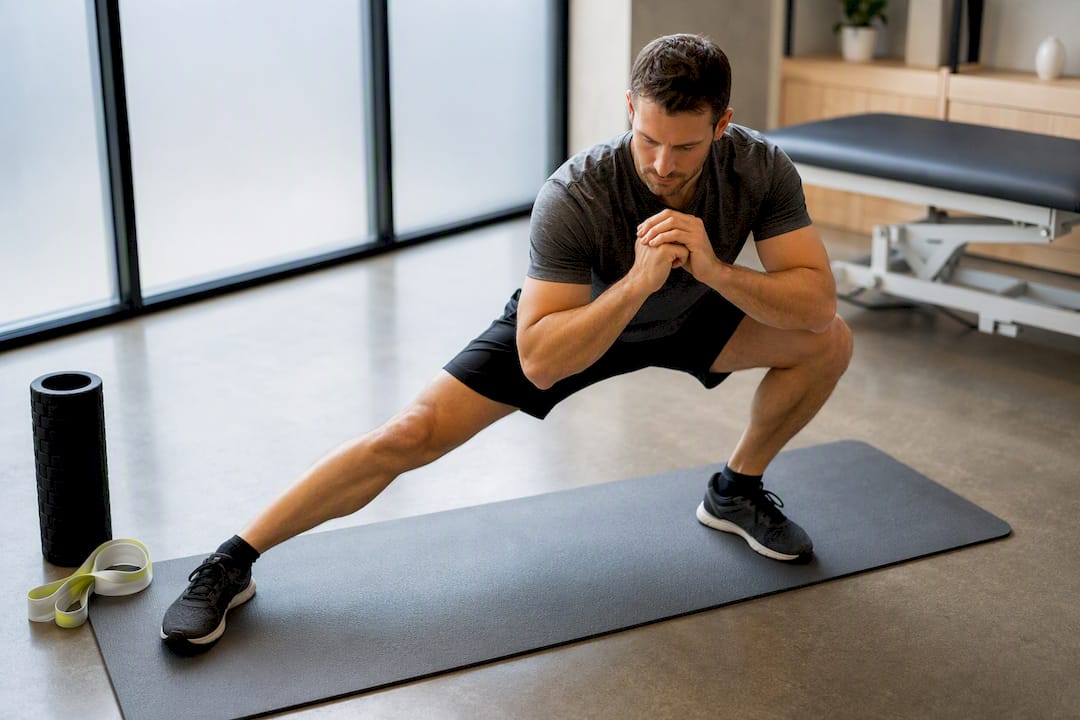
A pickleball-specific warm-up should run 8 to 10 minutes and include lateral lunges, carioca steps, and a few rounds of the world's greatest stretch to open the hips before you hit a single ball. Mayo Clinic's injury-prevention guidance points specifically to proper warm-up and progressive strength work as the two most controllable variables in reducing pickleball injuries. A full warm-up sequence is worth building into every session, not just tournament days.
On the strength side, prioritize:
- Adductor-specific work (Copenhagen planks, side-lying lifts) two to three times a week
- Posterior chain training: glute bridges, deadlift variations, hip thrusts
- Single-leg balance drills to catch asymmetry before it becomes a strain
- Core stability, since a weak trunk forces the hips to compensate during lateral movement
Workload matters as much as strength. Cap yourself at two to three hard sessions a week when you're building back up, and treat any lingering tightness or one-sided fatigue as a signal to scale back rather than a nuisance to ignore. Gradual ramp-up remains the single biggest lever for avoiding strains in players who are new to the sport or returning after a layoff.
How AI Movement Analysis Helps Spot Groin Strain Risk Early
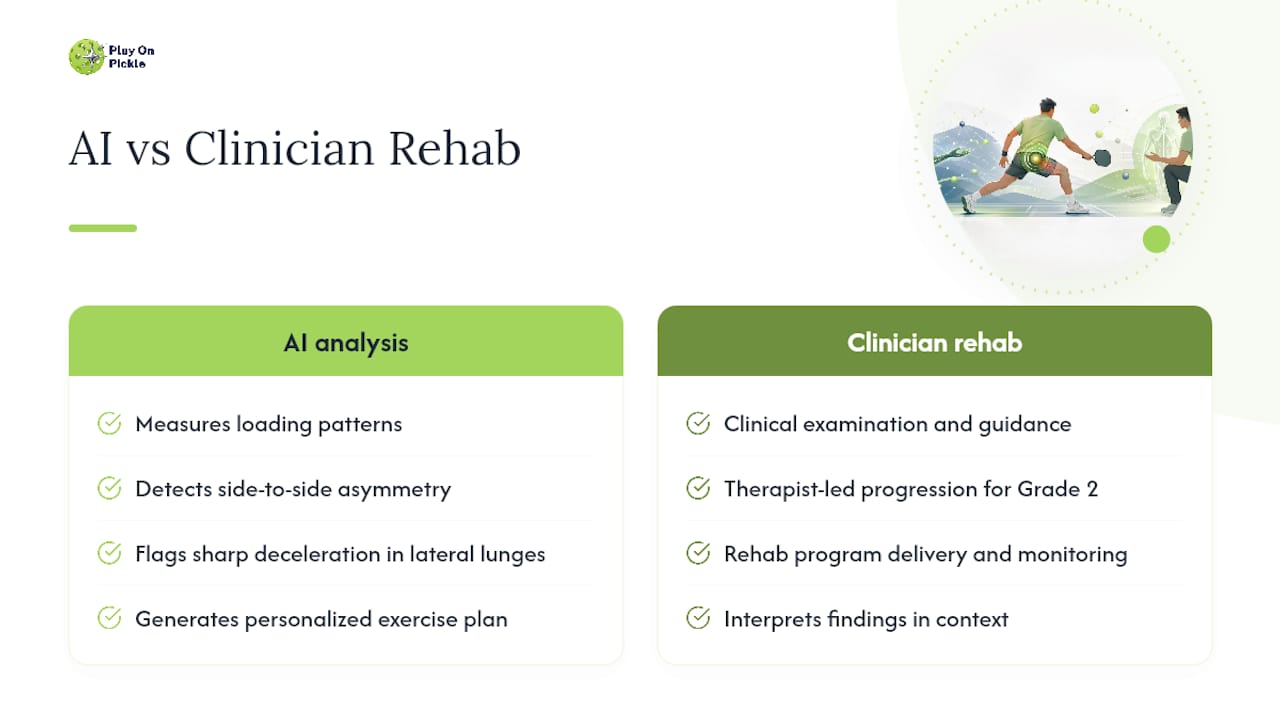
Most players never know their deceleration mechanics are off until something tears. Video-based movement analysis changes that by measuring loading patterns, side-to-side asymmetry, and how sharply you decelerate during a lateral lunge, the exact mechanism behind most adductor strains, using advanced AI sports video analysis for athletes.
Play On Pickle's computer vision technology analyzes uploaded gameplay footage to flag these stress points and generate a personalized exercise plan built around your specific biomechanics, rather than a generic stretching routine.
Movement analysis that flags asymmetry and abnormal deceleration forces gives players an objective target: exactly where to strengthen and which drills to prioritize, instead of guessing based on where it hurts today.
That kind of assessment works best alongside clinician-led rehab, not instead of it. If you're recovering from a Grade 2 strain, a physical therapist should guide your progression; movement analysis is most valuable once you're back to baseline and want to reduce the odds of a repeat injury.
A Realistic Take on Returning to Play
The biggest mistake recreational players make isn't ignoring a strain. It's rushing the last 20 percent of recovery because the pain is gone and the calendar has a tournament on it. Grade doesn't lie, and neither does asymmetry testing.
Combine a real rehab progression, targeted strength work, and objective movement feedback where you can get it. That combination beats stretching alone every time.
— Drona
A Smarter Way to Catch Groin Strain Risk Before It Happens
Most players find out their mechanics are a problem the same way you probably did: after something already tore. Video analysis systems can flag asymmetry, deceleration patterns, and loading imbalances that typically precede an adductor strain, then help build a personalized exercise plan based on what is found in your movement.
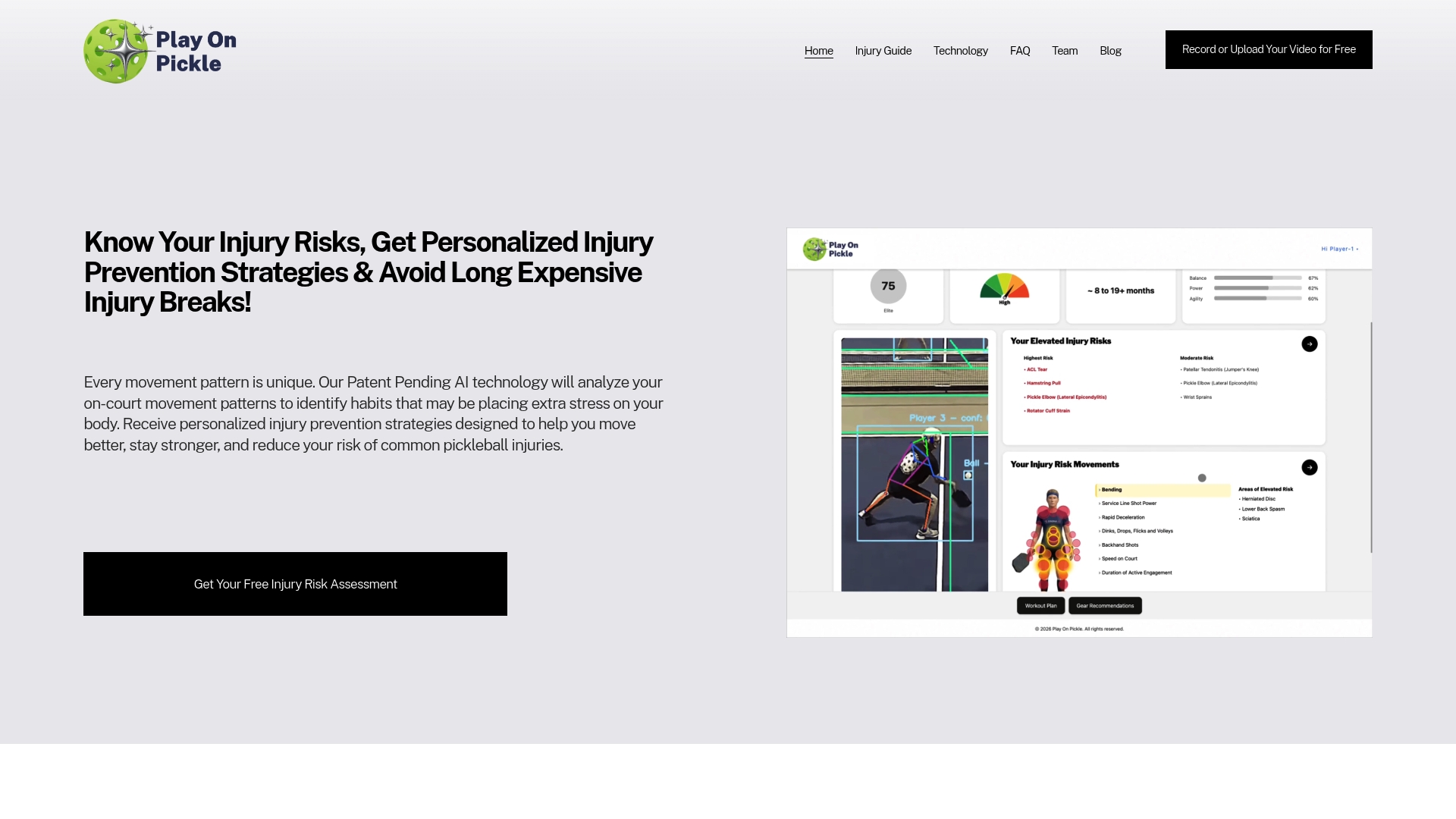
This fits naturally alongside the rehab work covered above. Once you're cleared and back to baseline strength, the assessment gives you a way to monitor whether the asymmetry that caused the first strain has actually resolved, rather than hoping it has. The monthly subscription runs $9.99 per month, and the annual subscription is $99 per year. New subscribers on the monthly plan currently get a free tripod to make filming your own play easier. If you've had one groin strain already, check your movement pattern before you have a second.
This article is general information, not a substitute for advice from a qualified doctor. Consult a qualified healthcare professional about your own circumstances before acting on anything here.
Sources
- Groin strain — Cleveland Clinic
- Groin pull (adductor strain) — WebMD
- Pickleball injuries are on the rise — UC Davis Health (2024-08-13)
- Pickleball injury patterns and prevalence — Sports Medicine (2025-08-22)
- How to prevent injuries when playing pickleball — Mayo Clinic
FAQ
How Long Will a Strained Groin Take to Heal?
A Grade 1 groin strain typically heals in about 3 weeks, while a Grade 2 strain usually takes 3 to 6 weeks, according to Cleveland Clinic. Chronic or recurrent strains can take 3 to 6 months of consistent rehab to fully resolve.
What Is the Most Common Injury From Pickleball?
Strains and overuse injuries rank among the most frequently reported problems in pickleball, according to recent injury prevalence data. The groin, along with the shoulder and knee, takes on the most repetitive stress from the sport's lateral, stop-start movement pattern.
How Do I Tell if My Groin Is Pulled or Torn?
A pulled (Grade 1) groin muscle causes soreness and tightness but still lets you walk and bear weight normally. A tear (Grade 2 or 3) brings noticeable weakness, visible swelling or bruising, and pain sharp enough to limit weight bearing, which signals you need a clinical evaluation.
How Can I Heal a Groin Strain Faster?
Follow short-term RICE care for the first 48 to 72 hours, then move into pain-guided range of motion and eccentric adductor strengthening as soon as sharp pain fades, per WebMD's guidance. Skipping ahead to sport-specific drills too early is the most common reason recovery drags on longer than expected.
Can Movement Analysis Help Prevent a Repeat Groin Strain?
Video-based analysis that flags asymmetry and abnormal deceleration patterns gives you an objective target for where to focus strength work, rather than guessing. Playonpickle's assessment pairs with clinician-led rehab to help confirm the mechanical issue behind your first strain has actually been addressed before you return to full-speed play.