
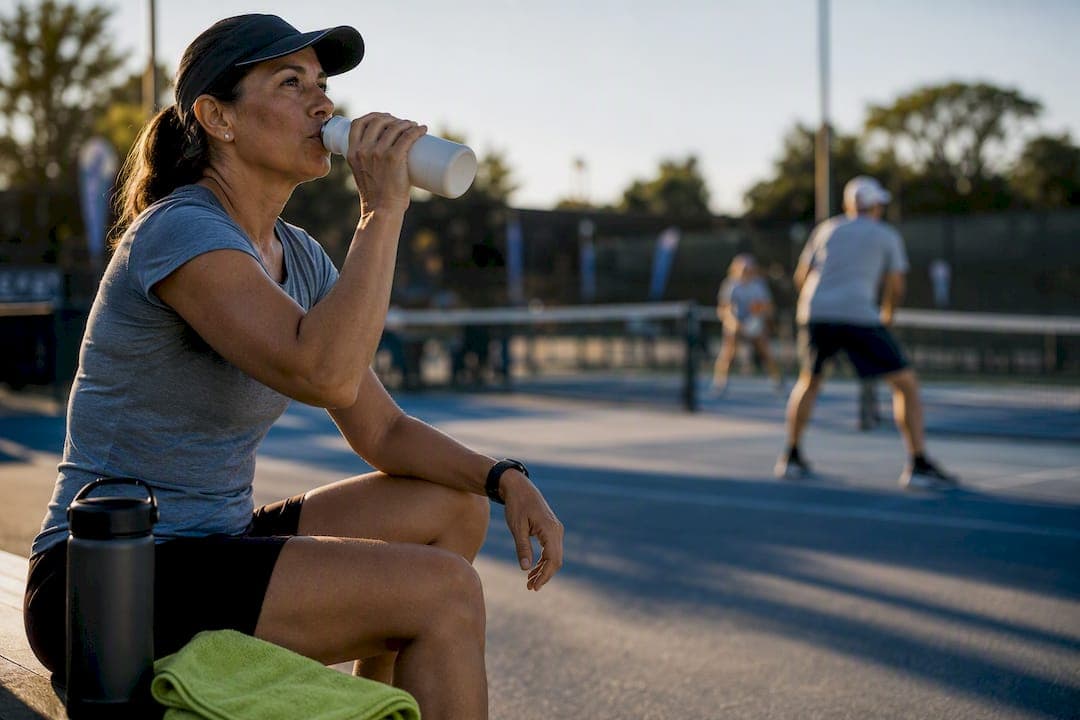
Drink 17 to 20 ounces two to three hours before you step on the court, then another 8 to 10 ounces about 30 minutes before the first serve. During play, sip 4 to 10 ounces every 10 to 20 minutes, adding electrolytes once a session runs past 60 to 90 minutes or the sweat starts pouring. Afterward, replace about 1.2 to 1.5 times whatever weight you lost, roughly a moderate amount of fluid per pound, and consume a moderate amount of sodium over the next few hours.
TL;DR:
- Players should hydrate with 17 to 20 ounces of water 2-3 hours before play and adjust intake based on their sweat rate for optimal hydration.
- During hot or humid conditions, increase fluid and sodium intake beyond standard ranges to compensate for higher fluid losses and prevent dehydration.
- Replenish weight lost during matches at a ratio of 1.2 to 1.5 times, including sodium, to maintain proper hydration and avoid repeated cramping or fatigue.
- Using simple tools like a scale to track weight loss and urine color can personalize hydration and sodium needs more effectively than generic guidelines.
- Combining small, steady sips of fluid with targeted sodium sources prevents overhydration and reduces risks such as hyponatremia during prolonged tournament play.
Table of Contents
- Pre-, During-, and Post-Match Hydration Timing
- How to Personalize Your Hydration Plan by Sweat Rate
- Electrolytes: Sodium, Potassium, and Magnesium in Practice
- Your Game-Day Hydration Schedule
- Why Chugging Water Backfires and When Cramps Signal Trouble
- What Hydration Has to Do With Injury Prevention
- Adjusting Your Hydration Plan for Heat and Humidity
- Balancing Carbohydrates and Fluids During Long Matches
- Should You Drink Coffee or Energy Drinks Before Playing?
- Overhydration and the Real Risk of Hyponatremia
- Bottles, Packs, and Electrolyte Tablets Worth Carrying
- What Actually Matters in a Pickleball Hydration Strategy
- Sources
Pre-, During-, and Post-Match Hydration Timing
Pickleball's stop-start rhythm tricks people into thinking they're not sweating much. You are. Between the footwork, the heat radiating off asphalt courts, and matches that stretch on longer than anyone plans, fluid loss adds up fast, and most players never notice until their legs feel heavy in the third game.
The American College of Sports Medicine lays out the pre-play numbers clearly: 17 to 20 ounces two to three hours before you play, then 8 to 10 ounces about 30 minutes before warmup. That gap matters. Chugging water right before the first serve just means you'll be looking for a bathroom break mid-game instead of actually absorbing what you drank.
Once play starts, the target shifts to steady, small intake:
- Sip moderate amounts of fluid every 10 to 20 minutes, increasing intake on hot or humid days.
- Scale up toward the top of that range during tournament play, when back-to-back matches leave little recovery window between games.
- Add sodium as needed once sessions push past an hour in serious heat.
Pro tip: Keep your bottle at the fence, not in your bag. If it takes ten seconds to reach, you'll actually drink between points instead of waiting for a full changeover.
Post-match, the math is straightforward. NATA sports medicine guidance recommends replacing 16 to 24 ounces for every pound lost, with sodium included to help your body actually hold onto that fluid instead of flushing it straight through. Skip the sodium and you'll just keep peeling off to the restroom while still feeling parched.
How to Personalize Your Hydration Plan by Sweat Rate
Generic guidelines get you close, but your actual sweat rate is personal. Some players lose a pound of water weight in a casual hour-long session; others lose three pounds in the same window standing on the exact same court. The only way to know which one you are is to test it.
- Weigh yourself nude or in dry clothes right before you play. Note the exact number.
- Track anything you drink during the session in ounces, and skip bathroom breaks if you can (or account for them).
- Weigh yourself again immediately after, before showering or eating.
- Calculate your loss: subtract post-play weight from pre-play weight, then add back any fluid you drank during the session. That total is your real sweat loss.
- Convert to ounces: each pound lost equals roughly 16 to 24 ounces you need to replace, per the physiology research on hydration and body mass loss.
Between formal weigh-ins, watch two cheap indicators. Pale yellow urine usually means you're in decent shape; dark yellow or amber means you're behind. White salt rings on your shirt or visor after a session are a strong clue you're a "salty sweater" who needs more sodium than average, sometimes pushing to 500 to 1,000 milligrams per hour in extreme heat rather than the standard 300 to 600 milligram range.
Pro Tip: Run the weigh-test on a typical day to establish a baseline number for sweating.
Electrolytes: Sodium, Potassium, and Magnesium in Practice
Sodium does the heavy lifting. It helps your body retain fluid instead of losing it straight through urine, and it's the mineral most directly tied to muscle cramping during long matches. Potassium and magnesium play supporting roles, aiding muscle function and recovery, though the amounts lost through sweat are typically smaller and easier to replace through normal food intake after play.
For most recreational sessions, a moderate sodium intake per hour covers it. Heavy, salty sweaters playing in serious heat may need to increase sodium intake, a range pickleball-specific hydration guidance increasingly points to for stop-start court sports, which tend to demand more tailored sodium replacement than steady endurance activities like distance running.
Your options for getting there:
- Standard sports drinks work fine for casual play but often carry more sugar than a two-hour match actually needs.
- Electrolyte tabs or powders let you control sodium dosing precisely without the sugar load, mixing directly into plain water.
- Small pickle-brine shots have become a popular sideline trick among competitive players chasing a fast, concentrated sodium hit without chugging extra fluid volume.
- Whole foods like salted nuts, pretzels, or a banana handle potassium and light sodium needs between matches.
The tradeoff is simple: sugary drinks taste better and add quick carbohydrates, but tabs and powders give you tighter control when sodium, not calories, is the priority.
Your Game-Day Hydration Schedule
Match length changes the math. Here's how to run it without doing calculations courtside.
One-hour session:
- Drink 17 to 20 ounces two to three hours out, 8 to 10 ounces 30 minutes before warmup.
- Sip moderate amounts every 15 to 20 minutes during play.
- Within 30 minutes of finishing, drink an appropriate amount per pound lost with a light sodium snack.
Two to three hour session:
- Carry two bottles: plain water and an electrolyte mix, alternating sips every 10 to 15 minutes.
- Once you hit the 90 minute mark, take a concentrated sodium source (tab, powder, or brine shot) if you're sweating heavily.
- Snack lightly on pretzels or a banana between games to keep sodium and light carbohydrates topped off.
Tournament day:
- Track cumulative losses across matches, not just the one in front of you; fatigue compounds fast by match three.
- Rehydrate fully between rounds rather than waiting until the day ends.
- Keep sipping water into the evening. Overnight rehydration matters as much as anything you drink courtside.
Why Chugging Water Backfires and When Cramps Signal Trouble
Gulping a full bottle during a changeover feels productive, but it usually backfires. Your gut can only absorb fluid at a certain rate, and the excess just sits there causing bloating and discomfort, or gets flushed out as urine before it ever helps your muscles. Steady small sips absorb far better than one big dose.
When cramps hit mid-match, the fastest response is a hit of sodium, a light stretch, and dialing back intensity for a few minutes rather than pushing through. Repeated cramping despite good hydration often points to something beyond fluids entirely: neuromuscular fatigue from insufficient conditioning can trigger cramps even when your electrolyte levels are fine.
Watch for these signs that mean stop playing immediately:
- Confusion or disorientation
- Fainting or near-fainting
- Vomiting
- Skin that's hot but not sweating
The CDC's heat illness guidance flags this combination as a medical emergency, not a "push through it" moment. Call for help.
What Hydration Has to Do With Injury Prevention
Even mild dehydration, around 2% of body mass, slows reaction time and blunts movement quality, which is exactly when sloppy footwork and awkward landings turn into rolled ankles or strained calves. Poor rehydration compounds the risk into the next day through lingering soreness and reduced neuromuscular control.
Hydration is one lever. Movement mechanics are the other, and that's where Playonpickle's AI-driven video analysis fits in:
- It identifies biomechanical stress points that hydration alone can't fix.
- It generates personalized exercise recommendations tailored to how you actually move on court.
- It pairs naturally with smart fluid strategy as part of a broader injury prevention approach for recreational players.
For conditioning work that reduces cramp risk alongside good hydration, the Play On Pickle blog has practical follow-ups worth reading.
Adjusting Your Hydration Plan for Heat and Humidity
Temperature and humidity change your hydration math more than any other variable. On a cool, dry day, your body cools itself efficiently through sweat evaporation, and you can often stay near the lower end of every range in this article. Push the temperature past 85 degrees Fahrenheit with high humidity, and evaporation slows down dramatically, forcing your body to sweat more just to achieve the same cooling effect.
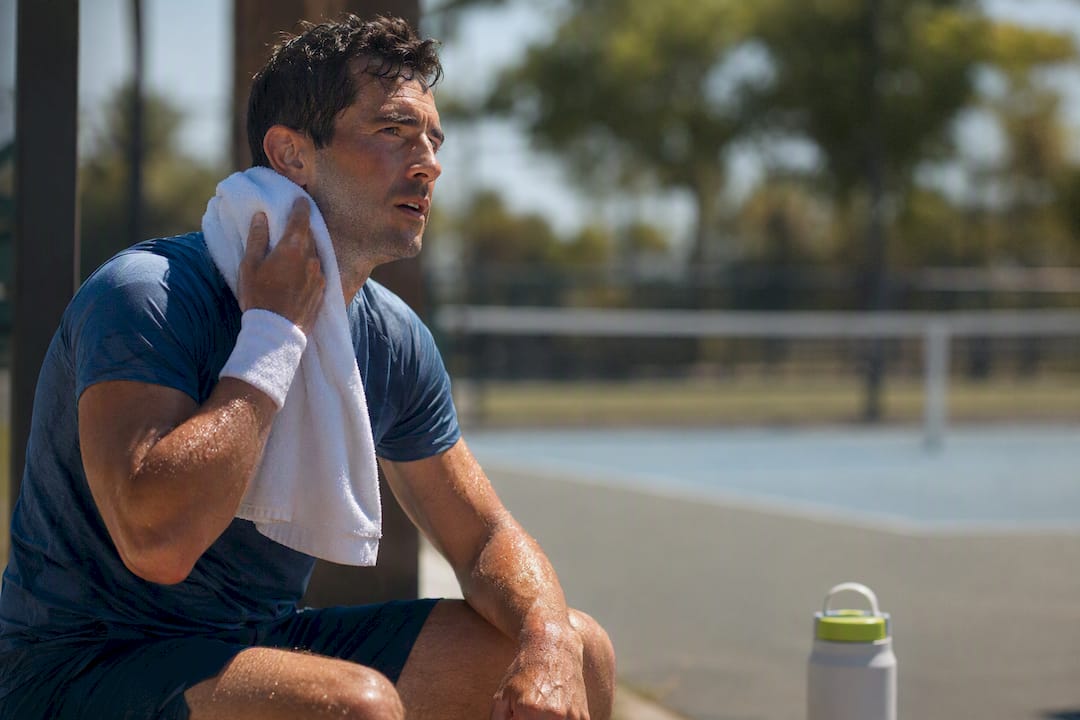
That's the trap with humid heat: you might not feel drenched, but you're losing fluid at a higher rate than a dry, sunny day would produce, simply because sweat sits on your skin instead of evaporating off it. Court surfaces make it worse. Asphalt and hard courts radiate heat back up at players, often running several degrees hotter than the ambient air temperature reported on your phone.
Practical adjustments for hot, humid conditions:
- Shift toward the top of every fluid range, 10 ounces rather than 4 during sipping intervals, and lean into 500 to 1,000 milligrams of sodium per hour if you're sweating heavily.
- Play earlier morning or evening sessions when possible to avoid peak heat windows.
- Take changeovers seriously. A minute in shade with a cold towel on your neck helps your core temperature more than people expect.
- Watch teammates and opponents, not just yourself. Heat illness symptoms often show up in someone else before that player notices it themselves.
Cold weather carries its own trap: reduced thirst sensation means players under-drink simply because they don't feel as parched, even though respiratory water loss and layered clothing still push fluid needs upward.
Balancing Carbohydrates and Fluids During Long Matches
Hydration and fuel aren't separate problems once a session runs past 90 minutes. Fluids without carbohydrates leave you hydrated but running on empty, while carbohydrates without enough fluid slow digestion and can cause stomach discomfort mid-match.
For sessions under an hour, water and electrolytes alone are typically enough. Past that mark, especially across multiple tournament matches, a light carbohydrate source, a few pretzels, a banana, or a sports drink with modest sugar content, helps maintain energy without overloading digestion. The goal is roughly 30 to 60 grams of carbohydrate per hour for extended play, similar to guidance used in other endurance sports, delivered in small amounts rather than one large snack between matches.
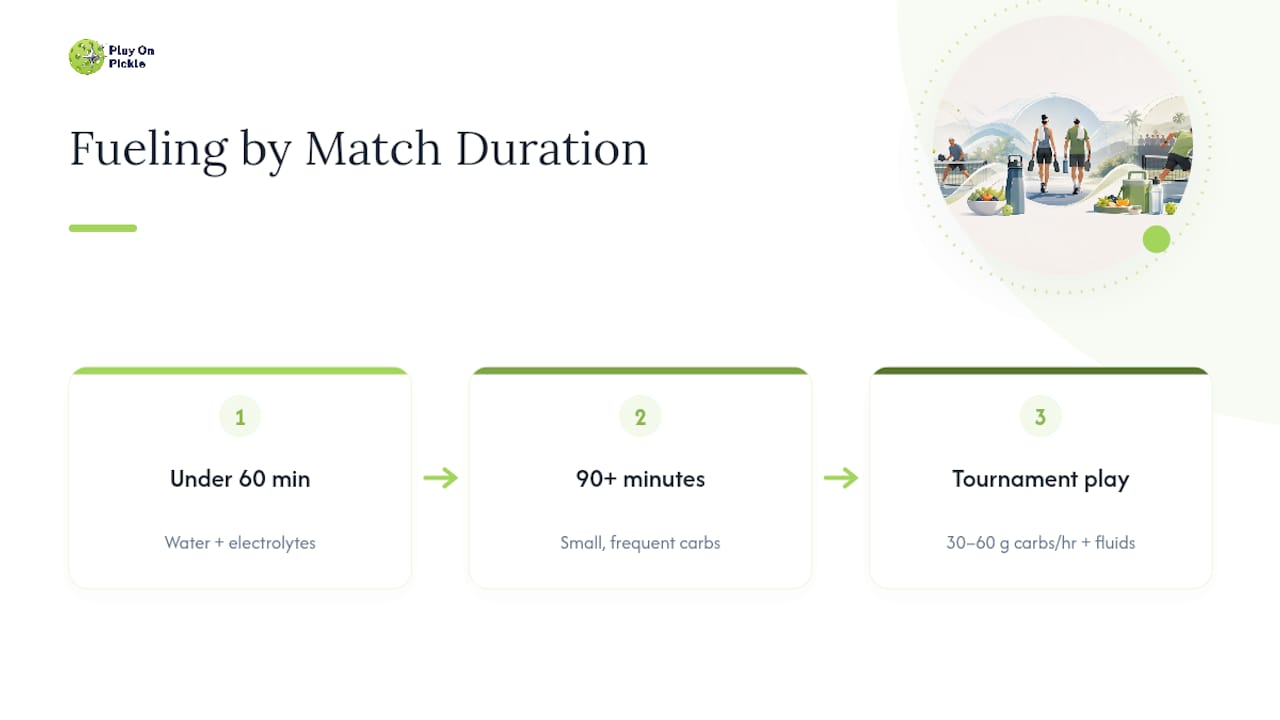
Timing matters as much as quantity. Eating a large meal 30 minutes before a match competes with hydration for blood flow to your gut, which is why many competitive players stick to small, frequent intake, a few sips of fluid and a bite of a snack, rather than a big pre-match meal followed by nothing until the changeover. Pair carbohydrate intake with your electrolyte mix rather than treating them as two separate routines; a sports drink with moderate sugar and sodium content often solves both problems in one bottle during long tournament days.
Should You Drink Coffee or Energy Drinks Before Playing?
Caffeine isn't off limits, but timing determines whether it helps or hurts. A moderate dose, roughly 100 to 200 milligrams, about an hour before play can sharpen focus and reduce perceived effort during long matches. That's useful for early morning tournament rounds when your body isn't fully awake yet.
The risk shows up with excess. Caffeine has a mild diuretic effect at high doses, and stacking multiple energy drinks or coffees on top of an already tight hydration schedule can work against your fluid balance instead of supporting it. One moderate serving before play rarely causes a problem; three energy drinks across a tournament day is a different story.
Avoid caffeine within the final 30 minutes before a match if you're prone to jitters or an elevated heart rate. That window is better spent on your final fluid intake and warmup, not a last-minute caffeine hit that leaves you jittery on the first serve. If you drink coffee daily, keep your normal routine rather than skipping it entirely on match day. Sudden caffeine withdrawal can cause headaches and fatigue that hurt performance more than moderate, habitual intake ever would.
Overhydration and the Real Risk of Hyponatremia
More water isn't automatically better. During prolonged exercise, drinking large volumes of plain water without replacing sodium can dilute the sodium concentration in your blood, a condition called exercise-associated hyponatremia. It's rare in matches under two hours, but the risk climbs during marathon tournament days when players drink steadily for six or more hours without ever reaching for electrolytes.
Symptoms overlap uncomfortably with dehydration, which makes the mistake easy to compound. Nausea, headache, confusion, and swelling can all show up, and a player experiencing them often assumes they need more plain water when the opposite is true. That's the dangerous loop: feeling bad, drinking more plain water, feeling worse.
The fix isn't drinking less overall. It's making sure every long session includes sodium alongside fluid, not water in isolation for hours on end. If you're sipping steadily across a full tournament day, alternate plain water with an electrolyte mix rather than treating water as the default and electrolytes as optional.
Bottles, Packs, and Electrolyte Tablets Worth Carrying
The right gear removes friction from the plan you just built. A simple two-bottle setup, one filled with plain water and one with an electrolyte mix, solves most of the guesswork during matches longer than an hour without requiring you to carry powders courtside.
For tournament days spanning multiple hours, a small hydration pack or insulated cooler bag at your bench keeps drinks cold and accessible between matches, which matters more than people expect since warm water is genuinely less appealing to drink in volume. Electrolyte tablets that dissolve directly in a water bottle offer more precise sodium control than pre-mixed sports drinks, letting you dial dosing up on hot days and back off on mild ones.
Reusable insulated bottles in the 24 to 32 ounce range hit a practical sweet spot: large enough to avoid constant refills, small enough to not sit heavy in a bag between courts. Pair that with a simple pill case or small pouch of electrolyte tabs, and your entire hydration kit fits in a side pocket. None of this requires expensive tech. A bottle, a scale for occasional sweat-rate testing, and a stash of electrolyte tabs covers the vast majority of what any recreational or competitive player needs across a full season.
What Actually Matters in a Pickleball Hydration Strategy
Most hydration advice floating around recreational leagues is generic gym talk repackaged for a different sport. Pickleball's real challenge isn't total sweat volume, it's the stop-start rhythm that hides how much you're actually losing between points. Players feel fine at 4-2 in the second game and then hit a wall in the third, and they blame conditioning when the real problem started an hour earlier with skipped pre-match fluids.
The conventional advice oversimplifies too. "Drink water" ignores sodium entirely, and generic sports drink marketing oversells sugar over the mineral that actually matters most for this sport's cramping patterns. The weigh-test protocol matters more than any product recommendation in this piece. Ten minutes with a bathroom scale tells you more about your personal needs than any bottle label ever will.
If you take one thing from this: personalize the sodium number before you worry about the brand of drink. Everything else is a rounding error by comparison.
— Drona
This article is general information, not a substitute for advice from a qualified doctor. Consult a qualified healthcare professional about your own circumstances before acting on anything here.
Sources
- Physiology review on hydration effects (PMC5634236)
- CDC guidance on heat illness
- NATA / sports medicine guidance (NBK541123)
- PubMed article on exercise-associated hyponatremia