
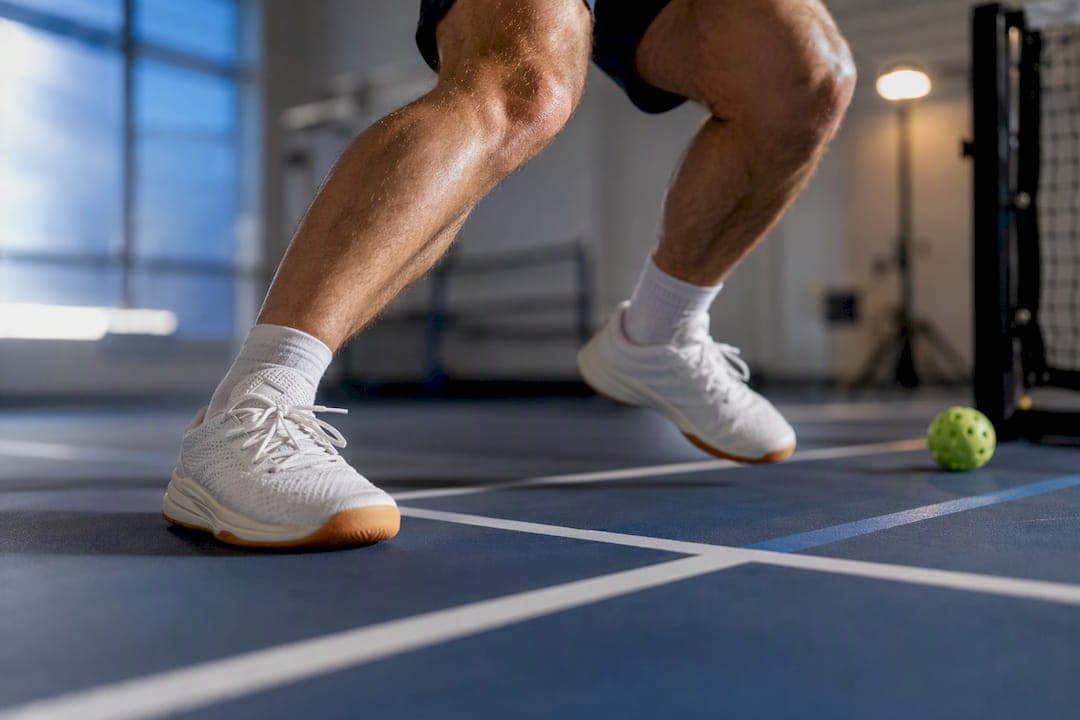
Yes, pickleball's constant lateral stops, quick lunges, and sudden direction changes commonly trigger medial tibial stress syndrome, the clinical name for shin splints. If your shins ache after play, cut back or pause court time, ice and elevate the leg, and start light, pain-guided rehab right away. Persistent or sharp, focal pain needs a clinician's evaluation before you step back on the court.
TL;DR:
- Shin splints from pickleball are caused by inflammation along the inner shinbone due to repetitive muscle pulling, with diffuse pain that worsens with activity.
- Risk factors include higher body weight, greater navicular drop, and limited ankle and hip mobility, which impair control during lateral cuts and deceleration.
- Immediate self-care involves rest, icing, light activity, and gradual return to play over six weeks, guided by pain levels and soreness monitoring.
- Strengthening the tibialis muscles, hips, and ankles with targeted exercises and improving footwear support reduces recurrence risk significantly.
- Movement analysis and personalized biomechanics training can identify hidden faults contributing to shin strain and help prevent future injury.
Table of Contents
- What Shin Splints (MTSS) Actually Are
- Symptoms, Self-Checks, and Red Flags
- Why Pickleball Puts Extra Stress on Your Shins
- Immediate Self-Care in the First Six Weeks
- Building a Pickleball-Specific Prevention Plan
- When to See a Clinician
- How Movement Analysis Catches What You Can't Feel
- The Overlooked Piece of Shin Splint Recovery
- Sources
- FAQ
What Shin Splints (MTSS) Actually Are
Medial tibial stress syndrome is inflammation and stress along the inner edge of the shinbone, caused by repeated pulling from the muscles that attach there. The pain typically spreads along a several-inch stretch of bone rather than sitting in one spot, and it usually flares during activity and eases with rest, at least early on.
That diffuse pattern is what separates MTSS from more serious lower-leg problems:
- Stress fracture: pain narrows to one specific point, often sharper, and can worsen at night or even at rest.
- Compartment syndrome: produces tightness or a squeezing pressure, sometimes with numbness or tingling in the foot.
- Calf or Achilles issues: pain sits lower and further back, closer to the heel cord, rather than along the shin's inner border.
A simple press-test helps: run a finger along the inner shin. Widespread tenderness over several inches points to MTSS. A single, pinpoint sore spot deserves more caution.
Symptoms, Self-Checks, and Red Flags
Shin splints from pickleball usually announce themselves gradually rather than all at once. Watch for these patterns:
- Diffuse ache along the inner shin that shows up during or after play and fades with rest in the early stages.
- Tenderness when you press along a broad stretch of bone rather than one exact point.
- Pain that returns faster each session if you keep playing without adjusting your load.
- A positive hop test: if hopping on the affected leg reproduces sharp, localized pain, treat that as a warning sign for a possible stress fracture.
- Night pain or pain at rest that wasn't there before, which also suggests something beyond simple MTSS.
Stop and get evaluated promptly if you notice numbness, significant swelling, or an inability to bear weight on the leg. Those aren't shin splint symptoms. They're signs of something that needs urgent medical attention, not home remedies.
Why Pickleball Puts Extra Stress on Your Shins
Court sports load the shin differently than running does, and pickleball's stop-start rhythm is particularly demanding. Every lateral cut, sudden deceleration, and split-step lunge forces the tibialis muscles to control the shin against a much sharper braking force than steady forward motion ever creates. Multiply that across dozens of short rallies in a session, and the tibia absorbs repetitive strain with little recovery time between bursts.
Research on who develops MTSS points to specific biomechanical patterns. A systematic review of MTSS risk factors found that higher body weight and greater navicular drop, a measure of how much the arch collapses when you bear weight, both raise risk, with the navicular drop difference alone averaging nearly 2 millimeters between affected and unaffected groups. The same body of evidence links greater ankle plantar-flexion range of motion and greater hip external-rotation range of motion to higher MTSS rates, with hip rotation differences averaging close to 4 degrees.
Why this matters on a pickleball court: loose ankle and hip mechanics translate directly into less control when you plant and cut, so the shin takes up the slack.
Player behavior compounds the biomechanics:
- Ramping up weekly play too fast, especially after a break, layoff, or new obsession with tournaments.
- Weak calf, tibialis, and hip stabilizer muscles that can't control deceleration forces.
- A prior history of MTSS, which strongly predicts a repeat episode.
Pickleball's own injury data backs up the concern: one clinical review found lower-extremity overuse injuries make up a substantial share of pickleball-related cases, and injury volume at some centers has climbed nearly seven-fold as the sport's popularity exploded.
Immediate Self-Care in the First Six Weeks
The first 72 hours matter most. Reduce or pause high-impact play, protect the leg, and swap in low-impact cardio like cycling or pool workouts to keep your fitness up without pounding the shin. Modern sports medicine favors the PEACE and LOVE framework over old-school total immobilization. That means protecting the area, elevating it, avoiding anti-inflammatory overuse, compressing gently, and educating yourself on the timeline, followed by load, optimism, vascularization through light cardio, and exercise as pain allows.
From there, follow a staged return:
- Weeks one to two: walk pain-free, add gentle ankle and calf mobility work, avoid sprints and lateral cuts entirely.
- Weeks two to four: reintroduce light drills without hard stops, monitor next-day soreness as your guide.
- Weeks four to six: progress toward full practice intensity only if pain stays absent through drills, not just at rest.
Pro Tip: Track pain on a simple 0 to 10 scale after every session. If it climbs above a 3 or lingers more than a day, dial back the very next practice instead of pushing through.
If pain hasn't meaningfully improved after two to four weeks of guided rest, or if it worsens despite reduced load, that's your cue to consider imaging and a specialist referral rather than waiting it out longer.

Building a Pickleball-Specific Prevention Plan
Preventing a repeat episode means training the specific muscles that control your shin and foot during lateral movement, not just stretching your calves and hoping for the best. Strengthening the tibialis posterior and anterior, along with progressive eccentric calf raises, improves how well your foot and shin absorb load when you plant and push off. Glute medius activation and hip external-rotator work matter just as much: tighter control at the hip reduces the compensatory stress that travels down to the shin during cuts and lunges.
A workable weekly structure looks like this:
- Strength, two to three times weekly: eccentric calf raises (3 sets of 12 to 15), resisted ankle dorsiflexion, and glute med side-lying raises or band walks.
- Mobility, daily: ankle dorsiflexion stretches and hip external-rotation drills held for 30 seconds each.
- Movement drills before play: lateral shuffles with a controlled, deliberate deceleration step rather than a hard, uncontrolled stop.
- Dynamic warm-up, every session: five to ten minutes of leg swings, walking lunges, and light shuffling before the first serve.
Footwear plays a bigger role than most recreational players assume. Court shoes need lateral stability and a firmer heel counter than running shoes provide, since pickleball's side-to-side demands differ from straight-line movement. If you notice excessive arch collapse when you stand, an off-the-shelf orthotic with arch support can reduce navicular drop and, by extension, shin strain. Check fit with a thumb's width of space at the toe, a snug heel with no slipping, and enough width to avoid pinching during lateral moves.
Load management ties it all together. Increase weekly play time gradually, build in at least one full rest day between sessions during high-volume weeks, and substitute a bike ride or swim for an extra pickleball session when your legs feel heavy rather than skipping rest entirely.
Pro Tip: A five-minute warm-up focused on hip and ankle mobility does more for shin-splint prevention than an extra ten minutes of static stretching after play. A structured warm-up routine built around dynamic movement, paired with hip mobility drills that target external rotation, covers both ends of the chain that MTSS research flags as high-risk.
When to See a Clinician
See a clinician if pain persists beyond two to four weeks of reduced load, if it's sharp and localized rather than diffuse, or if you notice swelling, numbness, or difficulty bearing weight. A typical evaluation includes a history and physical exam, with imaging such as X-ray or MRI reserved for cases where a stress fracture is suspected.
Conservative treatment usually starts with a progressive loading plan and targeted physical therapy focused on the same tibialis, calf, and hip work covered above, sometimes paired with custom orthoses for players with significant overpronation. Refractory cases that don't respond to months of standard rehab occasionally need more advanced interventions, though most players recover through structured, symptom-guided loading. Under supervised rehab, a gradual return to full play often takes several weeks to a few months, depending on how early treatment started and how well load was managed along the way.
How Movement Analysis Catches What You Can't Feel
Most players don't know their navicular is dropping or their hip rotation is limited until pain forces the issue. That's the gap individualized movement analysis is built to close. Specialized AI-driven video analysis can flag asymmetries, excess tibial loading, and movement faults during real play, detecting subtle mechanical issues that standard eyeball assessments or generic workout apps may miss.
Instead of a one-size-fits-all exercise sheet, the platform builds a plan around your specific biomechanics, whether that means more hip external-rotation work, ankle mobility, or calf loading progressions. Pairing that kind of targeted, personalized programming with the strength and load-management principles above gives recreational and competitive players a more direct way to reduce recurrence risk than guesswork alone. For additional drills and warm-up routines, Playonpickle's injury prevention resources cover age-specific progressions worth building into a weekly routine.
Ready for a plan built around your own movement? Playonpickle's monthly and annual subscription plans start at $9.99 a month, and new sign-ups on the monthly plan currently get a free tripod to make video capture easier from day one.
The Overlooked Piece of Shin Splint Recovery
Most advice on shin splints stops at rest and calf stretches, and that's exactly where it falls short. The evidence points somewhere less obvious: hip external rotation and foot control matter as much as anything happening in the calf. A player who stretches religiously but never strengthens their glute medius or works on ankle dorsiflexion is treating half the problem and wondering why the pain keeps coming back after every comeback attempt.

The other blind spot is pace. Recreational players tend to treat a good week of pain-free play as the green light to jump straight back into tournament-length sessions. That's how a mild case turns into a six-week layoff. Progressive loading isn't glamorous, but it's the difference between one bad month and a pattern that follows you every season.
If you take one thing from this, prioritize the strength and mobility work in the hips and ankles before you worry about which brand of compression sleeve to buy. The muscles you can't see doing their job are usually the ones that let you back down.
— Drona
This article is general information, not a substitute for advice from a qualified doctor. Consult a qualified healthcare professional about your own circumstances before acting on anything here.
Sources
- Risk Factors for Medial Tibial Stress Syndrome in Active Individuals: An Evidence-Based Review
- Risk Factors for Medial Tibial Stress Syndrome in Active Individuals: An Evidence-Based Review
FAQ
What is the fastest way to heal shin splints?
There's no true shortcut. The fastest path combines reducing high-impact activity immediately, applying PEACE and LOVE principles instead of full immobilization, and starting pain-guided, progressive loading within the first couple of weeks rather than waiting until pain disappears completely.
What sport gets the most shin splints?
Running historically carries the highest reported rates because of repetitive straight-line impact, but sports with heavy lateral movement, including pickleball, tennis, and basketball, carry meaningful risk from the added deceleration forces on the tibia.
What is the most common injury from pickleball?
Lower-extremity overuse injuries and soft-tissue strains rank among the most common issues, according to a clinical review of pickleball injury patterns, with shin splints falling into that broader overuse category alongside ankle sprains and Achilles irritation.
Is it okay to play through shin splints?
Playing through diffuse, mild soreness that fades quickly with rest carries lower risk, but continuing through sharp, worsening, or localized pain can push a mild case toward a stress fracture. When in doubt, reduce court time and reassess after a few days of lighter activity.