
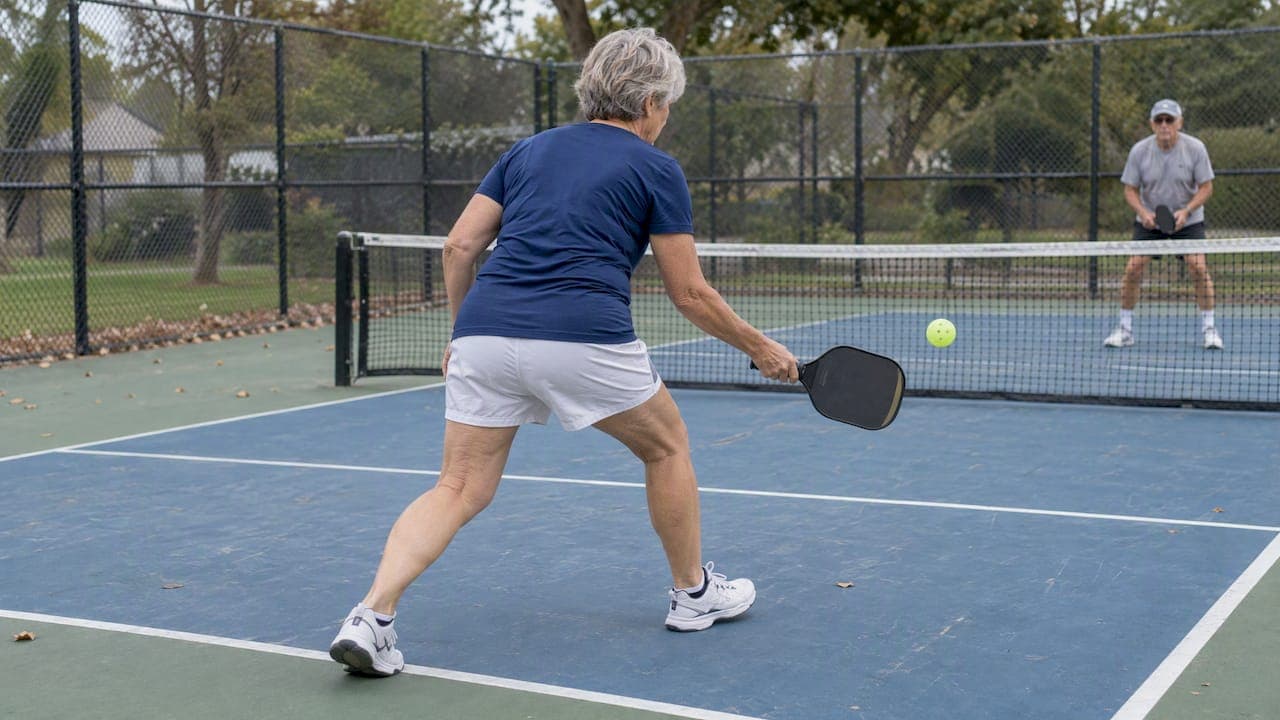
Most people can return to recreational pickleball after hip replacement once they finish rehab and receive surgeon and physical therapy clearance, commonly around 3 to 6 months after surgery. Clearance depends less on a date on the calendar and more on passing specific strength and balance tests. A staged return, doubles before singles, drills before full matches, gives your new joint the best chance of a smooth comeback.
TL;DR:
- About 44% of pickleball players return within 4 to 6 months after joint replacement, while roughly 72% eventually resume play, and some need longer.
- Before returning, demonstrate pain-free single-leg balance lasting at least 10 seconds, controlled lunges and step-downs, plus walking without a limp; let your clinician guide progression.
- Begin with doubles and controlled drills, then increase demands; delay singles, deep lunges, jump stops, and rapid pivots until your strength and balance support them.
- Cap early sessions at 20 to 30 minutes and contact your surgeon or physical therapist if pain worsens or persists beyond 48 hours.
- Continue hip abduction, glute bridges, and single-leg balance two to three times weekly after returning, since court play does not replace maintenance strength work.
Table of Contents
- Realistic recovery timeline: phases from surgery to on-court play
- What to do in rehab: exercises and progressions your PT should include
- Warm-up, cool-down, and best footwear for protecting your new hip on the court
- On-court precautions, activity modifications, and signs to stop
- What surgeons and PTs look for: clearance criteria and simple tests you can perform
- Evidence summary and expert consensus that supports the guidance
- Use of assistive devices or supports during initial return phase
- Signs of overuse or injury specific to post-hip replacement players during pickleball
- Long-term maintenance exercises to preserve hip health while playing pickleball
- Nutritional or lifestyle recommendations to support joint recovery and function during pickleball return
- Author perspective on balancing activity and implant longevity
- Optional adjunct: how AI movement analysis can support a safer return
- FAQ
- Sources
Realistic recovery timeline: phases from surgery to on-court play
Recovery from hip replacement follows a fairly predictable arc, though the pace differs from person to person based on pre-surgery fitness, surgical approach, and how consistently you do your rehab exercises.
- Weeks 0 to 6: Focus is on wound healing, walking with assistive devices as needed, and restoring basic hip range of motion.
- Weeks 6 to 12: Progressive strengthening and low-impact cardio (stationary bike, pool walking) take over, and some patients begin very light on-court drills once their physical therapist signs off.
- Months 3 to 6: Staged return to actual play starts, typically doubles and controlled drills before anything resembling competitive singles.
- Months 6 to 12: Many players reach full competitive play, though this varies by individual healing rate and activity goals.
About 44% of pickleball players return to the court within 4 to 6 months after joint replacement, and roughly 72% of recent pickleball players return to play at all following surgery. That gap between the two figures matters: most people who want to get back on the court eventually do, but the path there is rarely a straight line, and a meaningful share need longer than six months.
The timeline above reflects averages, not a guarantee. A partner resource on clinician-guided return to sport after ligament surgery makes a similar point for a different joint: structured, criteria-based progression beats rushing back on a fixed schedule every time.
What to do in rehab: exercises and progressions your PT should include
A good rehab plan builds in layers, starting with basic muscle activation and ending with movements that mimic what happens on a pickleball court.
- Foundational strength: Glute bridges, clamshells, standing hip abduction, and quadriceps sets rebuild the muscles that stabilize your new joint.
- Stability and neuromuscular control: Single-leg stands, progressive balance drills, and controlled step-downs retrain your body to manage weight shifts, which happen constantly during a pickleball rally.
- Power and agility: Lateral steps, controlled lunges, split squats, and gentle change-of-direction drills prepare your hip for the quick, multidirectional demands of the sport.
Lateral lunges, split-squat training, and single-leg balance work specifically reduce reinjury risk and build the kind of readiness that generic leg workouts don't address. A dedicated prehab routine for recreational and senior players walks through several of these moves in more detail.
Scale intensity by adding reps or hold time before adding speed or load, and treat any sharp or lingering pain as a signal to back off rather than push through. Mild muscle fatigue is expected; pain that changes your gait is not.
Pro Tip: Film your split squats and step-downs from the side on your phone. Comparing week-to-week footage shows you whether your form is actually improving or just your confidence.
Warm-up, cool-down, and best footwear for protecting your new hip on the court
A proper warm-up matters more after joint replacement than it did before, since your surrounding muscles and tendons need a few extra minutes to get ready for lateral movement.
- Spend 5 to 10 minutes on dynamic movement: march-outs, side shuffles, leg swings, and mini-squats before you pick up a paddle.
- Cool down with 30-second static holds for your hip flexors, glutes, and hamstrings once you're off the court.
- Choose court shoes built for lateral support rather than high-cushion running shoes, which are designed for forward motion and offer less stability during side-to-side movement.
- Cap your first few sessions at 20 to 30 minutes and track soreness afterward, extending playing time only once recovery between sessions feels consistent.
On-court precautions, activity modifications, and signs to stop
Certain adjustments to how you play, not just how much you play, protect your implant while still letting you enjoy the game.
- Favor doubles over singles early on since it naturally reduces sprinting, sudden stops, and full-court coverage demands.
- Limit repetitive deep lunges, jump stops, and rapid pivoting until your strength and balance testing shows you're ready for them.
- Track soreness and any swelling after each session, and treat pain that worsens or lingers past 48 hours as a reason to check in with your surgeon or physical therapist.
There's no universal list of banned movements after hip replacement. Evidence reviews acknowledge that no definitive threshold exists for exactly how much activity an implant can safely handle, so decisions come down to your specific procedure, implant type, and how your body responds as you progress. A broader injury prevention resource for older and recreational players covers additional modifications worth discussing with your care team.
What surgeons and PTs look for: clearance criteria and simple tests you can perform
Clinicians rely on functional benchmarks rather than a fixed calendar date to decide when you're ready for the court.
- Single-leg balance: Hold a stable, pain-free single-leg stance for 10 seconds or more.
- Pain-free lunges and split squats: Perform these through a controlled range of motion without compensating or favoring the operated side.
- Controlled step-downs: Lower off a step with good knee and hip alignment, not a side-to-side wobble.
- Normal gait: Walk without a limp or noticeable favoring of the surgical leg.
Clinicians commonly use these functional checks rather than calendar time alone, since two patients at the same week post-surgery can have very different readiness levels. Keep a simple log of reps, hold times, and a pain score (0 to 10) for each test so you can show concrete progress at follow-up visits rather than relying on memory. If pain persists despite good form, or your surgeon notices asymmetries during testing, that's the cue to ask about imaging or a specialist referral before progressing further.
Evidence summary and expert consensus that supports the guidance
Orthopedic literature increasingly supports an active approach to recovery, with real caveats about pacing.
Major reviews and consensus statements classify sports into low, intermediate, and high impact categories, recommending low-impact sports for most patients and individualized decisions for intermediate-impact activities like pickleball.
Roughly 72% of recent pickleball players return to play after hip or knee replacement, a figure that reflects both the sport's growing popularity among older adults and surgeons' increasing comfort recommending it. Evidence gaps remain, though: long-term data on repetitive lateral loading in pickleball specifically is still limited, and guidance continues to depend heavily on individual surgeon judgment rather than one settled protocol.
Use of assistive devices or supports during initial return phase
Many patients use a hip brace, compression sleeve, or kinesiology tape during their first weeks back on the court, mainly for proprioceptive feedback and confidence rather than structural protection. A brace can remind you to maintain better form during lateral movement, which matters while your neuromuscular control is still catching up to your healing.
These supports aren't a substitute for strength work. If you find yourself relying on a brace to manage pain rather than simply as a reminder for form, that's worth mentioning at your next physical therapy visit. Some patients also use a cane or walking poles for balance confidence during early outdoor practice sessions before transitioning fully to solo court movement. Ask your surgeon or physical therapist whether a support makes sense for your specific recovery stage. What works well for one patient's gait and strength level may be unnecessary, or insufficient, for another's.
Signs of overuse or injury specific to post-hip replacement players during pickleball
Your new joint sends different warning signals than a natural hip, and recognizing them early prevents small issues from becoming setbacks. Groin or thigh pain that increases during play and lingers afterward, rather than fading within an hour, deserves attention. A new clicking or catching sensation, especially paired with discomfort, is different from the occasional harmless click some implants produce at rest.
Watch for swelling that builds over several sessions instead of resolving between them, since that pattern often signals your tissue isn't recovering fully before the next load. A subtle limp that appears only after extended play, even if your gait looks normal at rest, suggests fatigue in the stabilizing muscles around your hip. Any of these signs, particularly if they worsen rather than plateau, warrants a call to your surgeon or physical therapist rather than waiting it out. A guide to common pickleball hip pain causes breaks down several of these patterns in more depth.

Long-term maintenance exercises to preserve hip health while playing pickleball
Returning to the court isn't a finish line. The strength and stability work that got you back should continue indefinitely, just at a maintenance dose rather than a rehab-intensive one. Two to three sessions a week covering hip abduction, glute bridges, and single-leg balance keeps the muscles around your implant strong enough to absorb the repetitive lateral loading pickleball demands.
Rotate in split squats and controlled step-downs periodically to keep your eccentric control sharp, since that's often what fades first when players coast on maintenance work alone. A six-week single-leg stability progression is a useful structure to revisit every few months, particularly before ramping up tournament play or a new season. Consistency matters more than intensity here: short, regular sessions beat occasional long ones for keeping the hip resilient over years of play.
Nutritional or lifestyle recommendations to support joint recovery and function during pickleball return
What you eat and how you manage your weight both influence how your hip handles repeated loading on the court. Maintaining a healthy body weight reduces the cumulative stress on your implant with every step, lunge, and pivot, which matters over years of regular play. Adequate protein intake supports the muscle rebuilding that happens throughout rehab and ongoing strength work, while calcium and vitamin D support the bone that anchors your implant.
Staying well hydrated and managing inflammation through consistent sleep and activity patterns, rather than overdoing it on big game days, helps your body recover between sessions. Hospital orthopedic guidance also points to low-impact cross-training activities like swimming and cycling as useful complements to pickleball, giving your hip variety in how it's loaded across a week.
Author perspective on balancing activity and implant longevity
Getting back to pickleball is worth the patience it takes. The emotional lift of rejoining your regular game matters as much as the physical progress, but it only lasts if you earn clearance through real strength and balance gains rather than rushing the calendar. Check in with your surgeon as you increase intensity, not just at the start.
— Drona
Optional adjunct: how AI movement analysis can support a safer return
Tracking your own mechanics during a staged return is hard to do accurately on your own, which is where we come in. AI can analyze uploaded video of your play to flag biomechanical stress points, the kind of subtle compensation patterns that are nearly impossible to catch by feel alone during a match.
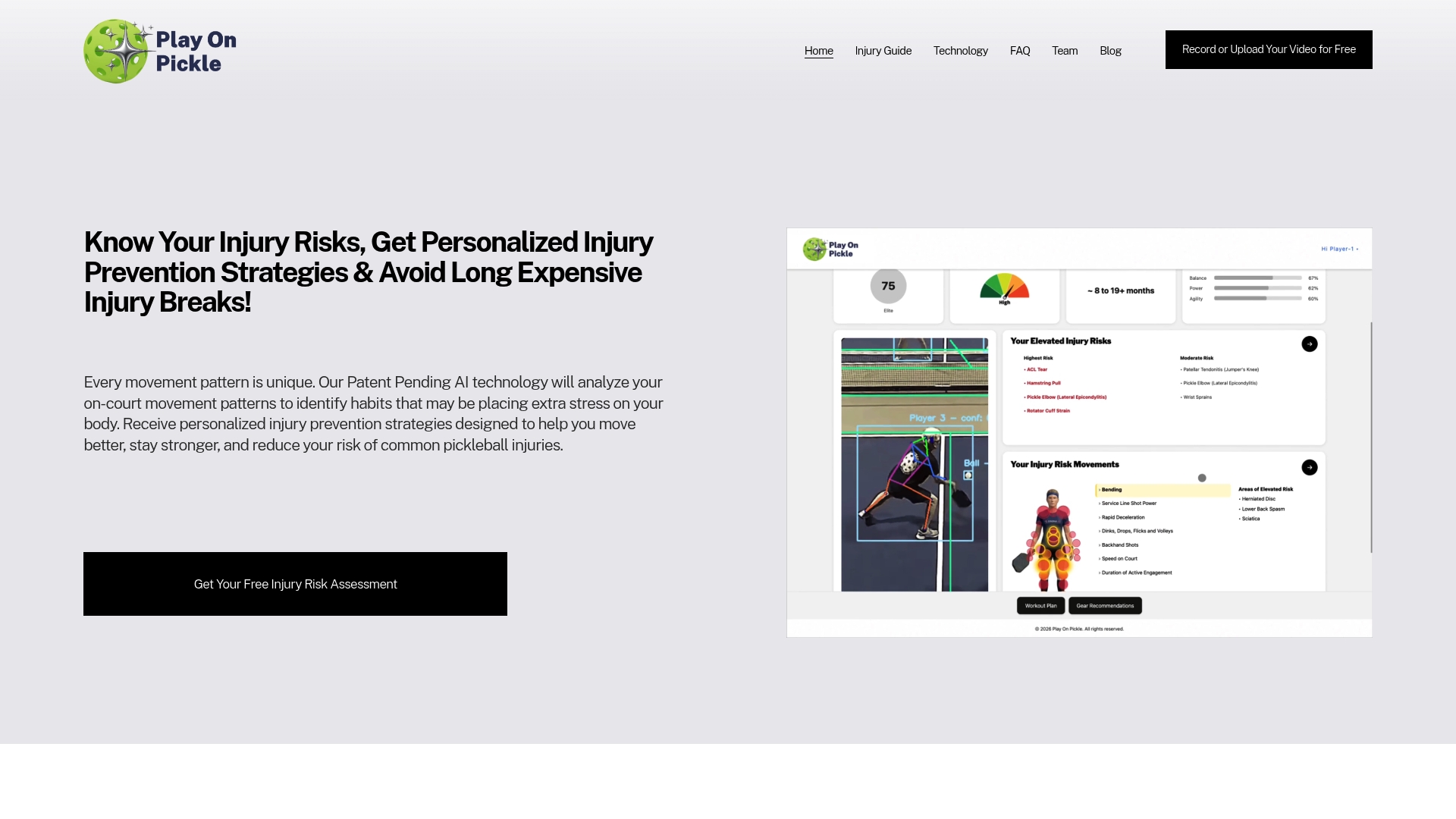
- Movement patterns can be turned into a personalized set of exercises matched to what the analysis finds, rather than a generic workout list.
- Objective data can be provided for you to bring to your physical therapist or surgeon, rather than a vague description of how your hip "feels."
- Progress over weeks can be logged, so improvements in your lunge form or step-down control are visible rather than assumed.
A 4-stage return-to-play framework pairs well with this kind of tracking as you move through doubles, drills, and eventually full matches. Start with a free trial plan or check our AI technology to see how the analysis works before you commit.
This article is general information, not a substitute for advice from a qualified doctor. Consult a qualified healthcare professional about your own circumstances before acting on anything here.
FAQ
How long to play pickleball after hip replacement?
Most patients get clearance for recreational pickleball around 3 to 6 months after surgery, once rehab is complete and functional tests show good strength and balance. Some players need longer, and the exact timeline depends on your surgeon's assessment rather than a fixed date.
What can you never do again after a hip replacement?
There's no single universal list of banned movements, since guidance depends on your specific implant and surgical approach rather than a blanket rule. High-impact activities and extreme hip positions are generally approached with more caution, so ask your surgeon which movements apply to your specific case.
Can you play pickleball with an artificial hip?
Yes, many patients return to recreational pickleball with an artificial hip once they've completed rehab and passed functional readiness tests. Roughly 72% of recent pickleball players return to play after hip or knee replacement, though pacing and intensity should be guided by your care team.
What is the most important exercise after a hip replacement?
Single-leg balance and controlled step-down exercises are consistently emphasized because they rebuild the stability your hip needs for everyday movement and sport. Glute bridges and hip abduction work also play a central role in restoring the strength around your new joint.
Sources
- Study reporting return-to-play rates among racket-sport patients
- Playing Pickleball after Knee or Hip Replacement: What to Know (HSS)
- Return to Sport After Hip and Knee Arthroplasty: Counseling the Patient