
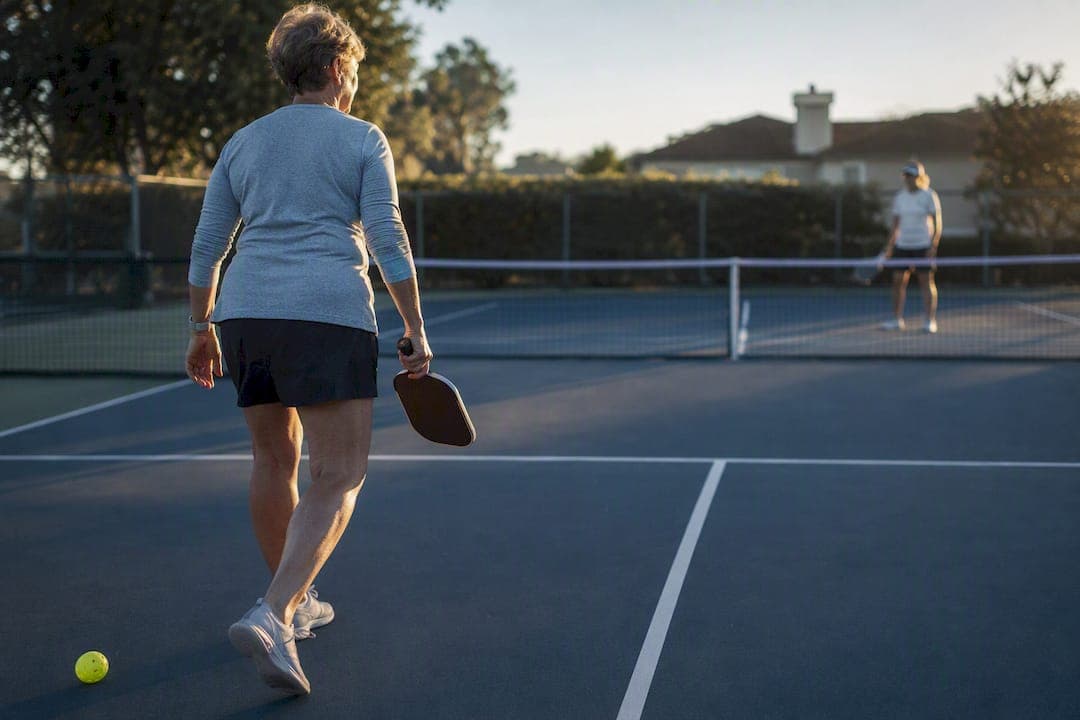
Most recreational players return safely when they follow a staged, criterion-based progression, moving from rest to controlled activity, then sport-specific drills, then graded full play, and only advance once they hit objective markers at each step. Pain-free range of motion, strength close to your uninjured side, symptom-free drilling, and a clean next-day check matter far more than simply feeling okay in the moment. Ankle sprains and mild tendinopathy might clear this path in weeks. Achilles ruptures and rotator cuff repairs need a clinician setting the timeline.
TL;DR:
- Most recreational players can return safely with a staged, criterion-based progression that emphasizes symptom resolution, functional markers, and gradual reintroduction of activity.
- Injury types like ankle sprains generally heal in weeks, while ruptures and rotator cuff repairs can require multiple months of protected loading and specialist clearance.
- Completion of three consecutive symptom-free sessions at each stage before advancing is essential, with objective tests like strength parity and full range of motion guiding readiness.
- Balancing physical therapy exercises, proper footwear, and workload management, including avoiding back-to-back intense sessions, minimizes re-injury risk during recovery.
- AI-driven movement analysis offers an objective supplement to rehab, highlighting asymmetries and mechanics issues that may predispose players to reinjury once back on court.
Table of Contents
- Common Pickleball Injuries and What Each Means for Your Recovery
- A Practical 4-Stage Return-to-Play Protocol for Recreational Players
- Objective Readiness Tests and Rules Clinicians Use
- PT-Led Exercise Progressions to Rebuild Mobility, Strength, and Reactive Control
- Drill-Based Session Plans for the Stage 3 to Stage 4 Transition
- On-Court Supports and Prevention Tactics to Reduce Re-Injury Risk
- How AI Movement Analysis Complements Rehab and Prevention
- Getting Your Head Back in the Game
- Nutrition and Hydration Considerations to Support Recovery
- Why Patience Beats Toughing It Out
- Get Personalized Movement Tracking as You Return to Play
- Sources
- FAQ
Common Pickleball Injuries and What Each Means for Your Recovery
Lower-extremity injuries dominate pickleball's injury profile, especially among players over 60, who make up a large share of the cases showing up in orthopedic clinics. That skew matters: older joints and tendons heal on a different clock, and progressions built for a 30-year-old athlete often need adjusting.
A retrospective study of 166 patients with pickleball and paddleball lower-extremity injuries found that ankle sprains were the most frequent diagnosis, while Achilles repair was the most common surgery performed. Of that group, a significant portion were formally cleared to return to play, a small percentage were told not to return, and many were lost to follow-up. That last number is the one to sit with. It does not mean most people gave up on pickleball. It means outpatient tracking is imperfect, and published return rates likely understate how many players actually get back on the court once you account for people who simply stopped checking in.
Here is how the major injury categories typically shake out:
- Ankle sprains: Usually non-surgical, with functional recovery often measured in weeks rather than months, provided swelling and instability resolve.
- Achilles ruptures: Usually require surgical repair, followed by months of protected loading before any lateral movement is allowed.
- Rotator cuff injuries: Range from manageable strains to full-thickness tears. Mayo Clinic notes that surgical repair often delays return to overhead sports for months, and full pickleball readiness can stretch past a year depending on tear size and repair technique.
- Elbow and wrist tendinopathy: Often develops gradually from paddle overuse and responds to load management, though it can flare again if serve mechanics do not change.
Age, prior joint history, and baseline fitness all shift these timelines. A fit 45 year old with a grade 1 ankle sprain and a deconditioned 68 year old with the same diagnosis are not on the same schedule, even with an identical MRI.
A Practical 4-Stage Return-to-Play Protocol for Recreational Players
Clinical guidance on musculoskeletal sports injuries is consistent on one point: waiting for pain to disappear is not enough to prepare your body for the deceleration, lateral cutting, and quick direction changes pickleball demands. You need a plan that rebuilds capacity in a defined order.
- Stage 1, rest and protection. Focus on reducing swelling, protecting the injured tissue, and maintaining gentle motion. This typically runs anywhere from a few days for a mild sprain to several weeks after surgery. Avoid loading the joint under body weight if pain spikes above a mild, tolerable level.
- Stage 2, controlled activity. Introduce pain-free range-of-motion work, light resistance bands, stationary cycling, or pool walking. No pivoting, no paddle work yet. Most players spend one to three weeks here depending on injury severity.
- Stage 3, sport-specific drilling. Start hitting off a wall, practicing dinks at half speed, or shadowing footwork patterns without a ball. This is where you reintroduce the specific movements pickleball demands, at low intensity.
- Stage 4, graded full play. Progress from short, low-stakes games to full-length matches over one to three weeks, watching how your body responds after each session.
The rule for moving between stages is simple: complete three consecutive sessions at the current stage without a symptom flare before advancing. If pain, swelling, or instability returns during or after a session, drop back one stage rather than pushing through.
Pro Tip: Keep a one-line log after every session, noting pain level, swelling, and how the area felt the next morning. Patterns show up in writing that you will miss if you're just going by memory.
Objective Readiness Tests and Rules Clinicians Use
Feeling ready is not the same as being ready. Clinicians rely on a handful of measurable checkpoints before clearing someone for full play, and you can use most of these yourself as a gut check.
- Pain-free range of motion: The joint moves through its full arc, matching the uninjured side, with no sharp pain, only mild stretch sensation at end range.
- Strength parity: Your injured side performs close to your healthy side on basic tests, a single-leg squat to a comparable depth, or a resisted shoulder external rotation that feels roughly equal in effort.
- Functional movement checks: A split-step, a lateral shuffle across the width of the court, and a short-court rally at half pace should all be symptom-free. Any sharp pain, buckling, or hesitation is a fail.
- Next-day symptom rule: Mild, brief soreness that fades within a few hours is normal. Swelling, stiffness that lingers past 24 hours, or pain that worsens overnight means you scale back volume or get reassessed.
None of these require fancy equipment. A mirror, a stopwatch, and honest observation will tell you most of what you need to know before your next session.
PT-Led Exercise Progressions to Rebuild Mobility, Strength, and Reactive Control
Physical therapy restores range of motion, rebuilds strength, and improves movement technique in ways that generic rest simply cannot. Recovery timelines vary by injury, running from a few weeks for minor strains to several months for surgical repairs, but the progression logic stays consistent.
- Early phase: Pain-free range of motion drills, isometric holds, and gentle mobility work. Ankle alphabet tracing, shoulder pendulum swings, and light wrist circles fall here. Nothing loaded, nothing explosive.
- Mid phase: Single-leg strength work (step-ups, split squats), hip and core stabilization, rotator cuff strengthening with resistance bands, and basic balance drills like single-leg stands on a firm surface.
- Late phase: Lateral bounds, split-step timing drills, and light plyometrics such as low box jumps, introduced only once mid-phase strength targets are met. Clinical reviews support progressing from squats and lunges into agility ladder work and controlled plyometrics once basic stability and strength are restored.
For a partially torn rotator cuff or a healing Achilles, this progression stretches longer, and jumping to late-phase drills too early is a common reason players get reinjured within their first month back.
Older recreational players benefit from a modified version of this sequence. Because players over 60 make up a large share of pickleball's lower-extremity injuries, prioritizing balance and hip strength over high-volume plyometrics tends to reduce reinjury risk, and explosive drills should be added later and progressed more slowly than a younger player might need. A resource on senior-specific pickleball exercises breaks down how to map these progressions to actual court movements.
Pro Tip: If a single-leg step-up on your injured side causes your hip to drop or your knee to wobble inward, your hip abductors probably need more work before you add any jumping or cutting drills.
Drill-Based Session Plans for the Stage 3 to Stage 4 Transition
The jump from sport-specific drilling to full games is where most setbacks happen, usually because players skip the middle ground and go straight from hitting off a wall to a competitive match.
Controlled drill progressions like these reliably bridge the gap between rehab exercises and actual match stress, and they let you test lateral movement without the unpredictability of a real point.
Once those drills produce zero symptoms across three sessions, Stage 4 volume should build gradually:
- Week 1: One short game to 7 or 9 points, then stop for the day.
- Weeks 2 to 3: Two to three games per session, monitoring next-day response after each.
- Week 4 and beyond: A full session of typical length and intensity, assuming no flares.
Tournaments deserve real caution here. Competitive play compresses hours of high-intensity points into a single day, and jumping into tournament volume before your body has tolerated several normal sessions is one of the more common ways players undo months of rehab in one weekend.
On-Court Supports and Prevention Tactics to Reduce Re-Injury Risk
Bracing and taping have a real, temporary role in early return-to-play. An ankle brace or a counterforce elbow strap can add stability while tissue is still remodeling, but leaning on external support indefinitely can mask weakness that never actually gets rebuilt. Most players can start weaning off supportive gear once strength testing shows parity between sides.
A few practical habits go a long way:
- Footwear: Court shoes with lateral support matter more than running shoes, especially on outdoor concrete where ankle sprains are common.
- Warm-up: Five to ten minutes of dynamic movement, ankle circles, leg swings, arm circles, before any hitting, every single session.
- Workload spacing: Avoid back-to-back high-intensity sessions early in your return. One rest day between sessions in weeks one through three of Stage 4 gives tissue time to adapt.
Checking your pickleball ankle sprain or pickleball elbow pain recovery guide before your first session back can help you spot warning signs before they become setbacks.
Pro Tip: Rotate court surfaces if you can. Outdoor asphalt and indoor gym floors load joints differently, and mixing surfaces during early return can reveal instability you would not notice on one surface alone.
How AI Movement Analysis Complements Rehab and Prevention
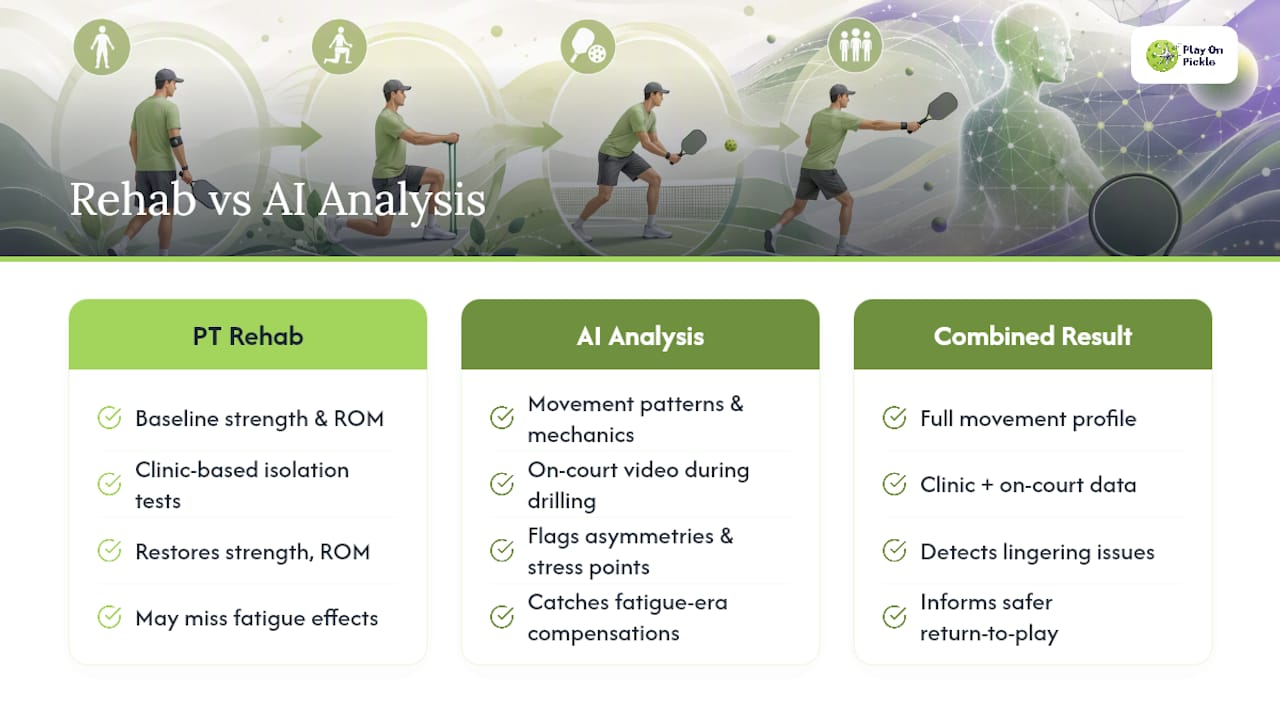
Traditional rehab tells you when a joint moves well in isolation. It rarely catches how your mechanics behave under real match fatigue, which is where reinjury tends to start. Play On Pickle's AI-driven video analysis tracks movement patterns, side-to-side asymmetries, and deceleration mechanics, flagging the exact stress points that precede common pickleball injuries.
That kind of feedback fits neatly alongside a PT-guided return. A therapist restores baseline strength and range of motion; movement analysis can then monitor how that strength holds up during actual drilling, catching a lingering asymmetry or a compensation pattern that might not show up in a clinic-based strength test. Used together, they cover both the rehab side and the on-court reality of how you actually move once you're back.
Getting Your Head Back in the Game
Physical readiness and mental readiness rarely arrive on the same day. It's common to clear every objective test, pain-free range of motion, strength parity, symptom-free drilling, and still hesitate at the kitchen line the first time an opponent hits a hard drive at your repaired ankle. That hesitation is not weakness. It's your nervous system remembering what happened last time, and it usually fades with repeated, positive exposure rather than willpower alone.
A few things help rebuild confidence without forcing it:
Start match-like drills against a cooperative partner who agrees to keep pace controlled, rather than jumping straight into competitive play with someone trying to win. Visualize specific movements you're anxious about, a lateral shuffle, a lunge for a low ball, before you attempt them live. Some players find that mentally rehearsing the motion a few times reduces the flinch response once they actually try it.
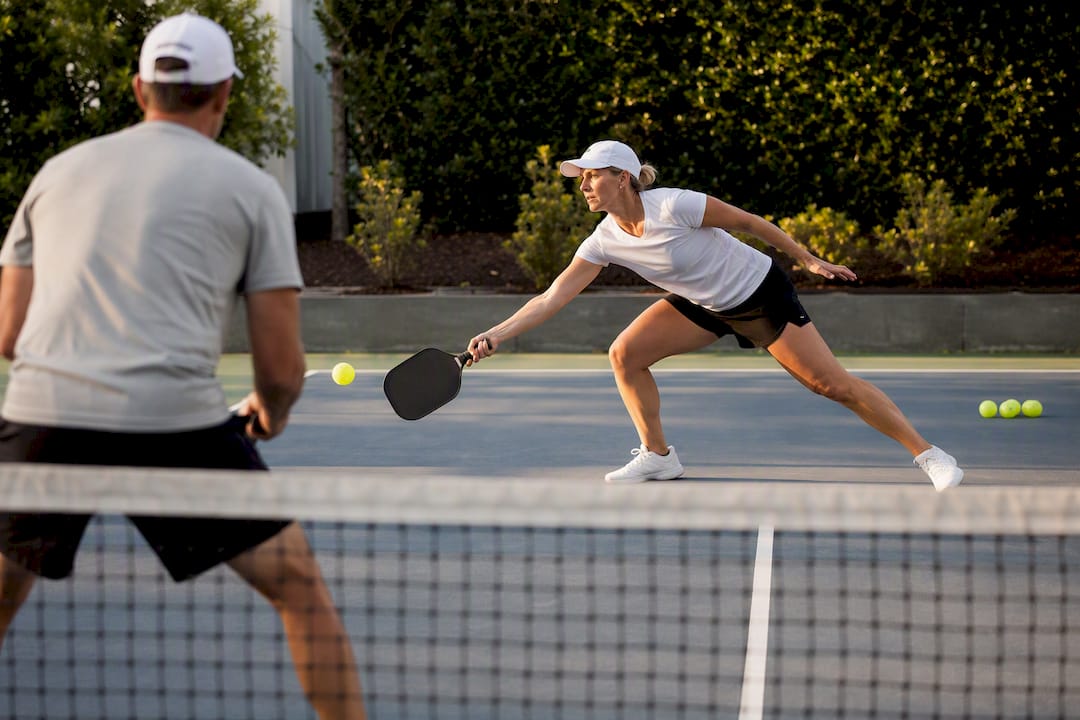
Track small wins. The first pain-free overhead serve, the first successful lateral shuffle without guarding the joint, these moments matter more for confidence than they do for fitness, and writing them down gives you evidence to counter the doubt that shows up on a bad day.
If hesitation persists well after your body has cleared every physical marker, that's worth mentioning to your physical therapist directly. Fear of reinjury that outlasts actual tissue healing is common and treatable, often with graded exposure drills specifically designed to rebuild trust in the joint, not just strength in it.
Nutrition and Hydration Considerations to Support Recovery
Tissue repair runs on protein, and most recreational athletes recovering from an injury or surgery need more of it than their normal diet provides. Aim for a source of protein at each meal, eggs, poultry, fish, legumes, or a protein supplement if whole food falls short, since collagen and muscle rebuilding both depend on adequate amino acid supply during the healing window.
Hydration affects more than performance. Dehydrated tendons and ligaments are stiffer and less pliable, which matters a great deal when you're doing range-of-motion work or early mobility drills. A simple check: if your urine is consistently dark through the day, you're behind on fluids, and that gap can slow how your body responds to rehab exercises.
Anti-inflammatory foods, fatty fish, berries, leafy greens, olive oil, won't replace medical treatment, but they support the same recovery processes your rehab plan is targeting. Alcohol, on the other hand, can interfere with sleep quality and tissue repair, which makes it worth minimizing during the weeks you're rebuilding strength and range of motion.
On heavy training or drilling days, especially in Stage 3 and 4 when you're logging real court time again, a small increase in carbohydrate intake around your session supports the energy demand of controlled hitting and footwork drills without requiring a complete diet overhaul.
Why Patience Beats Toughing It Out
Every recreational player feels the pull to skip stages once pain fades. It's a normal reaction, and it's usually the wrong call. Pain resolution and tissue readiness are not the same thing, and the players who get stuck in a reinjury cycle are almost always the ones who used pain, rather than objective testing, as their only measure of progress.
Structured progression is not about being cautious for its own sake. It's about protecting your ability to keep playing pickleball for years, not just this season. If you've had a significant injury, a torn ligament, a surgical repair, get a physical therapist or orthopedic specialist involved in setting your timeline rather than guessing from a blog post, even this one. And once you're back, ongoing monitoring tools matter just as much as the rehab that got you there, because the mechanics that caused the first injury are often still there, waiting for the right unlucky rally.
— Drona
Get Personalized Movement Tracking as You Return to Play
A specialized platform can provide returning players an ongoing, objective view of how mechanics hold up on court once back to real drilling and match play. Upload a video from a practice session, and the system uses computer vision technology to map movement patterns, flag asymmetries between injured and healthy sides, and highlight deceleration or stress points that may lead to repeat injury.
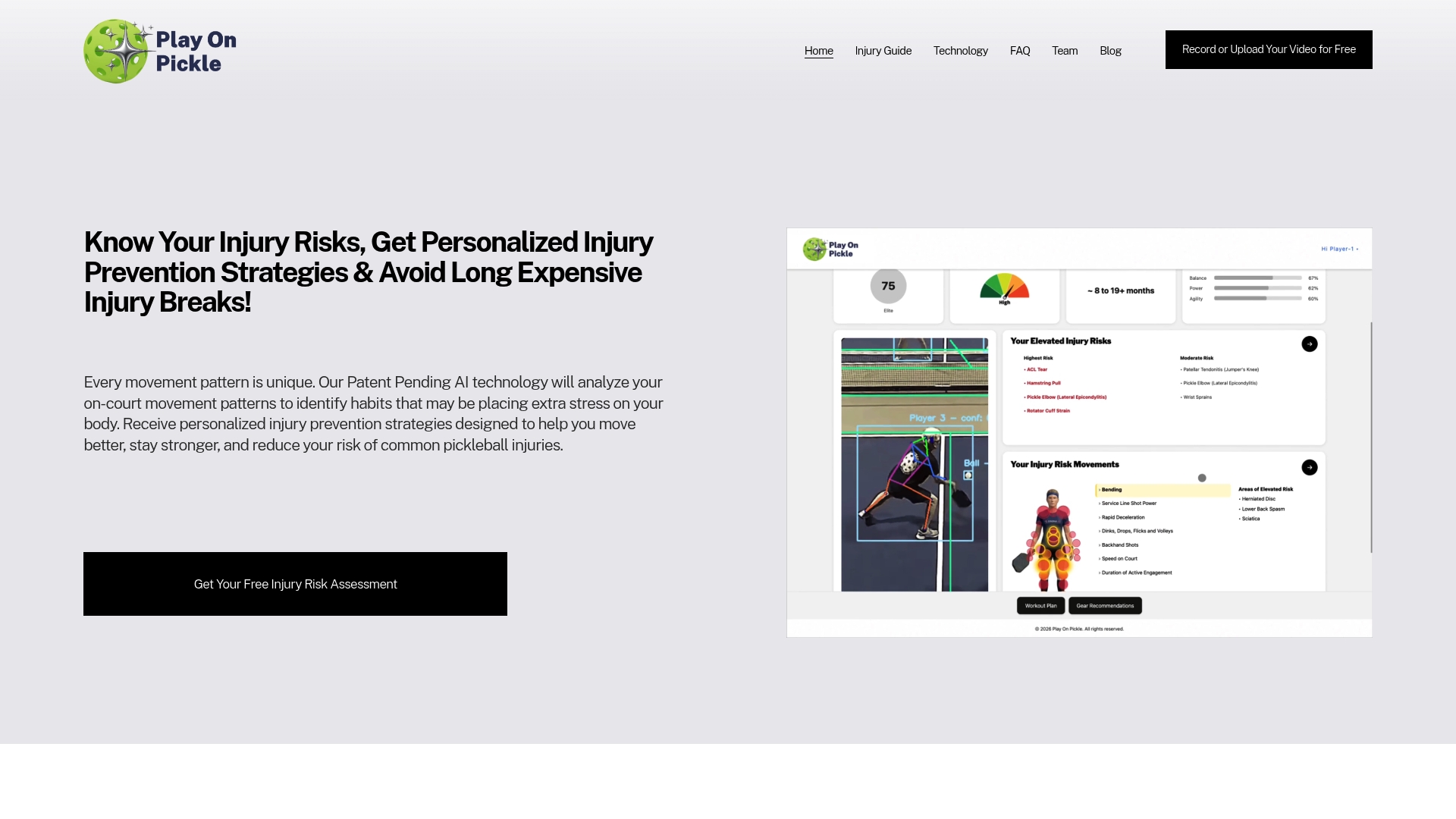
This isn't a replacement for your physical therapist. It's what happens after PT clears you, when you need something tracking your mechanics session after session instead of guessing whether that old ankle is really holding up under game speed. The platform can deliver personalized exercises based on observed movement, rather than generic advice. A free trial is available to get started with video analysis. Visit the Playonpickle landing page to start your trial and get a read on your own mechanics before your next session.
Sources
- Pickleball- and Paddleball-Related Injuries in the Lower Extremity: Description, Treatment Options, and Return to Play
- Diagnosis and Management of Common Musculoskeletal Injuries in the Pickleball Athlete | Current Physical Medicine and Rehabilitation Reports
- Physical Therapy in Recovery from Pickleball Injuries | Baptist Health
- Rotator cuff injury - Symptoms and causes | Mayo Clinic
FAQ
Is Pickleball's Popularity Expected to Decline in 2026?
No. Participation has grown steadily for years, and nothing in current injury or industry data suggests a decline. Rising player numbers are actually part of why injury prevention and safe return-to-play guidance have become more prominent topics.
What Is a "Return" in Pickleball?
In gameplay terms, a return is the shot that puts the ball back in play after the serve, typically hit deep into the opponent's court. This is distinct from "return to play," which refers to the medical and rehab process of getting back on the court after an injury.
How Soon After Knee Replacement Surgery Can You Play Pickleball?
Timelines vary by surgeon and individual healing, but most patients need several months of structured rehab before attempting court movement, and full clearance depends on meeting strength and mobility criteria rather than a fixed calendar date. Always follow your surgeon's specific timeline rather than a general estimate.
What Is the 10 Second Rule in Pickleball?
The 10 second rule is a gameplay rule requiring the server to serve within 10 seconds of the score being called, not a rehab or injury guideline. It has no connection to return-to-play timelines after an injury.
How Do I Know if My Injury Needs a Doctor Before I Return to Pickleball?
Swelling that doesn't improve with rest, joint instability, sharp pain during basic movement, or any injury involving a suspected fracture, tendon rupture, or dislocation all warrant a clinical evaluation before you attempt a return-to-play protocol on your own.