
Many players with mild sciatica can keep playing in a reduced form. Players with spreading pain, new numbness or leg weakness should stop and get examined. Sciatica is pain, tingling or numbness that runs from the lower back down a leg. It happens when a nerve root in the lower spine is pinched or irritated, and pickleball's constant forward bend, lunge and twist can set it off. The sport's spine injuries are rising fast, and movement habits are one of the few parts of the problem you can change. We built Play On Pickle for that reason: you upload a video of your play and we look for the movement stress points that load your body.
TL;DR
- Mild sciatica often settles over weeks, and doctors generally favor staying active over bed rest. Pain that spreads down the leg, new numbness or weakness means stop playing and get checked.
- Bladder or bowel changes, numbness in the groin or saddle area, or sudden leg weakness need emergency care the same day.
- Modify before you quit: shorter sessions, doubles over singles, shallower lunges and a tall torso on low balls.
- Prevention is a warm-up, core and hip strength, and a sensible weekly workload.
- Neck pain on the court is usually posture or overuse. Arm tingling or weakness needs a clinician.
Table of Contents
- Why pickleball can aggravate sciatica
- Is it sciatica or ordinary soreness?
- Red flags: stop playing and get care
- Can you play pickleball with sciatica?
- How to modify your game during a flare
- What helps between games
- Coming back to the court
- Preventing sciatica flares on the court
- A note on neck pain
- Our perspective
- Put your movement under review
- FAQ
- Sources
Why pickleball can aggravate sciatica
The numbers are striking. A 2025 study in PubMed reviewed 1,527 pickleball-related orthopaedic injuries and found 135 (8.8%) involved the spine. Spinal injuries from the sport rose 56-fold between 2013 and 2023. About 84% involved the lower back and 15% the neck. Some 63% of those patients arrived with sciatica-type symptoms, and 10% needed surgery, mostly decompression. Most patients, 98%, were managed as outpatients, which tells you that nearly all of these problems are handled without a hospital stay.
The same study found that 77% of the spine-injury patients were women and the median age was 62. A BMI over 25 was statistically linked to lumbar radiculopathy (nerve-root pain) and acute disc herniation.
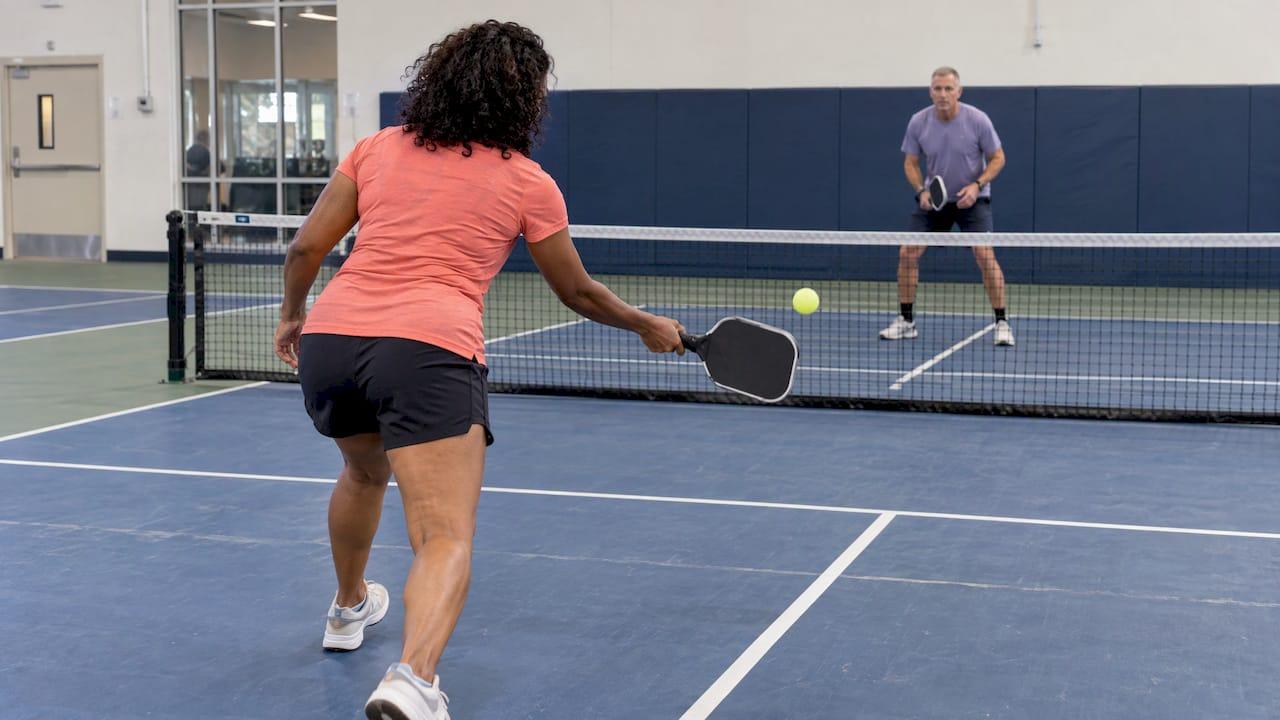
Why the sport does this is mechanical. You hold a slightly bent-forward stance for hours. You drop into low dinks, lunge for wide balls and twist through forehands and backhands. Each repeated flexion and rotation loads the lower-back discs. A herniated disc causes about 90% of sciatica cases, according to NICE's clinical guidance. A tight or weak hip and core, a late start to the season or a sudden jump from two sessions a week to five can all tip an irritated disc into a flare.

Is it sciatica or ordinary soreness?
A sore, achy low back that eases with movement is common after a long session. Nerve irritation feels different. Cleveland Clinic lists burning or electric-shock pain shooting down one leg, plus numbness and tingling. The pain often follows a line through the buttock and the back of the thigh, and it can reach the calf or foot.
A quick way to sort it out:
| Feels like | More likely |
|---|---|
| Dull ache across the low back, stiff after play, eases with walking | Muscle strain or general overuse |
| Sharp, burning or shooting pain down one leg, tingling in the foot | Nerve-root irritation (sciatica) |
| Pain plus a foot that slaps or drags, or a leg that gives way | Nerve weakness: see a clinician promptly |
| Numbness in the groin or inner thighs, bladder or bowel changes | Emergency: go to urgent care or the ER |
This table is a guide to what to watch for, not a diagnosis. A primary care doctor or sports medicine physician can examine you and tell you which one it is.
Red flags: stop playing and get care
The serious symptoms are consistent across the major sources. Mayo Clinic says to get immediate medical care for:
- sudden numbness or muscle weakness in a leg
- pain after a violent injury, such as a hard fall on the court
- trouble controlling your bowels or bladder
NICE's list of red flags adds numbness in the saddle area (where you would sit on a saddle), symptoms in both legs, a history of cancer, unexplained weight loss, and severe night pain that does not let up. Fever with back pain also needs prompt evaluation.
The less urgent triggers matter too. Mayo advises calling a primary care professional if self-care does not help, if pain lasts longer than a week, or if it is severe or getting worse. The American Medical Association says the same about a week or two without improvement, and sooner for numbness or leg weakness.
Can you play pickleball with sciatica?
Often you can, in a modified way. The old advice to lie flat until it passes has been dropped. A doctor quoted by the AMA calls the bed-rest belief wrong: a day or two of taking it easy is fine, but getting up and moving shortens how long symptoms last. The AMA also reports that most sciatica improves within two to six weeks with nonoperative care such as physical therapy. NICE advises staying active and resuming normal activities as soon as possible. The U.S. VA/DoD low back pain guideline summary likewise says that remaining active as tolerated may reduce pain and recovery time.
Playing through it is different from staying active, though. A workable rule is to let your symptoms set the level:
- Pain mild and steady, no new numbness or weakness: play easy doubles for a shorter time and keep a close eye on how the leg feels.
- Pain moderate or tingling comes and goes: limit yourself to drills, dinking and easy rallies, or walk and do your gentle exercises instead.
- Pain spreading farther down the leg, new numbness, weakness or any red flag: do not play. Get examined.
Use a traffic-light check after each session
The U.S. Pain Foundation describes a simple pacing model. An activity is green if pain rises by 0 to 2 points and settles quickly, so you can progress gradually. It is yellow if pain rises by 1 to 2 points but returns to baseline within 24 to 48 hours, so you hold the same amount. It is red if pain rises by more than 2 points and does not subside within 48 hours. That means doing less, going slower, breaking the activity into pieces or getting help.

Applied to the court: rate your pain before play, then again that evening and the next morning. A red result means the next session shrinks, and so does the one after.
How to modify your game during a flare
A spine-surgery practice that advises players with sciatica suggests a neutral spine, low-impact shots and no sudden twists or lunges. Supportive, cushioned shoes and breaks at the first sign of pain help too. In practice:
- Choose doubles. Less court to cover means fewer lunges and sprints.
- Start with soft-game shots. Dinks, blocks and resets are gentler on the spine than driving and overhead power.
- Bend your knees, not your back. On low balls, drop through the hips and knees and keep the chest tall.
- Shorten your lunges. If a ball is out of reach, let it go.
- Take a short reset between rallies. Stand tall, take a few breaths and walk it out.
- Cap the session. Play fewer games and stop before you are exhausted. Yale Medicine advises new players to build up gradually and take a break when fatigued.
If a flare lasts longer than a day after play, step back to your previous level for a few sessions before building up again. For more guidance on activity changes and recovery for a painful back, see this overview of low back pain activity modification and recovery.
What helps between games
Mayo Clinic's self-care guidance includes cold packs for up to 20 minutes several times a day, then heat after two to three days. It also recommends low-back stretches held at least 30 seconds, without jerking or twisting. Over-the-counter anti-inflammatories such as ibuprofen or naproxen may help, and your doctor or pharmacist can tell you whether they are safe for you.
Most people recover without surgery. AAOS OrthoInfo says about 80% to 90% of patients get better over time without surgery. A JAMA Internal Medicine patient guide reports that about one-third of people recover within two weeks and three-fourths feel better within three months. It adds that a physical therapist can coach specific exercises, and that surgery may be considered if pain persists after about four months of treatment.
On the tennis-ball trick: sitting on a ball to release the buttock muscles is only discussed for pain from the piriformis muscle, not for a slipped disc. A clinician has to tell you which one you have, so confirm the cause first.
Coming back to the court
A return should follow the order of the court's demands. A 2025 review of common pickleball injuries in Current Physical Medicine and Rehabilitation Reports describes return-to-play rehab that begins with pain-free range-of-motion work. Squats and lunges follow, to mimic the stop-and-start movement of the game, along with planks and bridges to handle the rotary forces of forehand and backhand strokes.
A sensible sequence:
- Walk daily and keep the leg moving without provoking pain.
- Add pain-free mobility and core work.
- Add squats, bridges and short lunges as they stay green on the traffic-light check.
- Return to dinking and easy doubles for short sessions.
- Build time and intensity only when you finish each week no worse than you started.
Our guides lay out the same logic for recreational players in an 8-week rehab plan for pickleball back pain and a 4-stage return to pickleball. If your sciatica came with a hip problem, our piece on pickleball hip pain covers that side of it.
Preventing sciatica flares on the court
The same 2025 review recommends a structured warm-up with dynamic mobility and light aerobic activity, proper technique for quick stops, pivots and overhead strokes, and suitable footwear. It also recommends prehabilitation: lower-body strengthening, balance work and core stabilization to support the kinetic chain, the linked chain of joints and muscles that passes force from the ground through your trunk to the paddle.
Yale Medicine suggests a 5 to 10 minute dynamic warm-up before play, with lunges, arm circles, knee lifts and a light jog or 30 seconds of jumping jacks. Afterward, do light static stretching and a slow walk. California Broker Magazine's 2026 injury overview reports that overuse accounts for about 38% of pickleball injuries, and suggests limiting play to three or four times a week and wearing court shoes with lateral support.
Balance and leg strength also protect your back, because a wobbly stance makes you lunge and twist harder. This guide to balance training for seniors is a good example of the exercises that build that base. Our shorter routines are three pickleball prehab moves and a broader injury prevention guide for recreational and older players. Rest days count as training, too: see what to do on a recovery day.
A note on neck pain
Neck pain is the second spine complaint in the 2025 study, at about 15% of spinal injuries. Orthopedic clinics link neck strain in players to leaning forward, jarring movements and looking up for overhead shots. Tingling, numbness or weakness in the arm points to a pinched nerve rather than a simple strain.
The same logic as for the back applies. Keep the head stacked over the shoulders when you set up, move your feet to the ball rather than craning your neck, and strengthen the upper back and shoulders. Neck pain with arm weakness, numbness in both hands or pain after a fall should be examined promptly.
Our perspective
Most players who write to us about sciatica do not need a lecture on posture. They need to know which movements are loading them, and they usually have no way of seeing that mid-rally.
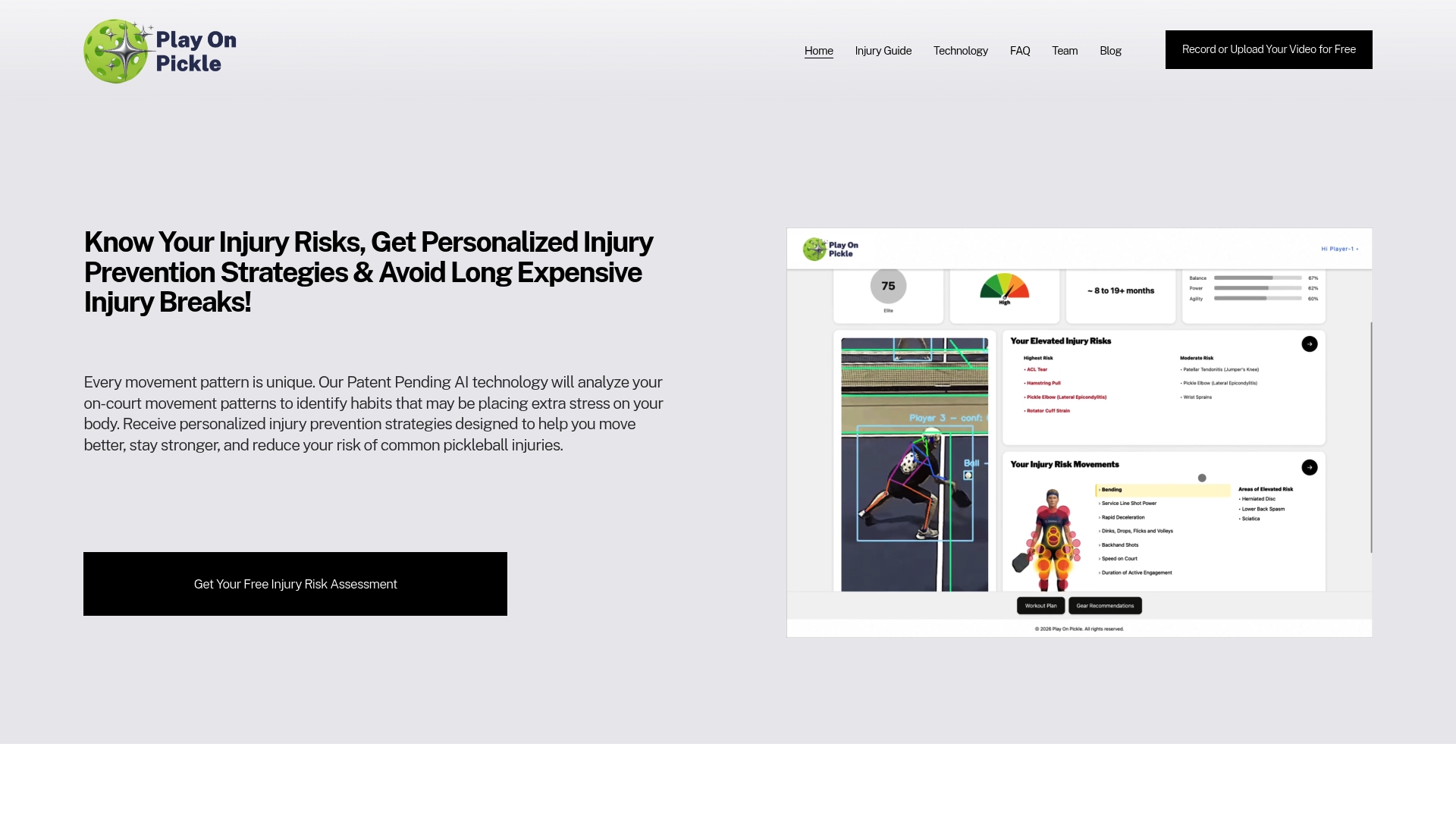
That is the idea behind Play On Pickle. We use computer vision to analyze video of how you move, find the biomechanical stress points and turn them into an injury risk assessment with exercise and equipment recommendations. Our approach is patent-pending, and we design it to give recreational and older players simple exercises that fit into their week.
The evidence above points one way: staying active, building strength and managing workload. A personalized view of your own movement makes it easier to act on that advice. It also gives a coach, a facility or a physical therapist a shared picture to work from.
Drona
Put your movement under review
If you want to see how your own stance, lunges and rotation load your back, Play On Pickle analyzes video you upload and returns personalized exercises. There is a free initial trial. After that, the plans are $9.99 per month or $99 per year.
Sciatica that is flaring, spreading or accompanied by weakness is still a job for a doctor first. Our analysis is for prevention and for building a stronger base once you are cleared to play.
FAQ
Is it okay to play pickleball with sciatica?
Often, yes, with changes: shorter sessions, doubles and gentle shots. Stop and see a clinician if pain spreads down the leg, or if you notice new numbness or weakness. Bladder or bowel changes need emergency care.
What is the worst thing you can do for sciatica?
Prolonged bed rest is the classic mistake. Doctors quoted by the AMA advise a day or two of taking it easy, then gradual movement. Ignoring weakness, numbness or bladder and bowel changes is the more dangerous error.
What is the number one injury from pickleball?
Strains and sprains of muscles and tendons are the most common, according to Yale Medicine, along with knee ligament injuries, tennis elbow and ankle sprains. Back problems, including sciatica, are a smaller share but are rising.
Does the tennis ball trick help sciatica?
It is discussed only when the cause is the piriformis muscle in the buttock, not a disc problem. Because a disc causes about 90% of sciatica cases, get the cause confirmed by a clinician first. Stop if you feel sharp pain.
How long until I can play again?
The AMA says most sciatica improves within two to six weeks. Seek care if you are not clearly better after a week or two, and return gradually once pain is settling and your leg feels normal.
Sources
- Introduction to Spine Injuries in the Pickleball Athlete (PubMed)
- Sciatica, NICE Clinical Knowledge Summaries
- Sciatica: What It Is, Causes, Symptoms, Treatment (Cleveland Clinic)
- Sciatica: Symptoms and causes (Mayo Clinic)
- Sciatica: Diagnosis and treatment (Mayo Clinic)
- What doctors want patients to know about sciatica (AMA)
- VA/DoD low back pain guideline summary
- Your Blueprint For Activity Modification and Pacing (U.S. Pain Foundation)
- Understanding Sciatica: Playing Pickleball with Sciatica
- How to Prevent Pickleball Injuries (Yale Medicine)
- Sciatica (AAOS OrthoInfo)
- I Am Worried I Have Sciatica (JAMA Internal Medicine)
- Diagnosis and Management of Common Musculoskeletal Injuries (Current Physical Medicine and Rehabilitation Reports)
- Pickleball Injuries: Common Risks, Prevention Tips (California Broker Magazine)
- Pickleball Injuries Are on the Rise (Comprehensive Orthopedic Center)