
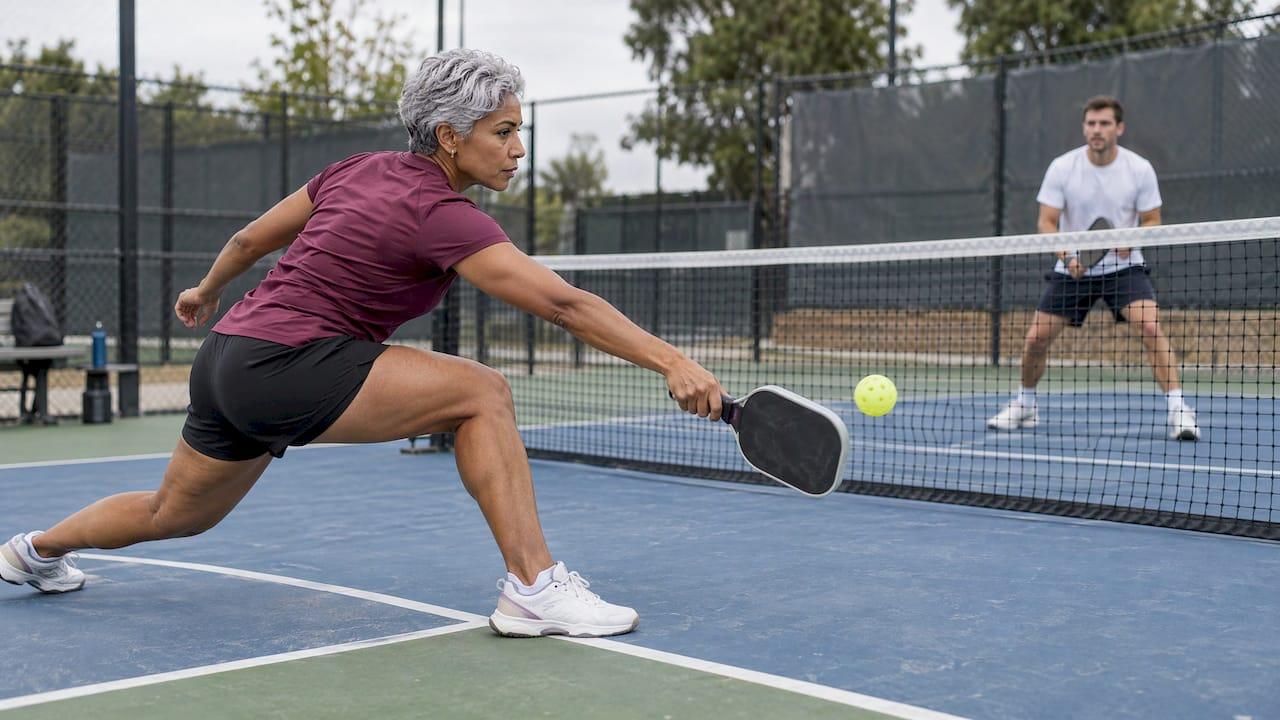
Good ankle mobility for pickleball means your ankle bends far enough, and controls that bend well enough, to handle the low ready position, the lunge and the sudden stop without borrowing motion from your knees, hips or back. You build it with a few minutes of calf and ankle mobility work, add simple strengthening and single-leg balance, and check how you actually move on court. That last step is where our video movement analysis comes in, because a stiff ankle is easy to feel but hard to see from the inside.
TL;DR
- Ankle mobility is the usable range your ankle has in the positions pickleball keeps demanding, not extreme flexibility.
- Do calf stretches, slow knee-over-toe rocks and ankle circles a few minutes at a time, regularly.
- Mobility is only half the job: controlled heel raises and single-leg balance build the strength that protects against sprains.
- Warm up with dynamic movement before play and save static stretching for the cool-down.
- Swelling past 48 hours, instability, numbness or pain in daily life means stop and get evaluated.
Table of Contents
- What ankle mobility does on a pickleball court
- A quick check before you start
- The ankle mobility routine: five to ten minutes
- Ankle strengthening for pickleball
- Balance: the other half of ankle stability
- Warm up and cool down the right way
- A simple weekly plan
- When to stop and get it checked
- What video shows that a stretch routine cannot
- Start with your own movement
- FAQ
- Sources
What ankle mobility does on a pickleball court
Pickleball looks gentle, but it asks the ankle for the same things tennis does: short sprints, abrupt stops and constant side-to-side movement. A physician at Hospital for Special Surgery (HSS) says ankle sprains are the most common pickleball injury she sees, and that weak ankle stabilizer muscles raise the risk of rolling the ankle.
The movement that matters most is dorsiflexion. That is the shin traveling forward over the foot while the heel stays down. You use it every time you drop into a ready position at the kitchen line, lunge for a dink, or brake after a chase. If the ankle cannot bend that way, the body finds a workaround: the heel lifts, the foot turns out, or the knee and hip take on motion they were not built to supply. Orthopedic specialists note that good ankle mobility can also reduce stress on the knees during matches.
The goal is not a gymnast's range. It is enough motion, controlled, for the positions you hold again and again in a two-hour session.
A quick check before you start
Stand facing a wall with your toes a few inches from it. Keeping your heel flat, bend your knee and try to touch the wall with it. Move your foot back a little at a time and note how far you can go. Compare your left and right sides. A clear difference between them, or a pinch at the front of the ankle, tells you where to begin.

This is a rough self-check, not a diagnosis. If it hurts, stop. If you want an objective read on how your ankles behave in real play, a video from the court shows far more than a wall test (more on that below).
The ankle mobility routine: five to ten minutes
Do these slowly, and warm up first. The American Academy of Orthopaedic Surgeons (AAOS) recommends 5 to 10 minutes of warm-up before stretching and says not to exercise through pain.
1. Straight-knee calf stretch
Stand facing a wall, one foot back with the heel down and the knee straight. Lean forward until you feel a stretch in the upper calf. Hold 20 to 30 seconds per side.
2. Bent-knee calf stretch
Same position, but bend the back knee while keeping that heel on the floor. This targets the deeper calf muscle (the soleus) and rehearses the low, knees-bent kitchen position.
3. Knee-over-toe rocks
Stand in a split stance with your front foot flat. Slowly glide the front knee over the toes, keeping the heel down, then return. Ten slow reps per side. Start with a small range and widen it as it feels comfortable.
4. Ankle circles
Sitting, lift one foot and draw slow circles. Orthopedic guidance suggests 10 to 15 in each direction. A variation is writing the alphabet in the air with your foot. An American Orthopaedic Foot & Ankle Society (AOFAS) surgeon names writing the alphabet with both feet as her favorite exercise for ankle strength and coordination.
5. Side-to-side weight shifts
Stand with feet wide and shift weight from one foot to the other, letting the ankle roll slightly over each foot under control. Add a shallow side lunge once that feels easy. It mimics the lateral movement the game rewards.
Five minutes of this a few times a week beats an occasional long session against a stiff ankle.
Ankle strengthening for pickleball
Mobility lets the ankle move. Strength lets it hold that movement when you are off balance. This is what answers the question behind "ankle strengthening pickleball": you need both.
Heel raises
HSS recommends controlled heel raises: hold a counter for balance, rise as high as you can, then lower slowly. The slow lowering is what builds the calf and the tendon.
A simple progression:
- Two-foot heel raises, rising and lowering slowly. Aim for 10 to 15 repetitions.
- Move to a single-leg version once two-foot raises feel easy.
- Add a slow lower from the edge of a step, holding support, with the heel dropping below step level.
Orthopedic specialists also describe eccentric calf work, where the calf lengthens while it contracts, as valuable for the Achilles tendon, which takes a beating from the stop-start pattern of the game. If your heel or Achilles already aches, our guide for players over 50 dealing with Achilles pain goes deeper.
Weights, if you want more load
Once bodyweight work is easy, some players add light resistance. A guide to using ankle weights for strength and mobility explains how to start light. Keep the load small and the movement slow.
Off-court extras
Heel-to-toe walking in a straight line, toe walking and heel walking are easy to do in a hallway. They train the small stabilizing muscles around the ankle without any equipment.
Balance: the other half of ankle stability
A sprain happens when the ankle is pushed past where your muscles can catch it. Balance training teaches those muscles to react faster.
Start with the single-leg stand. AAOS describes standing next to a support, lifting one foot with the knee straight and holding up to 30 seconds, using the support only as needed. Do 3 to 5 repetitions, and it suggests this can be done 6 to 7 days a week. HSS suggests building to a full minute per side, then trying an uneven surface such as a folded blanket or pillow.
To make it look more like pickleball, add a slight knee bend so you are in an athletic stance, or reach the free foot in different directions. Taking off your shoes makes it harder too.
For older players, balance work does double duty. It protects the ankle on court and helps with falls off court. This overview of balance training for seniors covers safe starting points, and our own 8-week balance plan for pickleball players lays out a progression built around the game.
Warm up and cool down the right way
An American Medical Association interview with a sports medicine physician advises dynamic stretching before play rather than long static holds, with a few drops of sweat as a practical marker that you are ready. Static stretching is best saved for the cool-down, when muscles are warm. The same article recommends tennis-style court shoes with firm sides and grip over soft-soled running shoes.
AOFAS also cautions against jumping in at full speed after a long layoff, such as the first warm weekend after a winter off. And one AOFAS surgeon notes that people often treat pickleball as recreation and skip stretching, even though the sport has many tennis-like motions that make calf stretches and balance exercises very important.
If you need a ready-made routine, see our 5- and 10-minute pickleball warm-ups or the three-move prehab routine.
A simple weekly plan
Sports Medicine Weekly recommends two weekly sessions of leg strengthening, core work and balance training, and increasing court time gradually over several weeks. Here is one way to fit the ankle work in:
| When | What | How much |
|---|---|---|
| Before every session | Dynamic warm-up, ankle circles, weight shifts | 5 to 10 minutes |
| 2 days a week, off court | Heel raises, single-leg balance, heel-to-toe walking | 10 to 15 minutes |
| After play | Straight-knee and bent-knee calf stretches | 2 to 3 minutes |
| Most days | Knee-over-toe rocks or a wall check | 2 to 3 minutes |
After 4 to 6 weeks, move to harder versions: single-leg heel raises, an uneven surface for balance, a wider side lunge. AAOS suggests continuing the foot and ankle conditioning program for 4 to 6 weeks under a doctor's or physical therapist's supervision after an injury, then 3 to 5 days a week as lifelong maintenance. Keep pickleball from being your only activity: an AOFAS surgeon suggests mixing in walking, biking, yoga or Pilates to maintain overall strength and endurance.
When to stop and get it checked
Mobility work should never hurt. Stop and see a doctor, sports medicine physician or physical therapist if you notice swelling that lasts more than 48 hours, instability, significant loss of motion, pain during daily activities, recurring injuries, or numbness or weakness. A rolled ankle in the middle of a game needs its own plan; our guide to what to do right after a pickleball ankle sprain covers the first steps.
Exercises described here are general conditioning for healthy players. If you have had a sprain, surgery or ongoing pain, have a clinician set your starting point.
What video shows that a stretch routine cannot
Most recreational players never see how their ankles behave during play. Do you lift your back heel when you drop low? Does one foot turn out on the lunge? Does one side collapse inward on the stop? A wall test cannot answer that.
This is the gap our service is built for. You upload video of your play, our computer vision analysis looks at your movement patterns, identifies where stress concentrates in the body, and turns that into an injury risk assessment with tailored exercise recommendations. Our technology is patent-pending and designed specifically for pickleball movement.
Coaches and facilities can use the same approach to give each player individual guidance instead of one generic stretch sheet for everyone. Our session templates and warm-up for coaches show how to build it into practice.
Our view: mobility is personal
We built Play On Pickle because we think the standard advice, a handful of stretches for everybody, leaves most recreational players guessing. Two players can have equally stiff ankles for completely different reasons, and the fix is not the same.
Our approach starts from your own movement on court. Your video shows where your body is under stress, and your plan is built around that, with simple exercises that fit into your routine rather than a second job. For older players, that means safer participation. For competitive players, it means training time spent where it counts. For coaches and facilities, it means a way to look after many players at once.
We believe the best injury prevention is the kind people actually do. That is why we keep it short, specific and repeatable.
Drona
Start with your own movement
If you want your ankle plan built around how you actually move, our service starts with a free trial. After that it is $9.99 per month or $99 per year. Our free tripod offer comes with the $9.99 monthly plan, so filming your play is easy.
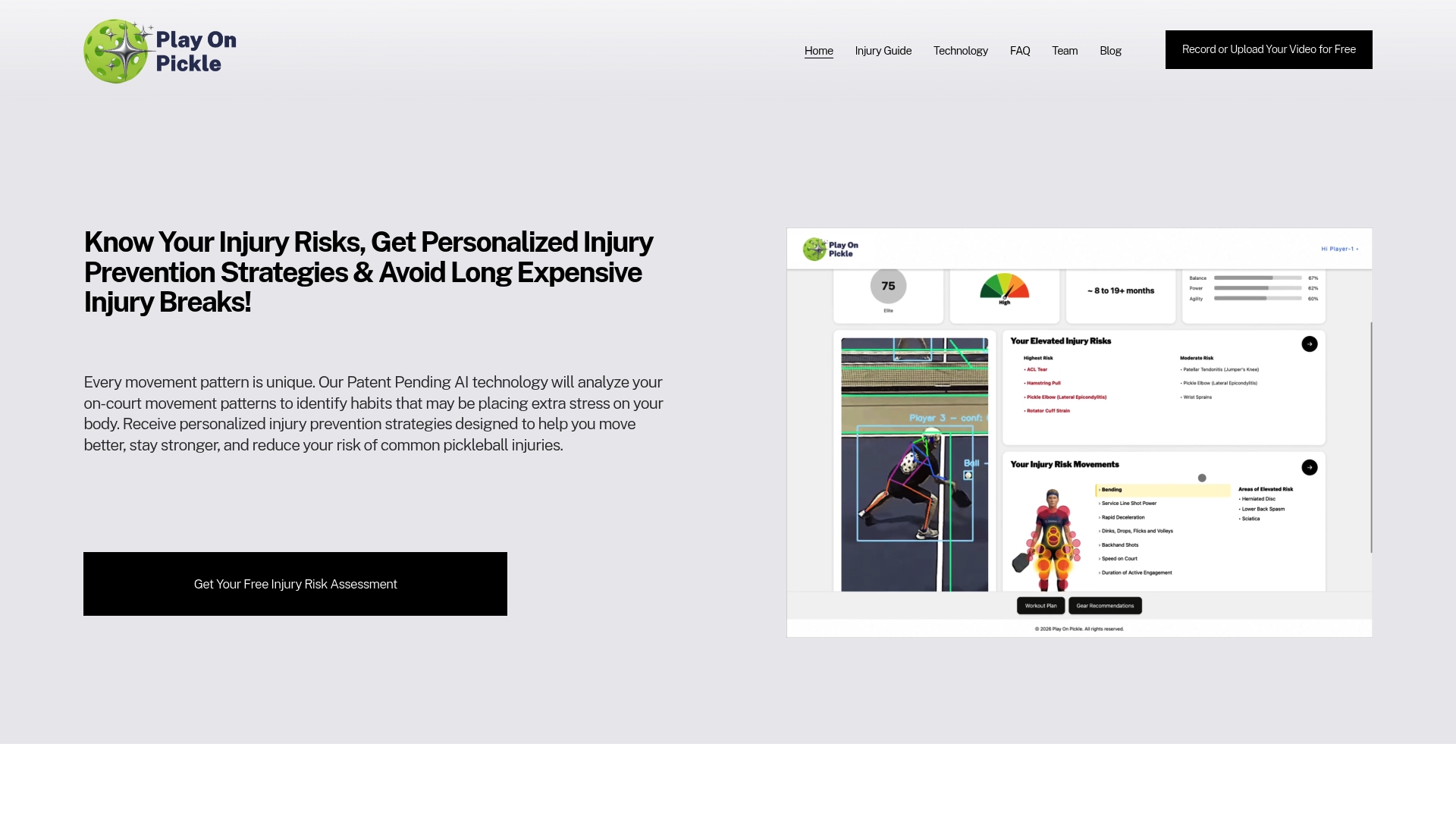
Upload a video, see where your body takes the load, and get exercises matched to it. You can find everything at playonpickle.com.
FAQ
How can I improve my ankle mobility for pickleball?
Do calf stretches (straight-knee and bent-knee), slow knee-over-toe rocks and ankle circles for a few minutes several times a week, after a short warm-up. Keep the range comfortable and widen it gradually. Pair mobility work with heel raises and single-leg balance so the new range is controlled.
Is pickleball a weight-bearing exercise?
Yes. You are on your feet, running, stopping and changing direction, so your legs and ankles carry your body weight throughout. That is a good reason to keep the ankles mobile and strong, and to build up court time gradually if you have been inactive.
What is the best ankle strengthening exercise for pickleball?
Controlled heel raises are a reliable starting point, and HSS recommends them along with single-leg balance. Raise both heels, lower slowly, then progress to one leg or a slow lower off a step. Writing the alphabet with your foot is a gentle add-on for coordination.
Should I stretch before or after playing?
Before play, use dynamic movement such as light cardio, ankle circles and weight shifts until you break a light sweat. Save static stretches such as holding a calf stretch for the cool-down, when your muscles are warm.
When should I see a doctor about my ankle?
See one if swelling lasts more than 48 hours, the ankle feels unstable, motion is clearly limited, daily activities hurt, or you notice numbness or weakness. Do not exercise through pain.
Sources
- HSS: Stretches and Exercises to Prevent Pickleball Injuries
- AAOS OrthoInfo: Foot and Ankle Conditioning Program
- AOFAS: 6 Tips to Prevent Pickleball Injuries to Your Feet and Ankles
- AMA: What doctors want patients to know about preventing pickleball injuries
- Sports Medicine Weekly: Pickleball Injuries Are Rising in 2026
- Getting Your Ankles in Shape for Pickleball
- Balance training for seniors
- Using ankle weights for strength and mobility