
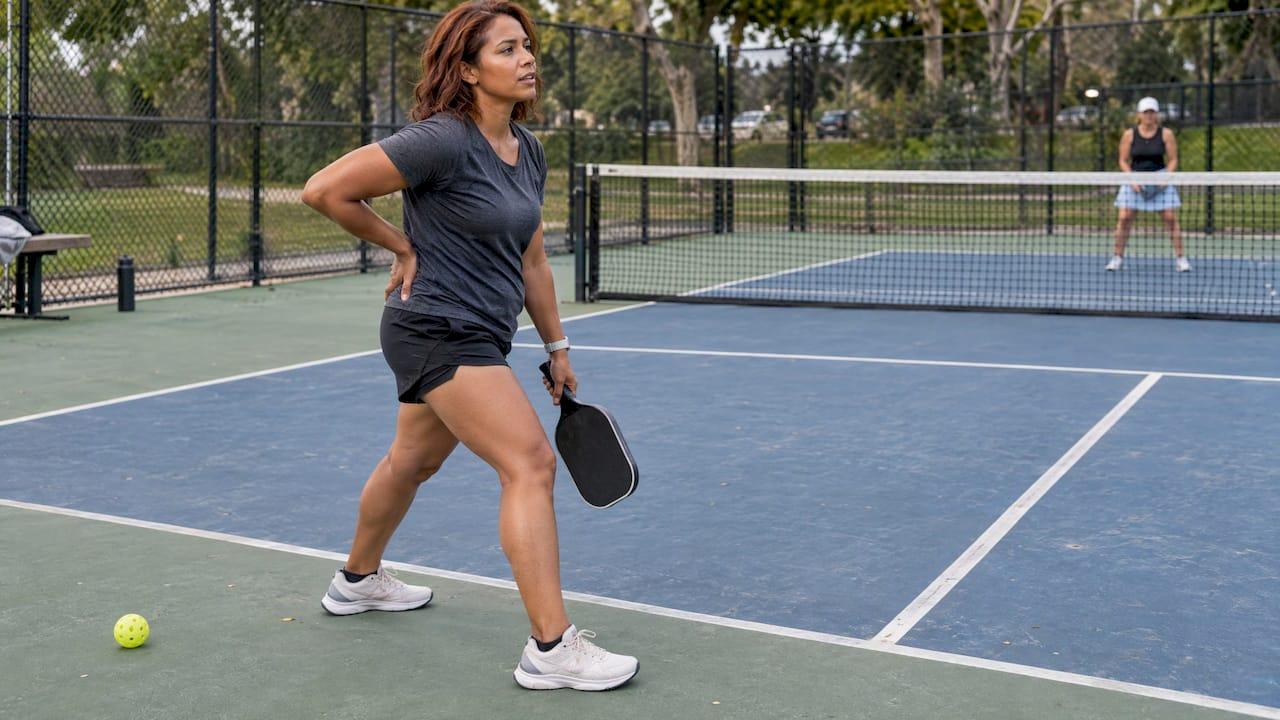
Deep, aching pain in one buttock after a night of open play is common among pickleball players, and it often points to the piriformis, a small muscle deep in the hip that rotates the thigh outward. The same side-to-side game can also irritate the IT band, the thick strip of tissue down the outside of the thigh. The usual driver is not one bad move but court time that outpaces your hips' strength and recovery. That is why a movement-based approach works best: Play On Pickle analyzes video of how you move and builds a personalized prevention plan around your stress points.
TL;DR
- Piriformis syndrome means the piriformis muscle irritates or compresses the sciatic nerve, causing buttock pain and sometimes pain, tingling or numbness down the back of the leg.
- IT band syndrome causes pain on the outside of the hip or knee, and it builds gradually with repetitive shuffling and planting.
- Sudden jumps in play volume, weak glutes, hard courts and worn shoes are the common triggers.
- Reduce load first, then rebuild with glute strengthening and a dynamic warm-up; see a doctor for numbness, weakness or pain that does not settle.
- Video movement analysis can show which of your own patterns load your hips most.
Table of Contents
- What piriformis syndrome is, and why pickleball provokes it
- IT band syndrome: the lateral cousin
- What loads your hips on a pickleball court
- When to stop and get checked
- Calming it down: load first, then strength
- A prevention routine for your hips
- Find your stress points with Play On Pickle
- FAQ
- Sources
What piriformis syndrome is, and why pickleball provokes it
The piriformis sits deep in the buttock, and the sciatic nerve runs close to it. Cleveland Clinic explains that the syndrome occurs when the muscle compresses that nerve, producing aching, burning, tingling or shooting pain in the buttock and down the back of the leg. Symptoms can worsen with prolonged sitting, walking, running or climbing stairs. Most episodes resolve in days to weeks with rest and simple treatment.
Pickleball asks a lot of this area. Quick lateral shuffles, sudden stops, lunges into the kitchen, split-steps, pivots and low defensive positions can irritate the deep hip rotators, glutes and sciatic nerve, especially when play outpaces recovery. Players describe deep buttock pain, soreness after sitting, pain on stairs or when lunging and squatting, and sometimes tingling down the back of the leg that mimics sciatica.
Cleveland Clinic also lists common contributors: not warming up before activity or stretching after it, repetitive motions, prolonged sitting, tight muscles from inactivity and weak piriformis muscles. Many recreational players sit at a desk all day, then play hard for two hours, which fits that list closely.
If your main symptom is pain running down the leg, our guide on sciatica and pickleball covers when to play, modify or rest.
IT band syndrome: the lateral cousin
The IT band is a long band of connective tissue running from the hip to the outside of the knee. AAOS OrthoInfo describes IT band syndrome as an overuse injury from repetitive friction along the outside of the hip and knee. Typical symptoms are:
- Knee pain during activity that eases with rest
- Aching, burning or stiffness on the outside of the knee and hip
- Clicking or popping at the outside of the knee or hip
- Pain that radiates up and down the leg
Cleveland Clinic notes that pain often shows up after exercise at first, then appears during play and eventually at rest as the problem progresses. That progression is the signal to act early.
On court, every hard shuffle-and-plant to reverse direction loads the band near the knee. Repeat that hundreds of times over two hours on concrete and the irritation builds gradually, not suddenly.
How to tell them apart
| Piriformis syndrome | IT band syndrome | |
|---|---|---|
| Where it hurts | Deep in the buttock, sometimes down the back of the leg | Outside of the hip or knee |
| Feel | Deep ache, burning, tingling or numbness | Aching, burning, snapping or clicking |
| Worse with | Sitting, stairs, lunging, squatting | Shuffling, repeated lateral movement, longer sessions |
Self-diagnosis is unreliable. Ohio State physical therapist Samantha Amway cautions that IT band syndrome can be confused with hip labral or knee meniscal problems, and does not recommend diagnosing yourself. Piriformis syndrome is also hard to confirm: a review of the athlete with buttock pain describes it as a diagnosis of exclusion, made after other causes of sciatic nerve irritation are ruled out, and notes that the common clinical tests have not shown reproducible validation.
What loads your hips on a pickleball court
The pattern behind both problems is load outrunning capacity. Common contributors include:
- Sudden volume jumps. Going from two sessions a week to five, or from one-hour games to three-hour open play, can overload the hips quickly. AAOS lists sudden increases in training volume and intensity as an IT band risk factor.
- Weak hip and glute muscles. AAOS names weak abdominal, hip and buttock muscles, and tight leg muscles. Medscape lists hip abductor weakness and tight hip rotators among the deficits associated with piriformis syndrome.
- Hard surfaces and worn shoes. Concrete and asphalt courts and shoes whose lateral support has worn down are flagged as IT band triggers. AAOS also lists poor shoe support and uneven surfaces. Our piece on court surface injuries gives a six-week single-leg plan.
- Skipping the warm-up. Cleveland Clinic lists not warming up as a piriformis contributor.
See also our overview of pickleball hip pain causes and fixes.
When to stop and get checked
Most cases settle with rest and simple measures, but some signs call for a doctor or physical therapist. See one if you have numbness or weakness in the leg, pain that keeps getting worse, pain at rest or at night, or symptoms that do not improve after a couple of weeks of reduced play. A clinician can rule out other causes such as a lumbar spine problem, hip joint pathology or a meniscus problem. If you have had hip surgery, read our note on pickleball after hip replacement and follow your surgeon's clearance.
A 2025 review of common pickleball injuries says evaluation should look at training patterns, activity level and prior injuries, with an exam of strength, range of motion and compensatory movement, and that hip function should be screened when knee pain is the complaint. Management centers on activity modification, physical therapy, gradual return to play and correcting biomechanical or training errors such as poor footwear and inadequate warm-up.
Calming it down: load first, then strength
The order matters. Pickleball Union's Ana Nodilo makes the point that you cannot strengthen your way out of an irritated hip while playing the same volume that irritated it. Glute bridges and clamshells on top of four hard open-play nights can register as more load, not rehab. A sensible sequence:
- Calm symptoms and cut the volume or intensity that provokes them.
- Rebuild strength with pain-free exercises.
- Return to intensity step by step, not in one jump.
- Keep the strength work going once you are back.
For piriformis syndrome, Medscape advises avoiding prolonged sitting and stretching two or three times daily and before sport. It says athletes can return when they have full pain-free range of motion and strength on the affected side and can do sport-specific activities without discomfort. For IT band syndrome, AAOS says most people treated without surgery can return to running within about 6 weeks, though your own timeline depends on your diagnosis and clinician.
A prevention routine for your hips
Warm up dynamically
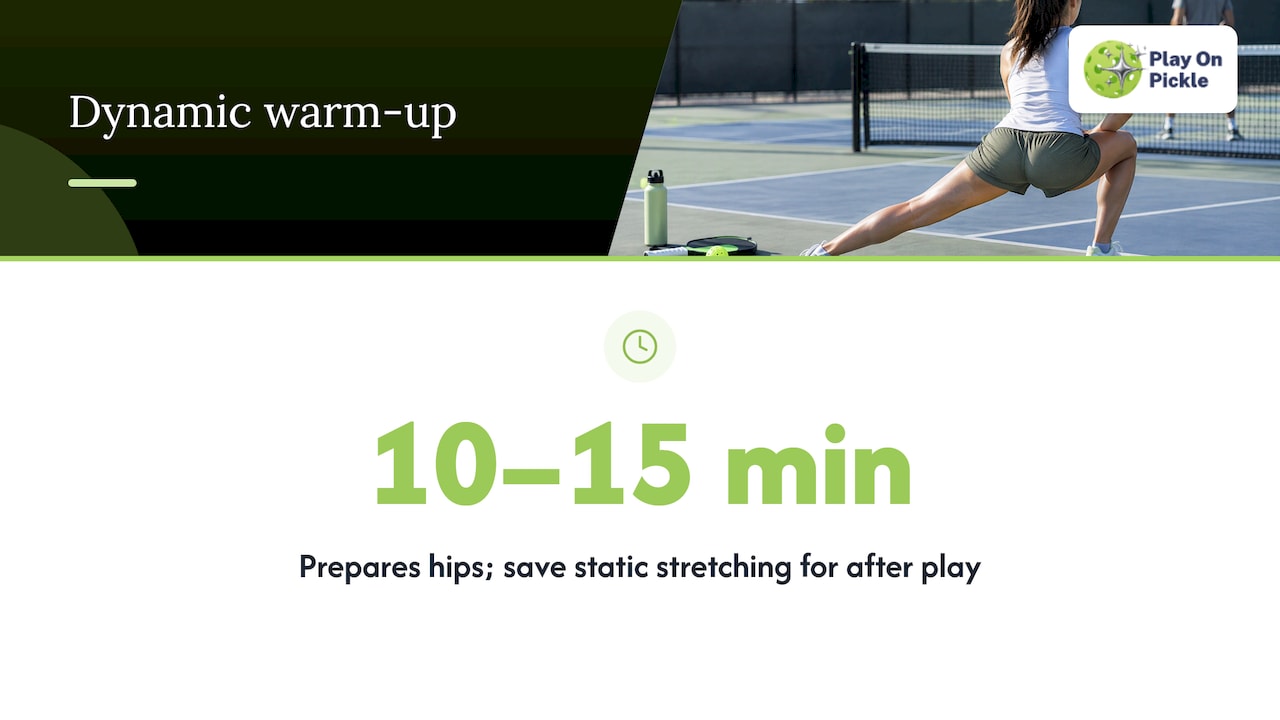
A 10 to 15 minute dynamic warm-up with walking and lateral lunges, leg swings, hip circles and lateral shuffles prepares the hips, with static stretching saved for after play. Research on older pickleball athletes also recommends joint mobility work for the ankles, hips and thoracic spine. Our coaching warm-up templates fit this in 5 to 10 minutes.
Strengthen the glutes
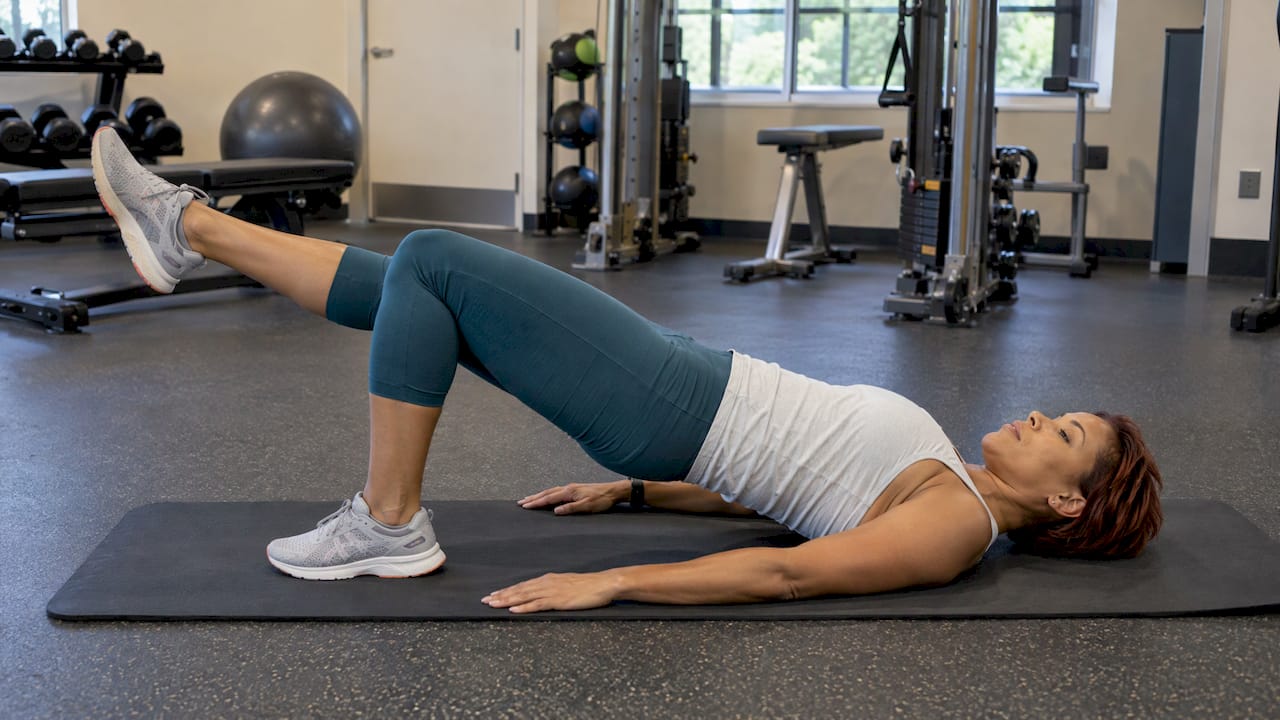
The same source suggests gluteus medius work two to three times a week for at least eight weeks: lateral band walks, clamshells, single-leg bridges and side-lying leg raises. For the IT band, one protocol uses clamshells with a band (3x15), lateral band walks (3x10 steps each way), side-lying leg lifts (3x12), single-leg glute bridges (2x10) and lateral step-downs (2x8), with the rule that exercises should not reproduce lateral knee pain. If an exercise provokes your symptoms, stop and have it checked.
The 2025 review adds squats and lunges that mimic the stop-and-start nature of the sport, plus planks and bridges to handle rotary forces in strokes. It frames this as prehabilitation: eccentric strengthening, balance work and core stabilization to build tissue resilience. For a short version, try our three-move prehab routine.
Manage the week, not just the session
Raise play time gradually, rotate shorter sessions with rest days, replace shoes when lateral support fades, and break up long stretches of sitting. Our broader guide to injury prevention for recreational and older players goes deeper.
Our perspective
Hip pain on a pickleball court is rarely about one shot. It is about how your own body moves through hundreds of shuffles, stops and lunges, and where it takes the stress. Two players with the same buttock ache can have very different causes: one drops the knee inward when planting, another sits tight from a desk job and has weak glutes.
That is why we built Play On Pickle around movement analysis. Our patented computer vision technology looks at how you move and identifies stress points in your body, and we turn that into personalized injury prevention strategies, with simple exercises that fit into a routine recreational players will actually keep. Generic workout lists treat every hip the same. We think prevention works better when it starts with your biomechanics.
Drona
Find your stress points with Play On Pickle
Play On Pickle analyzes video you upload, identifies biomechanical stress points, and returns a personalized injury risk assessment with tailored exercise and equipment recommendations. Plans are $9.99 per month or $99 per year, and there is a free initial trial. See the options on our pricing page.

Coaches and facilities can use the same approach to keep the players they work with on court.
FAQ
Can piriformis syndrome cause pain in the groin?
The typical pattern is deep buttock pain, sometimes traveling down the back of the leg. Groin pain more often points elsewhere in the hip, so have a clinician examine it rather than assuming the piriformis is the cause.
How long does a tight piriformis take to settle?
Cleveland Clinic says most episodes resolve in days to weeks with rest and simple treatments. Persistent or worsening pain, numbness or weakness needs a medical evaluation.
Can I keep playing with IT band pain?
The most consistently supported first step is reducing load. Cut back on the volume or intensity that provokes pain, and see a physical therapist if it appears during play or at rest.
How should I sit with piriformis pain?
Medscape advises avoiding prolonged sitting. Stand and move regularly, and stretch two or three times a day as your clinician advises.
Sources
- Piriformis Syndrome: Symptoms, Causes and Treatment, Cleveland Clinic
- Iliotibial Band Syndrome (ITBS), Cleveland Clinic
- Iliotibial Band (IT Band) Syndrome, OrthoInfo, AAOS
- Iliotibial (IT) band FAQ, Ohio State Health & Discovery
- Evaluation of the Athlete With Buttock Pain
- Piriformis Syndrome Treatment & Management, Medscape
- Diagnosis and Management of Common Musculoskeletal Injuries, Springer
- "Pickleball Butt" Is Real, Pickleball Union
- Pickleball IT Band Syndrome: Causes, Treatment & Recovery
- Pickleball Hip Pain: Causes, Prevention & Evidence-Based Care
- Exploring Training Strategies to Optimize Court Performance in Older Pickleball Athletes