
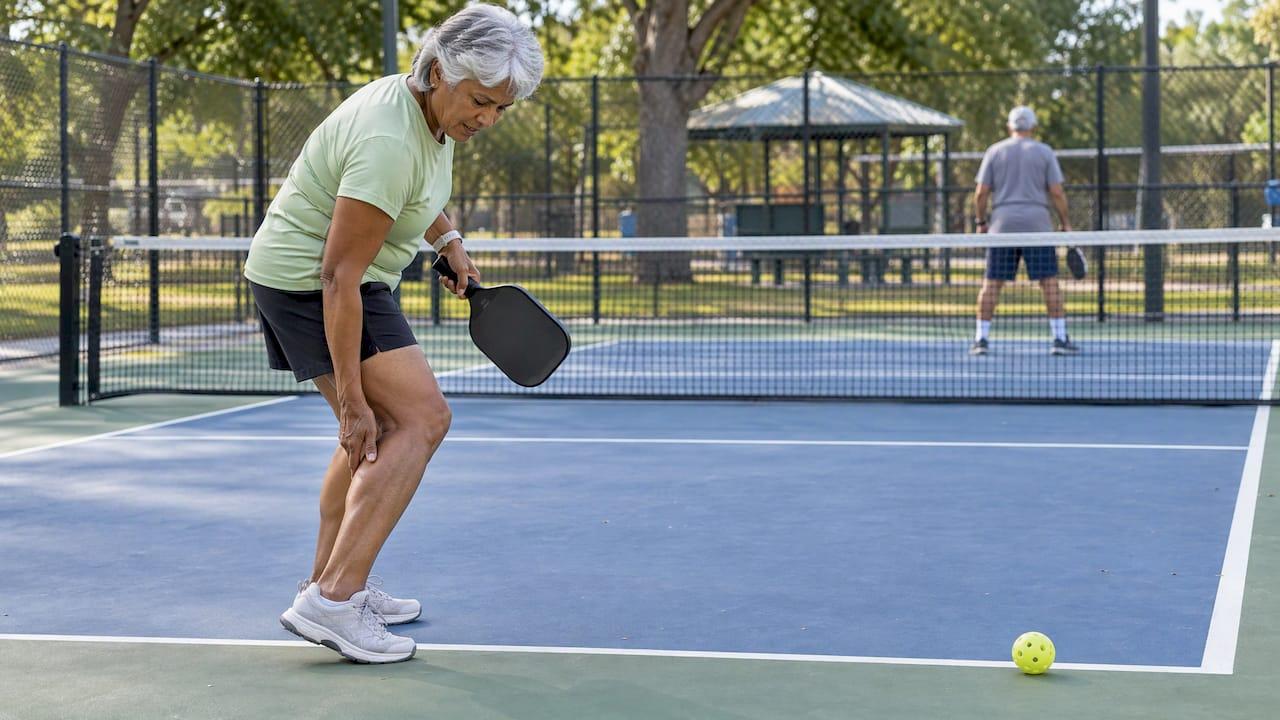
If a calf or hamstring locks up mid-rally, stop and gently stretch that muscle until it lets go. That is the fastest, safest first move according to an evidence-based review of exercise-associated cramps. Preventing the next one is a different job. It depends on your conditioning, your heat exposure, your sweat losses and how your body moves when you are tired, which is why a personal movement assessment beats generic advice. We built Play On Pickle around that idea: you upload video of your play, and the analysis looks for biomechanical stress points so your plan fits your body.
TL;DR
- Stretch the cramping muscle gently and hold until it eases. Stretching is the first-line treatment for an active cramp.
- Fatigue, poor conditioning, heat and heavy sweat losses all contribute. The exact cause is not settled, so prevention works best when it is individual.
- Pickle juice in small sips may shorten a cramp in lab tests, but a cold electrolyte drink and stretching are the better-established plan.
- Warm up for 5 to 10 minutes, cool down, and follow a fluid plan before, during and after play.
- See a health care provider if cramps are severe, frequent, come with swelling, redness or weakness, or do not improve with self-care.
Table of Contents
- Why pickleball players get muscle cramps
- What to do when a cramp hits mid-game
- Does pickle juice stop cramps?
- A fluid plan that fits a pickleball session
- Preventing cramps before they start
- Cramp, strain or something else?
- Perspective: why cramp prevention should be personal
- Try a movement analysis built for pickleball
- FAQ
- Sources
Why pickleball players get muscle cramps
Pickleball looks gentle and plays hard. Short sprints to the kitchen line, split-steps, lunges for dinks and sudden stops load the same leg muscles hundreds of times in an hour. Add a warm court and a long session, and cramps become common.
The science is honest about one thing: nobody has pinned down a single cause. AAOS OrthoInfo says the exact cause is unknown, but inadequate stretching and fatigue may affect how muscles contract. It lists poor conditioning, intense heat, dehydration and loss of salt and minerals as other possible contributors.
Two main explanations show up in the research:
- Muscle fatigue. The same source explains that a poorly conditioned body fatigues sooner, and fatigue can alter spinal reflex activity. Overexertion also depletes a muscle's oxygen supply, waste products build up, and once a cramp starts the spinal cord keeps stimulating the muscle to contract. A 2008 article by Bergeron links overload and fatigue to local cramps, the kind in one muscle that respond to stretching and massage.
- Heavy sweating and sodium loss. The same article ties more widespread cramps to extensive sweating and a significant whole-body sodium deficit. It reports that severe cramping has been associated with an estimated sweat-induced loss of 20% to 30% of the exchangeable sodium pool, and that sweat sodium concentration typically runs 20 to 80 mmol/L. It also says calcium, magnesium and potassium have been implicated falsely as causes of exercise-related cramping, so "you must be low on magnesium" is a weak guess.
Fluid matters too. MedlinePlus states that the most common cause of muscle cramps during sports is not getting enough fluids. Drinking water often eases cramping, but water alone does not always help, and sports drinks that replace lost minerals can be useful. Cleveland Clinic adds the other side: gulping large amounts of water quickly can dilute the electrolytes in your body, which may make muscles tighten and cramp.
Which muscles cramp most
The Miller review says exercise-associated cramps typically hit frequently used muscles that span more than one joint, such as the quadriceps and the gastrocnemius (the big calf muscle). MedlinePlus lists the calf, the hamstrings at the back of the thigh and the quadriceps at the front as the most commonly involved groups. It also notes cramps in the feet, hands, arms, abdomen and along the rib cage are common.
For pickleball, that maps neatly onto the movement. Calves and feet work in every push-off and split-step. Hamstrings fire when you lunge and recover. Quads hold your ready position all match long. Forearm and hand cramps can show up late in long sessions with a tight grip.
What to do when a cramp hits mid-game
Here is the sequence that the research supports.
- Stop playing the point. Step off the court if you can. Sit or lie down somewhere cooler or shaded.
- Stretch the muscle gently. The 2021 review calls gentle static stretching, held until symptoms abate, the fastest, safest and most effective treatment for an active cramp. For a calf, straighten the knee and pull your toes toward your shin. For a hamstring, straighten the leg and lean forward from the hips. For a quad, hold your ankle behind you and keep your knees together.
- Massage lightly. Houston Methodist's Dr. Braunreiter says the goal of stretching is to break the reflexive contraction. Cleveland Clinic also recommends gently massaging and stretching the cramping muscle.
- Drink. The American Orthopaedic Society for Sports Medicine suggests a cold electrolyte replacement drink, such as Gatorade, Powerade, Biolyte or Pedialyte, along with gentle stretching or massage.
- Return gradually. Houston Methodist notes there is no risk in continuing to exercise after a cramp resolves. If you feel sore afterward, ease back in. Mayo Clinic says the area might stay sore for hours or days.
A tennis-focused review, Exercise-Associated Muscle Cramps in the Tennis Player, reaches the same conclusion: passive stretching relieves an acute cramp quicker than hydration alone. That is a useful point for racquet-sport players who reach for the water bottle first.
Stop-play signs you should not ignore
A cramp on its own is usually a muscle problem. A cramp alongside heat illness symptoms is a different situation. If you feel confused, chilled or get goosebumps in hot weather, stop sweating suddenly, or feel faint when you stand, leave the court, get to shade and cool down. Do not go back on for the day. Cramps that do not ease with rest and fluids need medical attention, covered below.
Does pickle juice stop cramps?
The pickle juice story has real research behind it, which is why it is the best-known folk remedy in the sport.
In a single-blinded study cited in the 2021 review, ingesting a small volume (under 100 mL) of pickle juice relieved cramps 45% faster (68.6 seconds) than no fluids and 37% faster (49.1 seconds) than water. The investigators attributed the effect to a reflex in the mouth and throat triggered by vinegar, not to electrolyte replacement. That also explains the speed: the relief arrives before the juice could possibly be absorbed.
A 2019 review by Maughan and Shirreffs describes the same human model, where electrically induced cramps lasted about 37% less time after 1 mL of pickle juice than after water. It stresses this was not a study of cramps from exercise itself.
How much? The studies used small amounts, under 100 mL, which is about a few swallows rather than a glass. That answers a common question: you do not need to drink a cup of brine. A small sip while you stretch is the pattern those studies tested.
In practice, treat pickle juice as an optional add-on to stretching, not a replacement. The AOSSM update says electrolyte replacement drinks and Pedialyte are felt to be better options, partly because they generally have less sugar and more electrolytes than some sports drinks. A sensible court-bag kit has a cold electrolyte drink, plus a small bottle of pickle juice if you like the taste.
A fluid plan that fits a pickleball session
The hydration numbers below come from published guidance, and they are a starting point rather than a prescription. Sweat rates differ a lot from person to person.
The PPA Tour's summer hydration guide says losing as little as 2 percent of your body's water volume can impair performance, and you might cramp up or get dizzy, light-headed or nauseous. Its timeline:
| When | How much |
|---|---|
| 2 to 3 hours before play | 17 to 20 ounces of water |
| During warm-up | 8 ounces |
| Between games, every 10 to 20 minutes | 7 to 10 ounces |
| Within 30 minutes after finishing | 8 ounces, then another 20 ounces over the next two hours |
The same guide suggests weighing yourself after play. A 1 to 3 percent loss in body weight indicates dehydration, and for every pound lost it recommends drinking 20 to 24 ounces of water or sports drinks within two hours.
For long sessions, remember the sodium side of the story. Bergeron's article says restoring and maintaining water and sodium balance with salt solutions is an effective strategy for the widespread, sweat-driven type of cramp. The NCOA recommends water or low-sugar drinks with electrolyte replacement to help prevent cramps. For more detailed plans by session length, including tournaments, see our pickleball hydration strategy.
Two cautions belong here. Do not force huge volumes of plain water all at once, because of the dilution point above. And if you have a heart, kidney or blood pressure condition, or take medication that affects fluids or sodium, ask your doctor before adding salt or electrolyte drinks to your routine.

Preventing cramps before they start
Hydration is only one lever. Houston Methodist's Dr. Braunreiter calls gradual acclimation to the environment, including training for heat or humidity, the most important prevention factor. If you are used to playing indoors in spring and then spend a July afternoon on an outdoor court, expect trouble.
Warm up with pickleball movements
The NCOA article, written with a physical therapy professor from Augusta University, recommends 5 to 10 minutes of warm-up using movements like those in the game: walking lunges, side shuffles, light jogging, torso twists, arm circles and low-intensity serves and volleys. Our pickleball warm-up routines lay out 5- and 10-minute versions you can run before your first game.
Cool down and stretch
The same source recommends about 5 minutes of slow walking after play, then gentle stretches held for 30 seconds each for the calves, hamstrings, quadriceps and shoulders, followed by rehydrating. This also helps with next-day tightness.
Houston Methodist says a foam roller or massage gun on hot spots before and after exercise may help. Dr. Braunreiter explains it is less about stretching tissue and more about calming the nerves in tight spots so they are less likely to trigger a spasm. Rolling your calves and hamstrings for a couple of minutes is an easy add-on to a cooldown. If you want to add post-game recovery tools, cold plunge guidance for athletes covers how people use them after hard sessions.
Build the base
Poor conditioning is on every list of cramp risk factors. Players who go from zero to six sessions a week fatigue their legs faster than the legs can adapt. Strength and endurance work for calves, hamstrings, quads and hips raises the point at which fatigue sets in. Our pickleball conditioning guide covers speed, power and durability, and the three-move prehab routine is a short place to start for recreational and senior players.
Make it individual
This is where generic advice runs out. The Miller review emphasizes that individualized prevention will likely work better than blanket advice like "drink more fluids." It points clinicians to a thorough history and to unique risk factors, including poor conditioning, higher exercise intensity, prior injury and psychological stress, which fit fatigue-related changes in nervous system excitability better than dehydration or electrolyte loss.
In plain terms: two players can cramp for different reasons. One is under-conditioned. One has an old calf strain and compensates with a stiff landing. One simply sweats a lot in the heat. The fix for each is different, and a drink plan alone covers only one of them.
Cramp, strain or something else?
The calf is the classic problem spot, and not every calf pain is a cramp. A cramp is sudden and tight and usually passes. Mayo Clinic says cramps typically last seconds to minutes. Pain that lingers, with a sharp or pulling onset during a push-off, may be a strain. Our guide on what to do right now for a sharp calf pain walks through that case, and the hamstring movement checks help weekend players avoid reinjury. If your calf and heel hurt together, our piece on Achilles pain for players over 50 is the next read.
Mayo Clinic also notes two non-muscle causes of leg cramping pain: reduced blood flow from narrowed arteries, which can cause cramping in the legs and feet during exercise that usually fades soon after you stop, and nerve compression in the spine, which usually gets worse with walking. Neither is fixed with a stretch or a drink.

When to see a health care provider
Mayo Clinic advises seeing a provider for cramps that:
- cause severe discomfort
- come with leg swelling, redness or skin changes
- come with muscle weakness
- happen often
- do not get better with self-care
Verywell Health adds numbness, warmth, or no relief after fluids and stretching, and notes that in rare cases cramps can point to a problem with the spine, liver or blood vessels. The 2021 review likewise says that if stretching does not relieve a cramp, clinicians should seek advanced care. Frequent cramps deserve a visit to your primary care doctor, not a bigger bottle of pickle juice.
For a broader overview of spasm relief approaches, there is a guide to natural muscle spasm relief as well.
Perspective: why cramp prevention should be personal
We keep coming back to one finding from the research: individualized prevention is likely to beat generic advice. Most pickleball players, especially recreational ones, get the generic version: drink more, stretch more, warm up more. Those habits are sound, and the sections above spell them out.
What they cannot tell you is why your legs give out and your partner's do not. That depends on how you move. Where you load your calves, how you land from a lunge, which side you favor when you are tired. Those patterns show up on video long before they show up as pain.
That is why we built our service around video of your actual play. Our patented computer vision technology identifies stress points in the body, and we turn them into simple exercises tailored to your biomechanics, designed to fit into the routines you already have. A fluid plan keeps you in the game. A plan built on how you move helps you stay in it for years.
Drona
Try a movement analysis built for pickleball
Play On Pickle analyzes your movement from video you upload, identifies biomechanical stress points, and gives you a personalized injury risk assessment with tailored exercise and equipment recommendations. There is a free initial trial, and plans are $9.99 per month or $99 per year. A free tripod is offered with the monthly plan, so you can film your next session hands-free.
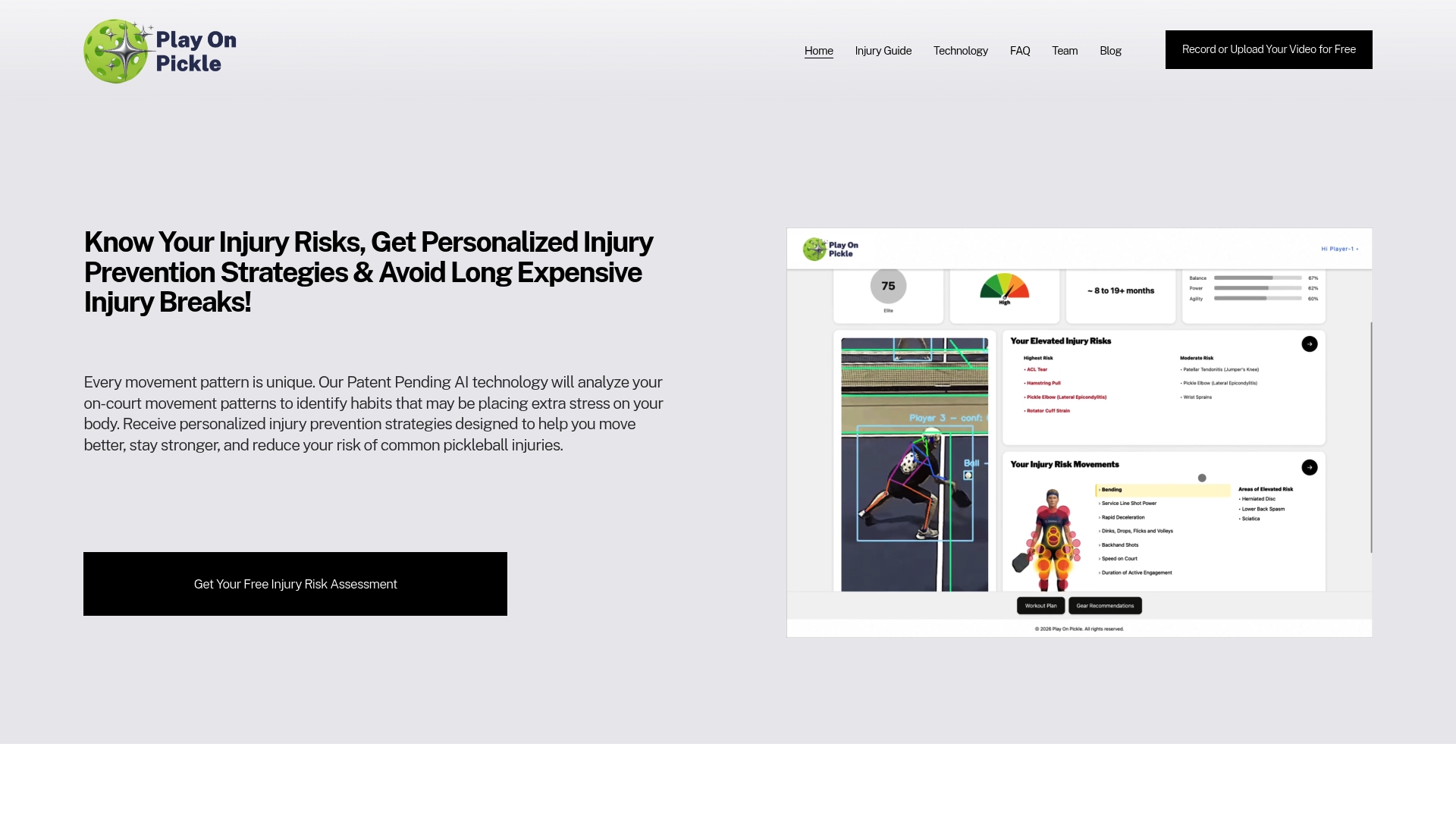
If you want to see how the technology works first, read about our patent-pending computer vision approach. For the wider picture on staying healthy on court, our injury prevention guide for recreational and older players is a good companion.
FAQ
How much pickle juice stops cramps?
The lab studies used small volumes, under 100 mL, which is a few swallows. In one study cited in a 2021 review, that amount relieved cramps faster than water or no fluids. Use it as a sip while you stretch, not as a replacement for stretching.
What is the body lacking when you have leg cramps?
There is no single answer. Fatigue, poor conditioning, heat, fluid loss and sodium loss from heavy sweating can all play a role. Bergeron's article says calcium, magnesium and potassium have been blamed falsely. If your cramps are frequent, a health care provider can look at your history and any medications.
Why do my calves hurt after playing pickleball?
Calf soreness often follows a cramp or a hard session, and it can last hours or days. Pain that is sharp, localized, swollen or red, or that comes with weakness, may be something other than a cramp. Mayo Clinic advises seeing a provider for those signs.
Should I keep playing after a cramp?
If it eases fully after stretching and fluids, Houston Methodist says there is no risk in continuing. If cramping returns, does not resolve within a few minutes of rest, or comes with dizziness, confusion or chills in the heat, stop for the day and cool down.
Sources
- An Evidence-Based Review of the Pathophysiology, Treatment, and Prevention of Exercise-Associated Muscle Cramps
- Muscle cramps: MedlinePlus Medical Encyclopedia
- Muscle Cramps: OrthoInfo, AAOS
- Muscle Cramps during Exercise: Is It Fatigue or Electrolyte Deficit?
- Heat Cramps: Causes and Treatment, Cleveland Clinic
- Exercise-Associated Muscle Cramps in the Tennis Player
- What is exertional heat illness? AOSSM Sports Medicine Update
- Leg Cramps When Exercising: Does Pickle Juice Help? Houston Methodist
- Muscle Cramping During Exercise: Causes, Solutions, and Questions Remaining
- How to Prevent Injuries When Playing Pickleball, NCOA
- Staying Hydrated for Summer Pickleball, PPA Tour
- Muscle cramp: Symptoms and causes, Mayo Clinic
- Charley Horse: Causes, Finding Relief, and Treatments, Verywell Health