
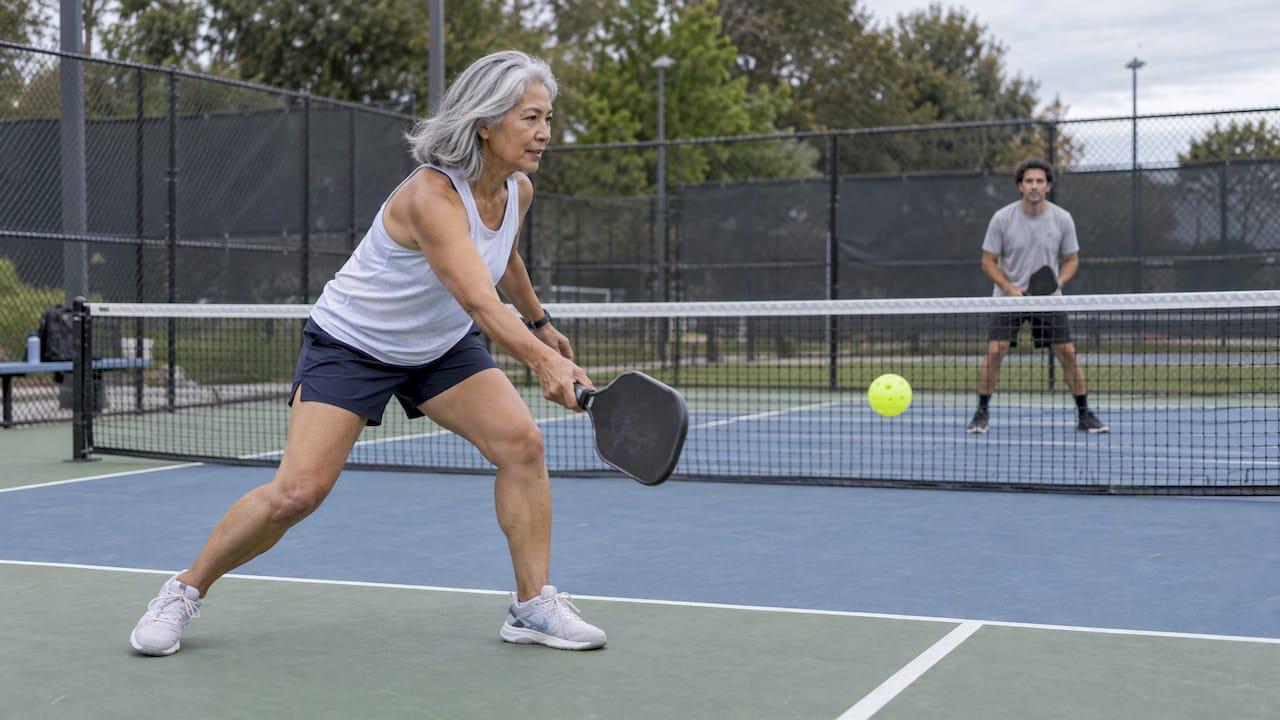
Yes, most people with osteoarthritis can keep playing pickleball, and staying active is usually better for the joints than stopping. What decides how well it goes is dose and movement quality: how fast you build up play, how you warm up, and how your knees, hips and feet actually move when you stop, split-step and lunge. Osteoporosis is a different problem. There the risk is less about the joint wearing down and more about a fall turning into a broken wrist or hip. This guide covers both, in plain terms, so you can match your play to your body. At Play On Pickle, we built our video-based movement analysis for exactly this: finding where your own movement loads your joints and turning it into simple exercises.
TL;DR
- Exercise does not cause or worsen knee arthritis, and inactivity is probably the worst thing for it, according to a sports medicine surgeon at HSS. Build up gradually and let pain guide you.
- Use the pain rules: pain that worsens during activity, lasts more than 24 hours afterward, or changes how you walk means you should modify play or get medical advice.
- With osteoporosis or low bone density, the main danger is falling. Talk with your doctor first, then train balance and strength, wear court shoes, and avoid backpedaling.
- Players over 65 and women have the most fracture-prone injuries, especially wrists and hips, so fall prevention matters more than any one stroke.
- Seeing how you move on video shows which joints take the load, so your warm-up and strength work can target them.
Table of Contents
- What osteoarthritis and osteoporosis mean on a pickleball court
- Can you play pickleball with osteoarthritis?
- The pain rules: how to know when to back off
- How to ramp up without a flare-up
- A warm-up that matches the sport
- Strength work that protects arthritic joints
- Pickleball with osteoporosis: the real risk is falling
- What changes after 50 and why movement quality matters
- Promo: see your own movement before it becomes pain
- Choosing the right shoes, gear and court habits
- When to talk with your doctor
- FAQ
- Sources
What osteoarthritis and osteoporosis mean on a pickleball court
Osteoarthritis is wear in the joint: cartilage thins, and the joint gets stiff, achy or swollen. In pickleball it most often shows up in the knees, hips, hands and the base of the thumb. Osteoporosis is thinning of the bone itself. It causes no pain until a bone breaks, which is why it surprises people. You can have both, and many older players do.
The two call for different strategies. Arthritis management is about joint loading: how much, how often, how well controlled. Osteoporosis management is about not falling, and about building bone and muscle so a fall does less damage.
Can you play pickleball with osteoarthritis?
For most people, yes. HSS's James Robinson says people with knee osteoarthritis should not be afraid to play: exercise doesn't cause or worsen arthritis, and inactivity is probably the worst thing for it. Baptist Health describes pickleball as a low-impact sport that can suit people with osteoarthritis, because movement stimulates joint fluid and tones the muscles that support the joint.
Mayo Clinic's Dr. Laskowski puts the threshold practically: if you can move around the court comfortably, have no balance problems and can move your arms and legs without significant pain or restriction, you will likely enjoy pickleball safely. He also notes that some players may see hip and knee arthritis worsen, which is why how you play counts.
The pattern in the evidence is consistent. UC San Diego's Dr. Vitale attributes much of the arthritis progression he sees to behavior: players skip warm-ups and keep playing through injury, which can progress arthritis and eventually lead to joint replacement. Twisting or trauma can also flare a baseline arthritic joint. So the sport is not the villain. Sudden jumps in play and ignored pain are.
Why the knees take the brunt
Much of pickleball is spent stooped over. HSS notes that waiting outside the kitchen, the no-volley zone near the net, involves squatting that presses on the kneecap and can lead to tendonitis and quadriceps pain. Add quick stops, pivots and lateral cuts, and a knee with worn cartilage has a lot to manage. That is also why strong thighs, hips and calves help so much: muscle shares the load with the joint.
The pain rules: how to know when to back off
The American College of Sports Medicine's clinical review of pickleball gives older adults with chronic orthopedic conditions a simple set of pain rules. Modify your play or get medical attention if:
- Pain gets worse as you play.
- Pain lasts more than 24 hours after you stop.
- The pain changes your gait, meaning how you walk.
A worked example: you play 90 minutes on Tuesday, your knee aches that evening, and by Thursday morning you are walking normally. That is fine. If on Thursday you are still limping, rule two has been triggered, and next week's session should be shorter, with more rest between games.
An AMA article quotes Dr. Wu advising older players with arthritis to let their body guide how much and how often they play, not to push through flare-ups, and to rest before returning. His framing is worth remembering: it's a fine balance between playing enough to feel satisfied and avoiding overuse.
See your doctor if the knee gives way, swells noticeably, or locks. HSS lists these as signs to seek care, and heat before play and ice afterward are its suggestions for routine soreness.
How to ramp up without a flare-up
Hinge Health's physical therapy team explains that with knee osteoarthritis, a flare-up is more likely when activity ramps up quickly or games run long, since repeated quick movements can temporarily increase stiffness or swelling. After a flare, a short break and a gradual rebuild is the advised route.
A sensible progression, drawing on Northwell Health's advice to start with one game a week and move to two if you feel fine:
- Weeks 1 to 2: one short session, with a full warm-up. Note how the joints feel that night and two days later.
- Weeks 3 to 4: if the pain rules stay quiet, add a second session or lengthen the first, not both.
- After that: change one variable at a time: frequency, duration or intensity. Baptist Health recommends increasing all three gradually.
Play doubles rather than singles if your knees complain, and take sit-out games when you need them. Supportive court shoes, a brace on a joint that is already active, and good hydration are also on Baptist Health's list.
A warm-up that matches the sport
Dr. Wu recommends dynamic warm-ups, such as walking lunges, high knees and arm circles, before play, with static stretching during the cool-down. HSS's Dr. Robinson suggests mini squats, calf raises and hip flexion exercises to prepare the knees. Mutual of Omaha's senior safety guidance suggests a 5 to 10 minute warm-up before play.
A simple routine to adapt, about eight minutes:
- Two minutes of brisk walking around the court, with a few side steps.
- Ten mini squats, staying in a comfortable range.
- Ten calf raises, holding the wall if needed.
- Ten standing hip flexion lifts per leg.
- A dozen arm circles each way, plus gentle shoulder rolls.
- A few practice split-steps in the ready position: feet wide, knees bent.
For more on this, our pickleball prehab guide lays out three moves for recreational and older players.
Strength work that protects arthritic joints
A July 2025 review in Current Physical Medicine and Rehabilitation Reports recommends prehabilitation for pickleball players that mirrors the demands of the game:
- Squats and lunges to imitate the stop-and-start pattern.
- Core work such as planks and bridges for rotary forces and balance.
- Rotator cuff and shoulder blade strengthening for overhead strokes.
- Balance and proprioceptive training (your sense of where your body is in space) to prevent falls.
- Eccentric strengthening, where the muscle works while lengthening, for tendons.
- Footwear with lateral support.
Two to three short sessions a week is a practical starting point. If your knees are sore, use a smaller range and add depth only when it is comfortable. Our guides on senior pickleball exercises mapped to court moves and proprioception drills turn this list into specific routines.
Pickleball with osteoporosis: the real risk is falling
Mass General Brigham states that older individuals, particularly women with osteoporosis or low bone density, can risk bone fractures when playing, and emergency room studies show older women are more likely than other age groups to break a wrist. A review in the Springer journal found players over 65, only 15.4% of pickleball athletes, are disproportionately injured, with wrist and hip fractures from falls leading the concern.

The numbers are sobering. A study of national emergency department data from 2014 to 2023, summarized by Pickleball Union, found upper-extremity pickleball injuries with an average patient age of 67, and 59% of the injuries were fractures. Among women, 72% of these injuries were fractures, versus 40% in men, and falls were the leading cause. An orthopaedic research group reported that fractures rose 90-fold over 20 years, noting that weaker bones from osteoporosis raise the stakes.
This is not a reason to stay home. It is a reason to prepare. Practical precautions from Mutual of Omaha's guidance:
- Talk with your doctor before starting if you have osteoporosis or low bone density, a history of falls, or balance concerns.
- Do a 5 to 10 minute warm-up.
- Wear court shoes with lateral stability and traction, not running shoes.
- Avoid backpedaling. Turn and shuffle or crossover-step back instead. Mayo Clinic's Dr. Laskowski gives the same advice.
- Play shorter sessions with rest between games, since fatigue makes people trip.
- After a fall with a head impact, or if you cannot bear weight, get urgent medical care.
Know your bone health
The US Preventive Services Task Force recommends osteoporosis screening, usually a DXA bone density scan, for women 65 and older and for postmenopausal women under 65 at increased risk. For men, it says there isn't enough evidence to recommend for or against routine screening. If you are in one of those groups and have not been screened, ask your doctor. The study's authors also suggest players get counseling on warm-ups, footwear and bone density screening, and that courts be cleared of tripping hazards.
Balance and strength lower the odds of a fracture
A 2024 meta-analysis of 19 trials in postmenopausal women found exercise significantly improved lower-body strength, balance, timed walking tests, fear of falling and quality of life. Combining several exercise types improved lumbar spine bone density, though adding exercise to medication did not significantly change hip or spine density overall. So the clearest payoff is fewer falls and more confidence, which is what you need on a court.
The APTA Geriatrics guideline for physical therapists recommends single-leg standing and progressive resistance training for postmenopausal women to slow hip and femoral neck bone loss. You can practice single-leg standing at a counter while brushing your teeth. For a structured plan, see our 8 week balance plan for pickleball players, and for background on why balance training for seniors is central to fall prevention, that guide explains safe exercises.

What changes after 50 and why movement quality matters
UT Medicine notes that players 50 and older face higher injury risk because of changes in balance, muscle strength and joint flexibility, raising the odds of falls, strains and sprains in the knees, shoulders and wrists. It adds that players with arthritis who return to court without enough rest increase their risk of overuse injuries such as tennis elbow or Achilles tendinitis.
Two players with the same X-ray can have very different knees on court. One drops straight into a deep lunge with the knee caving inward; another keeps the knee over the toes and shares the work with the hip. General advice cannot tell you which one you are. Looking at your own movement can.
Promo: see your own movement before it becomes pain
Play On Pickle is an AI-driven movement analysis service for pickleball players. You upload video, and our patent-pending computer vision identifies biomechanical stress points and generates a personalized injury risk assessment, with exercise and equipment recommendations tailored to how you move. It is designed to need minimal equipment and time, with simple exercises that fit your routine.
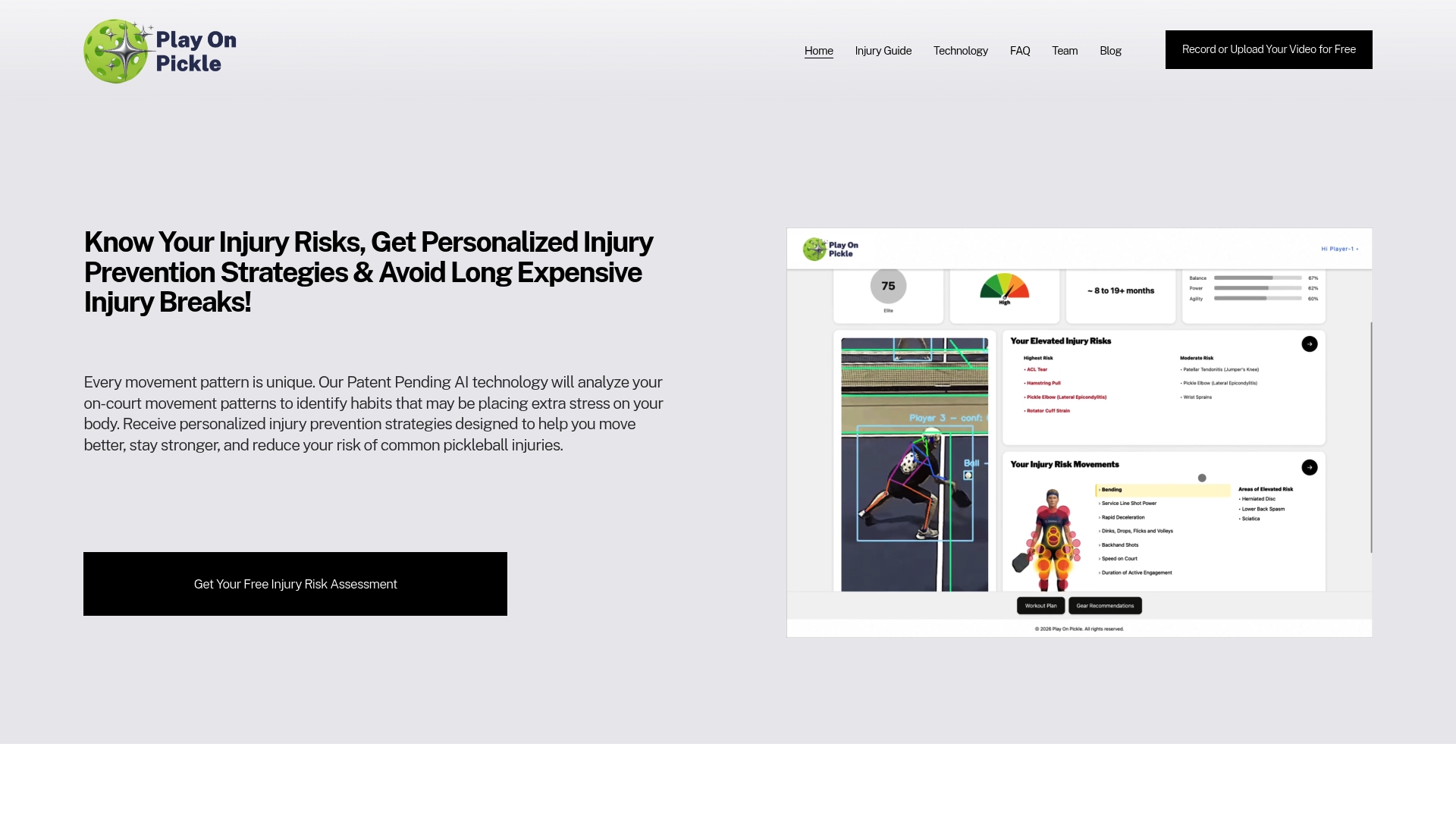
The monthly subscription is $9.99 per month, and the annual subscription is $99 per year, both on our pricing page. There is a free initial trial, and a free tripod comes with the monthly plan through our tripod offer. You can read how it works on our technology page.
Our perspective
Most advice for players with arthritis or thin bones is correct and generic: warm up, build slowly, strengthen your legs. The difficulty is that every body loads its joints differently. Two players of the same age and diagnosis can stress entirely different parts of the knee, hip or shoulder when they split-step and lunge.
That is why we built Play On Pickle around your own video. Our approach is designed to find the stress points in your movement and turn them into short, targeted exercises, so a recreational player who would never book a gait analysis can still work on the right things. We believe the goal is not to play less, but to play with a body prepared for the game.
For older players, we think prevention should be as routine as the paddle: a few minutes of the right exercises, a check on how your movement changes over time, and the confidence to keep showing up. Our guides on senior pickleball safety and joint stress go deeper.
Drona
Choosing the right shoes, gear and court habits
Footwear is the cheapest risk reducer. Court shoes with lateral support and good traction hold your foot through side-to-side cuts, where running shoes tend to roll. Replace them when the tread smooths out. Indoor and outdoor surfaces grip differently, so pay attention to how your feet slide on a new court; our single leg plan for court surface injuries covers it.
Beyond shoes:
- Brace an arthritic knee or wrist if your doctor agrees.
- Check the court for loose balls, bags and cracks before every game; stray balls cause falls.
- Drink water, since tired players misstep.
- Stay out of deep lunges and dives for balls you cannot reach. Let it go.
When to talk with your doctor
Before you start or return, see your doctor if you have osteoporosis or low bone density, a history of falls, or balance problems. Seek care promptly if the knee gives way or swells, if pain breaks the 24 hour rule, or after any fall with head impact or an inability to bear weight. A physical therapist can also set a safe exercise plan for your diagnosis.
FAQ
Is pickleball bad for osteoarthritis?
Not for most people. HSS says exercise doesn't cause or worsen arthritis, and Hinge Health notes regular moderate play helps keep knees flexible and strong. Flare-ups tend to come from ramping up too quickly or playing long sessions, so build gradually and follow the pain rules.
Can I play pickleball if I have osteoporosis?
Many people do, after talking with their doctor. The main risk is a fall that breaks a wrist or hip, so focus on balance and strength training, court shoes, shorter sessions and avoiding backpedaling. Get urgent care after a fall with a head impact or if you cannot bear weight.
How do I know if my knee pain is a problem?
Use the ACSM pain rules. Pain that worsens as you play, lasts more than 24 hours, or changes your walk is a signal to modify your play or seek medical attention. Swelling or a knee that gives way needs a medical visit.
What exercises help most for arthritis and bone health?
Squats and lunges that mimic the stop-and-start movement, core work, single-leg balance and progressive resistance training are the best supported. Start small and add load gradually.
Sources
- Is Pickleball Good for the Knees? (HSS)
- Pickleball and Osteoarthritis (Baptist Health)
- Play on, Picklers! (Mayo Clinic Press)
- As pickleball's popularity surges, injuries are also on the rise (University of California)
- Pickleball: Review and Clinical Recommendations (ACSM)
- What doctors want patients to know about preventing pickleball injuries (AMA)
- Pickleball Knee Pain and Injuries (Hinge Health)
- Pickleball injuries: causes and prevention (Northwell Health)
- Pickleball Injuries in Seniors (Mutual of Omaha)
- Diagnosis and Management of Common Musculoskeletal Injuries (Springer)
- Pickleball Injuries (Mass General Brigham)
- Common Pickleball Injuries and How to Prevent Them (UT Medicine)
- The Pickleball Injury That Puts Players in the ER (Pickleball Union)
- As More People Begin to Play Pickleball, More of Them Are Sustaining Fractures (FORE)
- Effects of exercise on bone density and physical performance (PMC)
- Physical Therapist Management of Patients With Osteoporosis, APTA Geriatrics guideline
- Balance Training for Seniors: Safe Exercises to Prevent Falls