
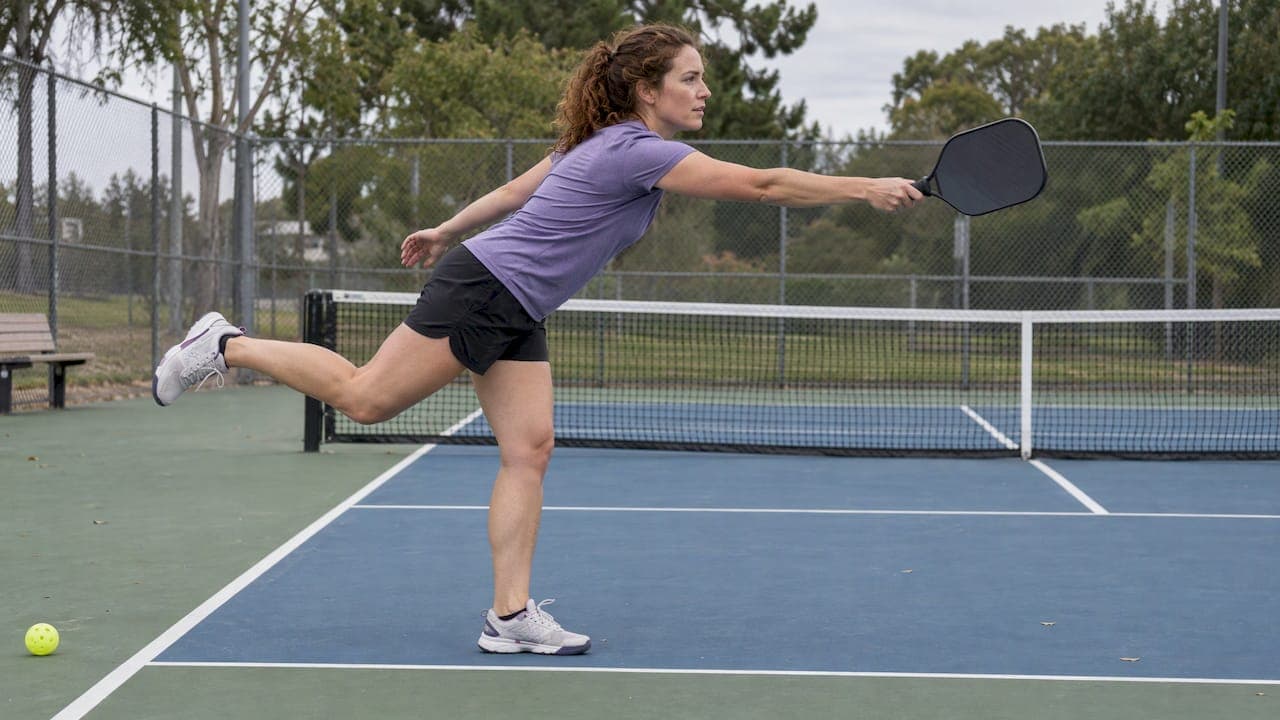
Proprioception training teaches your body to sense where your joints are without looking, so you stay balanced through lunges, pivots and sudden stops. For pickleball, that means a few minutes, two or three times a week, of single-leg balance work that gets harder as you improve: unstable surfaces, eyes closed, arm movements, then dynamic steps. Below you'll find the drills, a simple way to progress them, and the situations where you should check with a physical therapist first.
TL;DR
- Proprioception is your body's automatic sense of position and movement, and it is central to balance on court.
- Lower-body injuries, often from falls and fast changes of direction, are common in pickleball, so ankle and leg stability work is a sensible place to start.
- Do short balance sessions two to three times a week, off the court, and make them harder gradually.
- Older players, and anyone with a history of falls, vertigo or joint trouble, should progress more conservatively and talk to a clinician first.
- Video-based movement analysis can show which side or joint needs the most attention.
Table of Contents
- What proprioception is and why pickleball demands it
- What the evidence says about balance work and pickleball injuries
- Why you train balance off the court
- A pickleball stability routine you can do at home
- How often, and how to progress
- Adjusting for age, fitness level and injury history
- Our perspective
- For coaches and facilities
- Turn a general routine into a personal one
- When to see a physical therapist
- FAQ
- Sources
What proprioception is and why pickleball demands it
Proprioception is the body's subconscious, automatic ability to sense its position and movement in space, without relying only on vision. You use it every time you step back for a lob without checking your feet.
That matters in pickleball because your eyes are busy. You are tracking the ball off your opponent's paddle, judging speed and depth, and watching the kitchen line. Research on ankle balance control notes that the nervous system can lean on other senses when vision is occupied with an outside task. Your feet and ankles then do a lot of quiet work.
The same research describes ankle proprioception as a critical part of balance control in sport, because the ankle and foot are usually your main contact with the ground. On a pickleball court that contact is constantly shifting: split steps, lateral slides, short backpedals, and a stretch for a dink.

The three systems behind balance
Balance comes from vision, the inner ear (vestibular system) and proprioception working together. Sports balance training generally works by challenging one or more of these systems. That is why the usual progressions take away vision (eyes closed) or make the ground less predictable (foam, cushions).
What the evidence says about balance work and pickleball injuries
A 2026 review of adult pickleball players in the US found that sprains, strains and fractures of the lower extremity are common, with falls and rapid directional movements among the leading causes. Those are exactly the situations balance and stability training is meant to prepare you for.
On the training side:
- A 10-week program of strength, balance, change-of-direction and agility work reduced fear of falling and improved change-of-direction time in senior pickleball players.
- A clinical review describes prehabilitation, meaning targeted exercises that correct asymmetries and build tissue resilience, as increasingly recognized for extending playing longevity.
- For older adults in general, the American College of Sports Medicine says multicomponent programs combining aerobic, strength and balance work give the most convincing evidence for reducing fall-related injury.
No exercise guarantees you will avoid injury. But the pattern is consistent: balance is trainable, and it works best as part of a broader routine that includes strength.
Why you train balance off the court
Match play runs on the movement patterns you already have. It is hard to fix a wobbly left ankle in the middle of a rally, because you are focused on the ball. Some sports educators make the same point: play is "performance mode," so corrective work happens away from the game. Treat balance practice as its own short session, ideally in your living room or at the court before you warm up.
A pickleball stability routine you can do at home
The home program in the senior pickleball study above included bridges, band side steps, a lunge matrix, planks and single-leg balance with a second task, done two to three times a week. The routine below borrows that structure and keeps it short. Do it after a few minutes of easy movement, not cold.
1. Single-leg stand
Stand on one leg next to a wall or counter, knee soft, hips level. Hold, then switch. This is the base drill: you are asking the ankle, knee and hip to make constant tiny corrections. Stay near support until you can do it without grabbing.
2. Single-leg stand with paddle reach
From the single-leg stand, reach your paddle forward, to the side and slightly back, as if stretching for a low dink or a wide ball, then return to center. Reaching moves your center of mass, so your standing leg has to work. Balance sessions built on single-leg stands and paddle reaches are an easy way to add this reaching pattern at a set frequency.
3. Single-leg balance with figure-eight arms
Stand on one leg and trace a slow figure eight in the air with your arms. It trains coordination because the upper and lower body are doing different jobs at once, which looks a lot like swinging while holding your base. More ideas of this kind appear in a list of balance and coordination drills that mix arm patterns with one-leg stands.
4. Band side steps
Place a light band above your knees or around your ankles, sit into a quarter squat and step sideways, keeping your knees tracking over your toes. This builds the hip strength that keeps the knee from collapsing inward on lateral moves.

5. Lunge matrix
Step forward, to the side and diagonally back into a controlled lunge, pausing for a second at the bottom of each. Pickleball asks for deceleration in every direction, and this drill rehearses it slowly.
6. Bridges and planks
These are not balance drills in the narrow sense, but they were part of the studied program and they give your hips and trunk the strength that makes balance work hold up when you are tired.
Quick reference
| Drill | What it trains | First progression |
|---|---|---|
| Single-leg stand | Ankle, knee and hip control | Eyes closed, near support |
| Paddle reach | Balance while your center of mass moves | Reach farther, add a cushion |
| Figure-eight arms | Coordination under a second task | Slower, then eyes closed |
| Band side steps | Hip strength for lateral moves | Stronger band |
| Lunge matrix | Controlled deceleration | Add a pause, then a light weight |
How often, and how to progress
The study above used two to three sessions a week, so that is a reasonable frequency to aim for. Keep each session short enough that you will actually do it. Five to ten minutes done consistently beats a long session you skip.
To progress, change one thing at a time:
- Master the floor first. Hold the single-leg stand steadily with a quiet ankle before changing anything.
- Add a task. Reach with the paddle, toss and catch a ball, or trace the figure eight.
- Take away vision. Close your eyes, only when you are next to a counter or wall.
- Soften the surface. A folded towel, then a cushion or foam pad, makes the ankle work harder.
- Make it dynamic. Move into the lunge matrix, side steps and small hops only when the static versions feel easy.
If a drill makes a joint ache, that is a signal to step back. The American Physical Therapy Association says that muscle soreness after exercise is normal, but joint irritation means reducing intensity and focusing on rest or stretching.
Adjusting for age, fitness level and injury history
Older players
For older adults who are sedentary or functionally limited, the ACSM recommends conservative, individualized progression based on tolerance. It also suggests that muscle-strengthening and balance training can come before aerobic work for this group. In practice: start with a stable support, use the wall liberally, and move up a level only when the current one feels boring. Our guide to injury prevention for recreational and older players covers the wider routine.
Newer or less fit players
If you took up pickleball without a fitness background, begin with the single-leg stand, bridges and band steps. Leave eyes-closed and foam work until the basics feel solid. A short prehab routine of three moves is a good first block.
Competitive players
You likely already have the base. Make the drills sport-specific: reach and hold in a split-step position, add a ball or paddle task, and train the weaker side more. If one ankle or knee always feels less steady, a pickleball movement screen can point you to the right drills.
Players with a history of falls, vertigo or joint injury
See a physical therapist before you start balance training. A previous ankle sprain, dizziness, a balance disorder or repeated falls all change what is safe. The APTA describes physical therapists as qualified to assess healthy people for latent injury risk and to offer preventive rather than just reactive care. Knowing what a therapist does versus other kinds of bodywork also helps: a short comparison of physical therapy and massage explains how assessment and safe progression fit in.
Our perspective
Most recreational players do not skip balance work because they doubt it. They skip it because nobody has told them which drill is for them. Generic lists treat every player the same, but a player who rolls the left ankle on lateral moves needs something different from one whose right knee drifts inward on lunges.
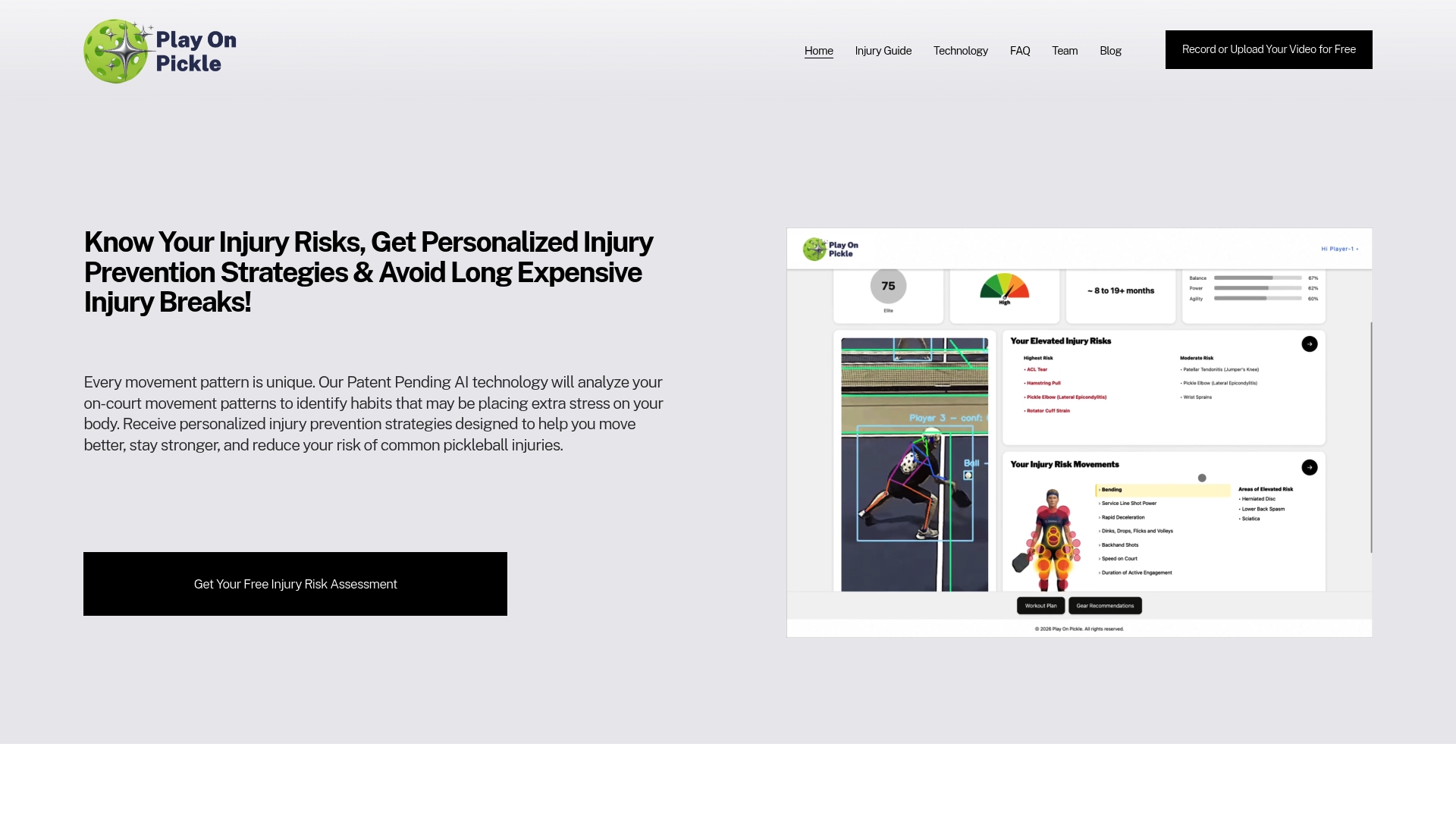
That is why we built Play On Pickle around video. Our computer-vision technology is designed to look at how you actually move on court, identify stress points in the body, and turn that into a personalized injury risk assessment with simple exercises and equipment suggestions that fit into your routine. We believe stability training works best when it is aimed at your own biomechanics, kept short, and repeated every week.
Our claim is simple: you should not need a lab or a long session to find out where you are weak. A phone, a few minutes of footage and a plan you can follow at home should be enough to start.
Drona
For coaches and facilities
Stability drills fit naturally into the start of a session. Two or three single-leg or reach drills take only a few minutes and can replace part of a standard warm-up. Keep the environment safe: clear the floor, leave room for players to step out of a wobble, and slow your instruction down when players are older or new to balance work. ACSM guidance written for older cancer survivors recommends assessing the environment for fall risks and minimizing distractions, and the same habits help any mixed-age group.
We have laid out two session templates and a 5 to 10 minute warm-up for coaches who want a ready structure. For the bigger picture of why courts see so many injuries, see our breakdown of pickleball injury risk and evidence-backed fixes.
Turn a general routine into a personal one
Play On Pickle analyzes a video of you playing and identifies where your movement puts stress on your body, then gives you exercises and equipment recommendations matched to what it finds. The plan is built for recreational and competitive players, coaches and facilities. A monthly subscription costs $9.99 per month and an annual subscription costs $99 per year, and a free initial trial is available. See the current plans and any promotions on the pricing page, or read how the patent-pending technology works.
If you like to see how the pieces fit, our posts on computer vision and a short warm-up and on the single-leg fix for court surface injuries go further.
When to see a physical therapist
Book an appointment before starting if you have fallen recently, get dizzy, have a diagnosed balance disorder, or are returning from an ankle, knee or hip injury. Stop and have a clinician look at it if a drill causes joint pain that lingers, rather than ordinary muscle fatigue. A therapist can set the starting level and show you how to progress safely, and you can then use your own routine and video feedback to keep it up.
FAQ
What is proprioception training in pickleball?
It is practice that improves your body's ability to sense joint position and movement, so you stay steady without looking at your feet. For pickleball, that usually means single-leg balance, reaching and stepping drills that mimic court movement.
How often should I do pickleball stability exercises?
A study of senior pickleball players had participants do a home program of balance and strength exercises two to three times a week. Short, regular sessions are easier to keep up than occasional long ones. Adjust based on how your joints feel.
Do I need a balance board or foam pad?
No. Start on the floor with a single-leg stand. When it feels easy, a folded towel or cushion is enough to make the ankle work harder. Buy equipment only once you have outgrown the simple versions.
Is balance training safe for older players?
Generally it is part of the recommended approach for older adults, but progress conservatively and keep a wall or counter nearby. If you have a history of falls, vertigo or a balance disorder, talk to a physical therapist first.
Can video analysis help with balance training?
Video can show where your movement looks unstable, such as a knee drifting inward or a trailing ankle collapsing, so you can pick drills that fit. That is the idea behind our analysis, which is designed to turn your footage into a personalized plan.
Sources
- Proprioception: What It Is, How To Improve It & Disorder (Cleveland Clinic)
- The Role of Ankle Proprioception for Balance Control in Sports (PMC)
- Using vs. Training Balance (SportsEdTV)
- Lower Extremity Injuries in Adult Pickleball Players (PMC)
- Effect of a Multi-Faceted Training Program on Falls in Senior Pickleball Players (MDPI)
- Diagnosis and Management of Common Musculoskeletal Injuries in Pickleball (Springer)
- Physical Activity and Function in Older Age (ACSM)
- Exercise and Physical Activity for Older Adults (ACSM)
- Six Exercises to Stay at the Top of Your Pickleball Game (WSJ)
- APTA magazine, February 2022
- New Exercise Guidelines for Older Cancer Survivors (ACSM)
- Surf Balance Training
- Balance and Coordination Drills List for Athletes
- Physical Therapy vs. Massage