
Patellar tendinopathy, often called jumper's knee, is an overuse problem in the tendon that runs from your kneecap to your shinbone. Pickleball can bring it on through repeated lunging, stopping, pushing off and long stretches in a low stance. The usual path back is to trim your playing load for a while, rebuild quadriceps strength in progressive steps, and return to full play gradually. Pain that lingers or gets worse needs a medical visit.
This guide explains what the condition is, why the game loads that tendon, what the symptoms feel like, how to manage your weekly volume, what rehab usually involves and how to lower your risk in the first place.
TL;DR
- Patellar tendinopathy causes pain at the front of the knee, right below the kneecap, and tends to build gradually as your playing load rises.
- The sustained crouch at the kitchen line, plus sudden stops and direction changes, puts repeated load on the quadriceps and patellar tendon.
- Early management means cutting the volume and frequency of aggravating play, then rebuilding with progressive strengthening, not complete rest forever.
- See a doctor or physical therapist if pain does not ease after a few days, keeps getting worse, limits daily activity, or comes with swelling or redness.
- Prevention focuses on movement quality, landing mechanics, balance, flexibility and strength, all of which you can work on before pain starts.
Table of Contents
- What patellar tendinopathy is
- Why pickleball can load the patellar tendon
- Symptoms to watch for
- When to see a doctor or physical therapist
- Managing your playing load
- Rehab: what the evidence describes
- Getting back on the court
- How to lower your risk
- Our perspective
- Try a movement analysis before pain starts
- FAQ
- Sources
What patellar tendinopathy is
The patellar tendon connects the bottom of your kneecap to the top of your shinbone. It transmits the force of your quadriceps so you can straighten the knee, push off and absorb landings.
Cleveland Clinic describes patellar tendinitis, or tendinopathy, as a repetitive strain injury: too much repeated stress causes tiny tears in the tendon, and if you keep up intense activity before it has healed, the tendon can become weak and sore.
You may see both "tendinitis" and "tendinopathy" used. Tendinitis implies inflammation. Tendinopathy is the broader term for a painful, overloaded tendon, and it is the word most sports medicine clinicians use today. For your purposes, the practical point is the same: the tendon is irritated by load it has not been prepared to handle, and it responds best to well-dosed load, not to guesswork.
The name "jumper's knee" can be misleading. Anyone who repeatedly loads the front of the knee can develop it, including players of sports that look much gentler than basketball.
Why pickleball can load the patellar tendon
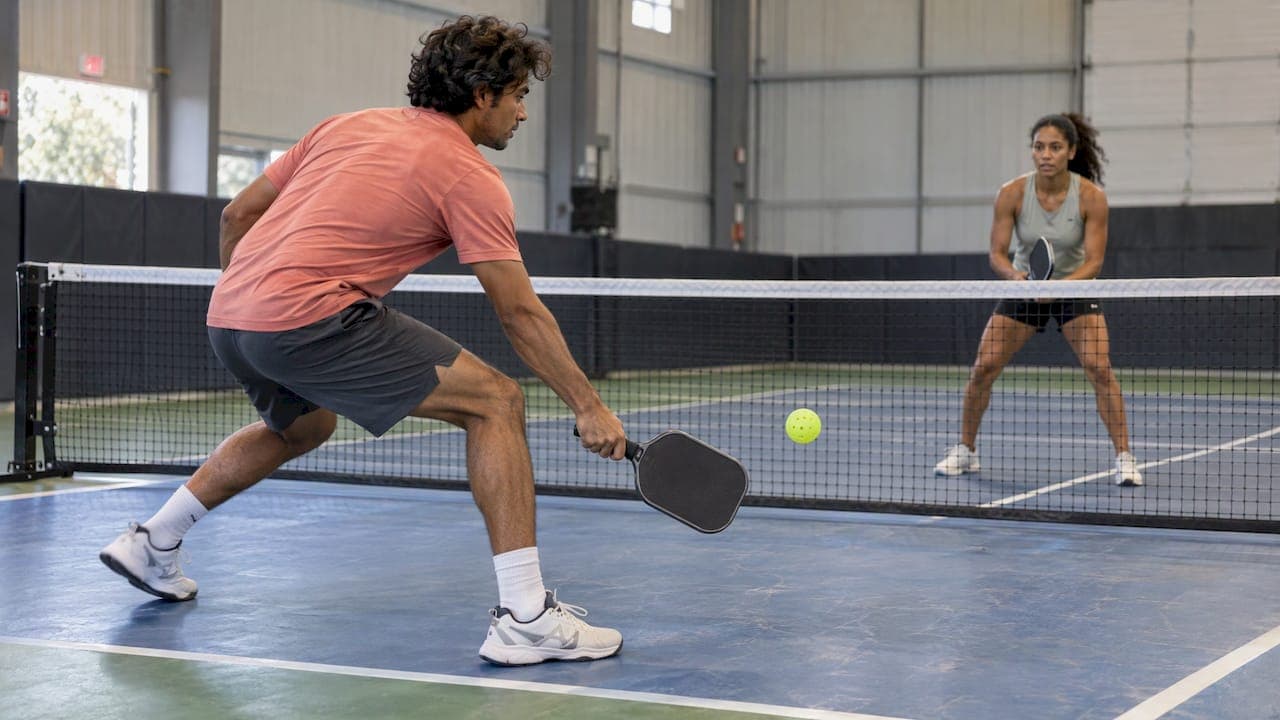
Pickleball is not a jumping sport, yet it asks a lot of the front of the knee.
The kitchen-line crouch. Dinking from a low, bent-knee stance keeps your quadriceps working for long stretches. According to pickleball.com's overview of common knee injuries, that sustained crouch places continuous load on the quadriceps and patellar tendon.
Start-stop movement. Reaching for a short ball, pushing off to cover a lob, then braking hard all load the tendon in quick bursts. Add the occasional jump for an overhead and the tendon sees both steady and sudden demand.
Fast increases in play. Many recreational players go from two sessions a week to five after discovering the sport, or add a tournament weekend with no ramp-up. Research on the condition notes that the onset of pain is typically gradual and tied to increases in the frequency and intensity of loading. Volume is often the trigger, not one bad step.
Hard courts and long sessions. Concrete and back-to-back games add up. Fatigue also changes how you land and lunge, which can shift more work onto the knee.
For a broader look at how the game affects the joint, see our piece on whether pickleball is bad for knees.

Symptoms to watch for
The typical picture is pain at the front of the knee, tenderness just below the kneecap, and some stiffness. Cleveland Clinic lists pain that worsens when you straighten the knee, climb stairs or squat. Mayo Clinic places the pain between the kneecap and the point where the tendon meets the tibia, and notes it may first show up at the start of an activity or after a hard workout and can worsen over time.
How it behaves across a session
The clinical literature describes a common pattern. In the early stages, pain shows up at the beginning of exercise and eases as you warm up. In more advanced stages, pain can be present throughout activity and starts to limit what you can do.
That is why "it warms up, so it's fine" is a risky rule of thumb. A knee that hurts for the first ten minutes and then settles is still telling you the tendon is being loaded beyond what it tolerates comfortably. Early is the cheapest time to act.
Signs that point to other problems
Not all knee pain is the tendon. Pain along the joint line, locking, catching or a giving-way feeling after a twist can point elsewhere. Our guides on knee pain warning signs and meniscus tears in pickleball can help you tell the patterns apart, but a clinician should make the diagnosis.
When to see a doctor or physical therapist
Mayo Clinic advises calling a doctor if patellar tendon pain continues or gets worse, keeps you from doing daily activities, or comes with swelling or redness around the knee joint. Cleveland Clinic suggests seeing a provider if pain does not improve after a few days of rest or at-home treatment.
In practice, book a visit with a sports medicine physician or physical therapist when:
- The pain has lasted more than a few days despite backing off play.
- It hurts on stairs, squatting or getting up from a chair.
- The knee is swollen, red or warm.
- You cannot play a full game without pain that rises game to game.
A physical therapist can confirm the diagnosis, rule out other knee problems and build a program around your sport. Cleveland Clinic notes that physical therapy provides exercises and stretches customized to your sport or activities, to improve flexibility and strengthen the muscles around the knee so they can resist the stress of jumping.
Managing your playing load
The tendon needs the right amount of work, not zero work. A clinical review of patellar tendinopathy reports that reducing the volume and frequency of sport or other aggravating activity has been used successfully to manage initial symptoms and pain.
The USOPC tendinopathy education manual frames care around the effects of loading, and around managing underloading, physiologic loading and overloading so exercises put an appropriate load on the tendon. Too little load leaves the tendon unprepared. Too much keeps it irritated.
A simple pain-monitoring guide
The same clinical review describes a pain-monitoring model: pain up to 5 out of 10 during and after exercise is considered allowable, but tendon pain must be below 5 the following day, and if pain increases from week to week, activity should be reduced. Use it as a way to organize a conversation with your clinician, not as permission to push through pain on your own.
A practical way to apply it:
- Rate your front-of-knee pain from 0 to 10 during play, right after, and the next morning.
- Keep a simple log of sessions per week, length of each session and the morning-after score.
- If the morning-after number is climbing across the week, play fewer or shorter sessions, or swap one session for lower-impact work.
- Share the log with your physical therapist. It tells them more than "it hurts sometimes."
What to swap in
During early phases, clinicians often replace jumping and squatting with options such as cycling or aquatic therapy. That keeps you moving and keeps your fitness up while the tendon calms down.
Rehab: what the evidence describes
Rehabilitation for patellar tendinopathy centers on quadriceps strengthening and progressive tendon loading. The details belong to your clinician, but knowing the outline helps you follow a plan and ask good questions.
Isometrics, then heavier work
The USOPC manual notes that submaximal isometrics are typically tolerated acutely, meaning holding a contraction without movement is often where a program begins. From there, progressive isotonic work (lifting and lowering weight through a range of motion) and sport-specific loading are added.
Eccentric strengthening
Eccentric quadriceps strengthening, where the muscle lengthens under load, has been effective for long-term pain and patient-reported outcomes. A commonly used program involves slow decline squats on a 25-degree slant board. The review also reports that combining quadriceps stretching with eccentric strengthening may offer greater benefit than strengthening alone.

These are not exercises to improvise. Slant-board depth, speed, load and repetitions all matter, and a physical therapist can set them for your knee.
Later-stage work
Plyometric programming, such as hopping and jumping drills, is typically best tolerated in late-stage rehabilitation. Starting it early is a common reason rehab stalls.
Supportive treatments and tougher cases
Supportive treatments are suggested only alongside progressive quadriceps strengthening and tendon loading, never in place of them. For stubborn cases, a review in Current Sports Medicine Reports notes that injections or surgery may be necessary when rehabilitation has not worked well enough. That decision belongs with a sports medicine physician.
Getting back on the court
Rehab is often described in four stages: symptom management and load reduction, recovery, rebuilding, and return to unrestricted sport. In the last phase, symptoms should be minimal to none during physical activity and during progressive-loading sessions.
A 2015 JOSPT article adds a useful marker: a return-to-sport progression can begin once you have completed energy-storage progressions that replicate your sport's demands in volume and intensity, followed by a graded return to training and competition.
For a pickleball player, a sensible return might look like this, always agreed with your clinician:
- Drills before games. Start with controlled dinking and drop practice at modest intensity.
- Short games. Play one or two short sessions on non-consecutive days, then check your morning-after pain.
- Add one variable at a time. Increase either session length or number of sessions, not both in the same week.
- Reintroduce explosive movement last. Hard lunges, quick stops and overheads come back once the base is solid.
- Keep strength work going. The exercises that got you back are the ones that keep you there.
How to lower your risk
Prevention guidance in the sports medicine literature focuses on biomechanics, landing mechanics, lower-extremity balance, flexibility and strength. Each one translates into something you can do:
- Build leg strength off the court. Two short strength sessions a week for the quads, hips and calves give the tendon a stronger system to share the work.
- Ramp up gradually. Add playing time in small steps, and treat a tournament weekend like a spike that needs a lead-in.
- Improve how you stop and land. Hips back, knees tracking over the toes and a controlled step into the kitchen line spread the load better than a stiff, knee-dominant lunge.
- Vary your stance. If you spend a lot of time crouched, build in breaks and stand tall between points.
- Keep flexibility in the quads and hips. Short stretches after play are easy to fit into a routine.
- Work on balance. Single-leg stands and controlled step-downs train the control you need on the court.
If you want a ready starting point, our three-move prehab routine is built for recreational and senior players. If your knee pain is part of a wider pattern, our overview of joint stress in recreational pickleball shows how the body shares load. Players who also feel it in the heel or lower leg can read about Achilles pain after 50.
Our perspective
Most players think about their knees only after they hurt. By then the tendon has usually been overloaded for weeks.
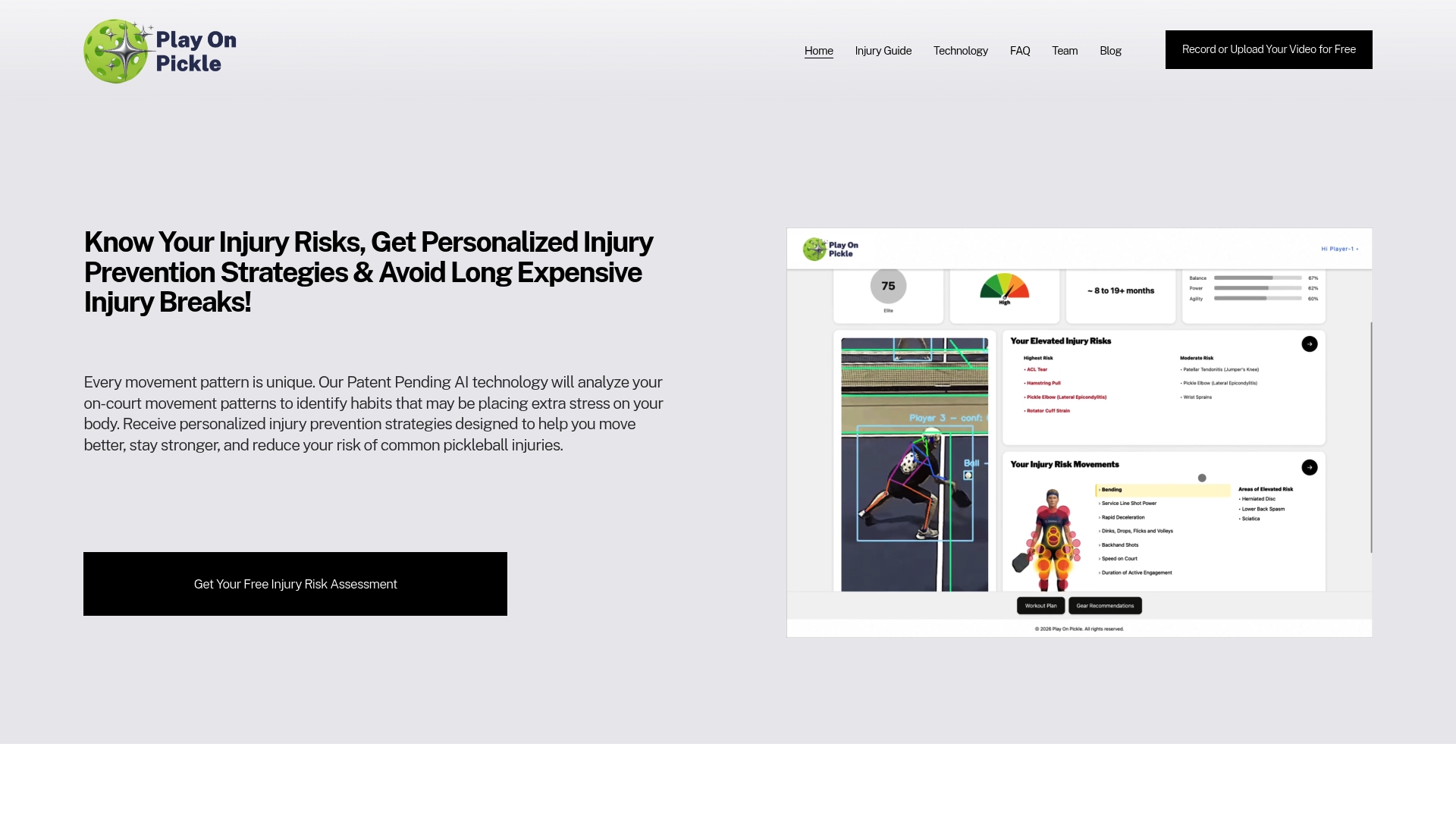
We built Play On Pickle around a different idea: your movement is visible long before your pain is. A short video of you playing can show how you lunge, load and land, and where your body is taking more stress than it should. Our patented computer vision technology is designed to identify those stress points and turn them into a personalized injury risk assessment, so the advice fits your biomechanics, not an average player.
For patellar tendon problems, this matters because the tendon responds to load, and load depends on how you move. Our service is designed to pair that analysis with simple, targeted exercises and equipment recommendations that slot into a busy week, which is what recreational players are most likely to actually keep doing.
A tool like ours does not replace a diagnosis. If you have pain that is not settling, a physician or physical therapist should see it. What we aim to do is help you spot the pattern early, train the right things and keep playing.
Drona
Try a movement analysis before pain starts
If you want to know how your own movement loads your knees, Play On Pickle analyzes video of you playing and is designed to identify biomechanical stress points, give you a personalized injury risk assessment, and recommend exercises and equipment matched to what it finds. It works with video you upload, so you do not need a clinic visit to get started.
The subscription is $9.99 per month or $99 per year, and a free initial trial is available. You can see the current plans on our pricing page, or learn more on the Play On Pickle homepage.
FAQ
Can I keep playing pickleball with patellar tendinopathy?
Often you can, with changes. Clinical guidance describes reducing the volume and frequency of aggravating activity, not stopping everything. Use a pain log, and if pain is rising week to week, cut back further and see a physical therapist or sports medicine doctor.
How do I know if my knee pain is patellar tendinopathy?
The classic sign is pain at the front of the knee just below the kneecap that gets worse with squatting, stairs or straightening the knee. It often starts at the beginning of play and builds over time. Only a clinician can confirm the diagnosis and rule out other knee problems.
What exercises help patellar tendinopathy?
Programs usually start with gentle isometric holds and progress to strengthening, including eccentric work such as slow decline squats on a slant board. Jumping drills come late in rehab. Have a physical therapist set the load and progression for your knee.
Do I need surgery or injections?
Most programs begin with rehabilitation. Reviews note that injections or surgery may be considered in stubborn cases that do not respond enough to rehab, which is a decision to make with a sports medicine physician.
How can I prevent it from coming back?
Keep up your strength work, ramp playing time up gradually and pay attention to how you land and stop. Prevention guidance centers on biomechanics, landing mechanics, balance, flexibility and strength.
Sources
- Patellar Tendinitis (Jumper's Knee): Symptoms & Treatment, Cleveland Clinic
- Patellar tendinitis: Symptoms and causes, Mayo Clinic
- Clinical Management of Patellar Tendinopathy, PMC
- Knee Extensor Mechanism Tendinopathy: Evaluation and Treatment, Current Sports Medicine Reports
- USOPC Tendinopathy Education Manual
- Patellar Tendinopathy: Clinical Diagnosis, Load Management, JOSPT
- What Are the Most Common Knee Injuries in Pickleball?, pickleball.com