
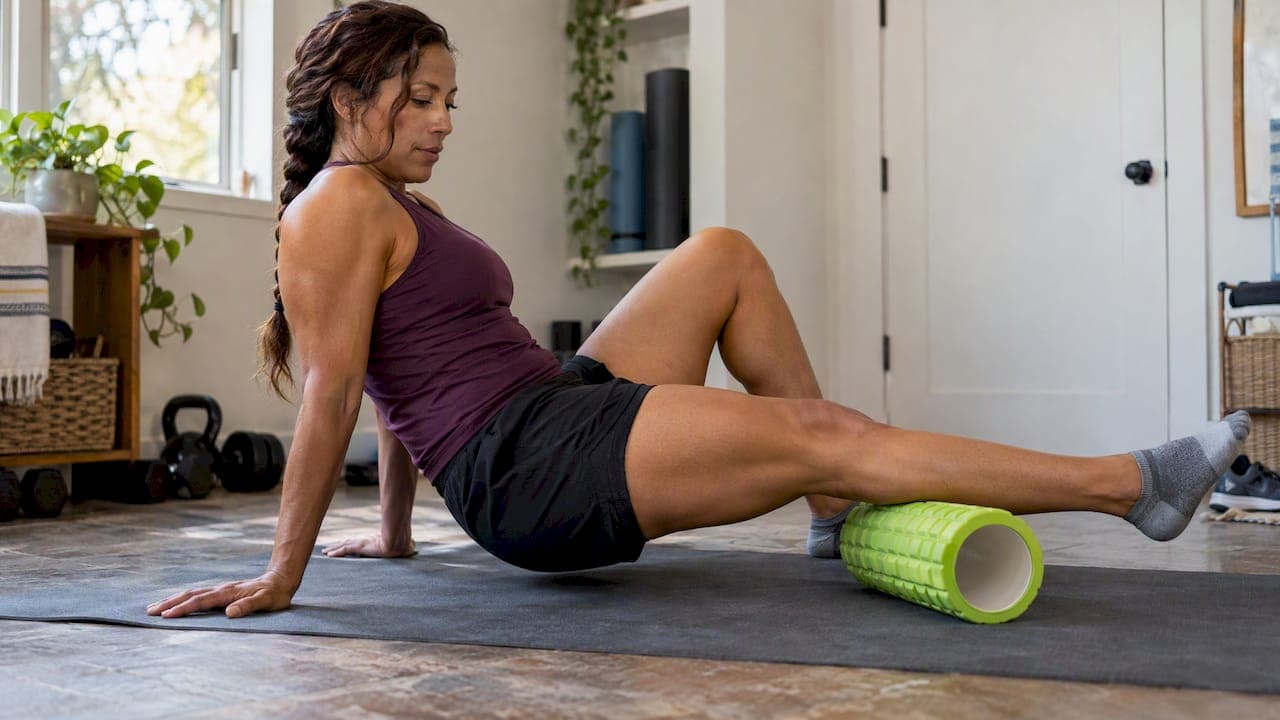
Foam rolling can help you feel looser and less sore around pickleball. Roll your calves, quads, outer thighs, glutes and upper back for 30 seconds to 2 minutes each, at a pressure you can breathe through. Treat it as one small part of recovery, not the foundation. Sleep, sensible training load and movement quality do more of the heavy lifting, and this guide shows how to put all of it together.
TL;DR
- Foam rolling is a self-massage tool that can temporarily improve flexibility and reduce how sore muscles feel. It is not a cure for injury risk.
- Aim for roughly 30 seconds to 2 minutes per area, using pressure you can breathe through. Before play, keep it brief and follow with an active warm-up.
- Calves, quads, outer thighs, glutes and upper back are the usual targets for pickleball players.
- Skip rolling over acute injuries, open wounds, significantly inflamed tissue or a suspected blood clot, and see a clinician instead.
- Sleep matters more than any tool: adults should get at least 7 hours a night, and players 65 and older should aim for 7 to 8.
Table of Contents
- What foam rolling actually does for pickleball players
- Which muscles to roll after pickleball
- How long and how hard to roll
- When to skip the foam roller
- Sleep: the recovery tool you already own
- A simple recovery routine that ties it together
- Our perspective
- Get a personalized look at how you move
- FAQ
- Sources
What foam rolling actually does for pickleball players
Pickleball asks a lot of the lower body in short bursts. You split-step, lunge to the kitchen line, push off sideways and stop hard, all on a hard court surface. By the end of a two-hour session your calves, quads and hips can feel tight, and your upper back has been rotating and reaching all morning.
Foam rolling is a form of self-myofascial release: you use your body weight on a cylinder to apply pressure along a muscle. A meta-analysis of foam rolling studies found it can temporarily improve flexibility and reduce the perception of muscle pain, while its effects on performance and recovery are generally small. That is a useful, honest picture. Rolling is a quick way to feel better and move more freely for a short window. It will not rebuild tissue or replace strength work.
A narrative review of recovery strategies puts it in context: foam rolling is an optional strategy, and sleep, nutrition and the way training is periodized contribute more to recovery than tools do. For a recreational player that translates simply. Roll if you enjoy it and it helps you feel ready, but do not let a five-minute roll talk you out of a rest day or a good night's sleep.
Where it fits in your week
Think of three jobs foam rolling can do for you:
- Before play: a short roll of stiff areas, followed by movement, so you step on court feeling less tight.
- After play: a gentle roll that can help your legs feel more comfortable.
- On recovery days: an easy session paired with walking or light mobility work. Our guide to the pickleball recovery day covers what to do and how often.
Which muscles to roll after pickleball
The areas pickleball players most often roll are the calves, quads, outer thighs (the IT band region), glutes and upper back. They line up with the demands of the game: calves and quads absorb stopping and lunging, glutes drive lateral movement, and the upper back handles rotation and overhead reaches.
| Area | Why pickleball loads it | How to roll it |
|---|---|---|
| Calves | Push-off, split-steps, quick stops | Sit with the roller under your lower leg, lift your hips, and slowly roll from ankle toward knee |
| Quads | Lunging, bending to dinks, returning to ready position | Face down on forearms with the roller under your thighs, rolling hip to just above the knee |
| Outer thighs | Side shuffles and lateral balance | Lie on your side, roller under the outer thigh, support your weight with your top leg and arms |
| Glutes | Lateral drive and rotation | Sit on the roller, cross one ankle over the opposite knee, lean toward the crossed side |
| Upper back | Rotation, reaching for lobs, serving | Lie on your back with the roller across your shoulder blades, hands behind your head, small rolls |
Avoid rolling directly on your lower back or joints. If you are chasing stiffness there, rolling is a poor fit. Our 8-week plan for pickleball back pain takes a more structured approach.
How long and how hard to roll
Two practical rules cover most of it: pressure and time.
Pressure. Use pressure that is tolerable. Sports medicine clinicians at Princeton Medicine advise that you should be able to breathe normally and relax the muscle while you roll. If you are holding your breath, grimacing or tensing up, ease off. Setting your body weight on a leg, arm or the floor so only part of it presses on the roller is an easy way to dial intensity down. For a deeper look at how rolling time and pressure connect to flexibility work, this overview of flexibility training routines shows how dynamic and static stretching can be layered in.
Time. A good starting range is 30 seconds to 2 minutes per area, according to the same Princeton Medicine guidance. A narrative review in the research literature notes that the dosage typically used to improve recovery and flexibility is 90 to 120 seconds of total rolling time per muscle group. In practice, that means one calf at a time, a slow pass or two, and a pause on any tender spot rather than grinding on it.
A complete roll of the five areas above, both sides, takes about 10 to 15 minutes if you use the upper end of the range and less if you stay near 30 to 60 seconds per area.

Before play versus after play
Before you play, roll briefly and then follow it with an active warm-up, as the Princeton Medicine guidance suggests. Rolling alone does not prepare your body for a lunge. Movement does. If you need a routine, our 5- and 10-minute pickleball warm-ups pick up right where the roller leaves off.
After you play, rolling may help with comfort. Keep it gentle. This is not the time to hunt for the most painful spot.
A simple 10-minute post-play sequence
- Calves, 45 seconds each side.
- Quads, 45 seconds each side.
- Outer thighs, 30 to 45 seconds each side, light pressure.
- Glutes, 45 seconds each side.
- Upper back, 45 to 60 seconds, small movements with your hands behind your head.
Finish with a few easy breaths and a glass of water. Done.
When to skip the foam roller
The same Princeton Medicine guidance is clear on when to avoid aggressive rolling directly over a problem: acute injuries, fractures, open wounds, significantly inflamed tissue or a suspected blood clot. If you have a swollen, hot, tender calf, particularly after travel or a layoff, stop and contact a doctor rather than rolling it. If you have a possible sprain or strain from a lunge, rest it and get it assessed.

Other situations call for a conversation with your clinician before you start. If you have osteoporosis or low bone density, or you take blood thinners, ask your doctor what pressure is appropriate. A bone health clinic's overview of contraindications for compression therapy is a good illustration of how recovery tools can carry conditions that matter for some people, and the same careful thinking applies to hard rolling.
The daily-roller warning sign
There is one pattern worth taking seriously. If you need to foam roll every day just to tolerate the same level of activity, Princeton Medicine advises that it is a signal to investigate the underlying cause of the persistent discomfort. For a pickleball player, that might mean you are playing more than your body is ready for, your movement pattern is overloading one joint, or something needs to be assessed by a physical therapist or sports medicine doctor. Our piece on load management for pickleball offers three simple rules for the first of those.
Sleep: the recovery tool you already own
Most searches on foam rolling end with a roller. The strongest recovery habit you have is a bed. Sleep is essential for athletes' health and psychophysiological recovery, and the same review notes that sleep loss can impair cognition, immunity and athletic performance. On a pickleball court, thinking clearly and reacting quickly at the kitchen line is half the game.
How much sleep you need
The CDC's guidance recommends:
| Age | Recommended sleep per night |
|---|---|
| 18 to 60 | At least 7 hours |
| 61 to 64 | 7 to 9 hours |
| 65 and older | 7 to 8 hours |
If you play in the morning, an early alarm is the usual thief. Protect your bedtime rather than your roller routine.
Habits that help you recover between games
The American College of Sports Medicine lists several practical habits:
- Keep a consistent sleep schedule, including weekends.
- Limit caffeine at least 8 hours before bed. For a 10 p.m. bedtime, that means no coffee after 2 p.m.
- Keep the bedroom cool, dark and quiet.
- Avoid heavy or high-fat meals close to bedtime.
- Use naps wisely: 20 to 40 minutes can boost alertness with minimal grogginess, while 60 to 90 minutes allow deeper sleep stages that benefit physical recovery. Neither fully replaces a night of sleep.
If you play evening matches under lights and come home wired, give yourself a wind-down: a few minutes of easy rolling or stretching, a shower, dim lights. Gentle rolling can be part of that routine, which is where foam rolling and sleep work together.
A simple recovery routine that ties it together
Here is a weekly template for a recreational player who plays three times a week. Adjust to fit your life.
- Play days: a 5-minute warm-up before, a 10-minute gentle roll after, and a fixed bedtime that night.
- The day after a hard session: a walk, light mobility work and an easy roll of any tight area. Skip anything that hurts sharply.
- One real rest day: no play, no heavy effort. See our recovery day guide.
- Two short strength sessions: a few simple moves for hips, legs and shoulders. Our pickleball prehab routine gives you three of them for recreational and senior players.
- A check on your joints: if the same knee, shoulder or elbow keeps nagging, rolling will not fix the cause. Our guides to joint stress care and preventing pickleball elbow show what to change.
If you are coming back from time off, the 4-stage return to pickleball plan helps you ramp up without jumping straight to full sessions. For the bigger picture, our injury prevention guide for recreational and older players pulls the main habits together.
Our perspective
We like foam rolling for what it is: a quick, cheap way to feel looser after a long session. We also think it works best when it answers a question about your own body. Why are your calves always tight? Why does the same hip grumble after every match?
That is where we come in. Play On Pickle uses computer vision on a short video of you playing to look at how you move, then points to stress points and suggests simple exercises matched to your biomechanics. Our approach is built around the idea that recreational players rarely have time for long routines, so the plan should be short and specific to you rather than a generic list of stretches.
The sports science backs the direction. Sleep, training load and smart conditioning matter most, and technology can help track motion patterns and guide training adjustments to help prevent overtraining and injury. A roller handles how you feel today. Understanding how you move helps you decide what to change so you can keep playing for years.
Drona
Get a personalized look at how you move
If you want to know which areas of your body deserve attention, rather than rolling everything and hoping, our subscription analyzes video of your play and builds an exercise plan around what it finds. Plans are $9.99 per month or $99 per year, and you can start with a free trial. See our pricing for the current options, or read how the patent-pending technology works.
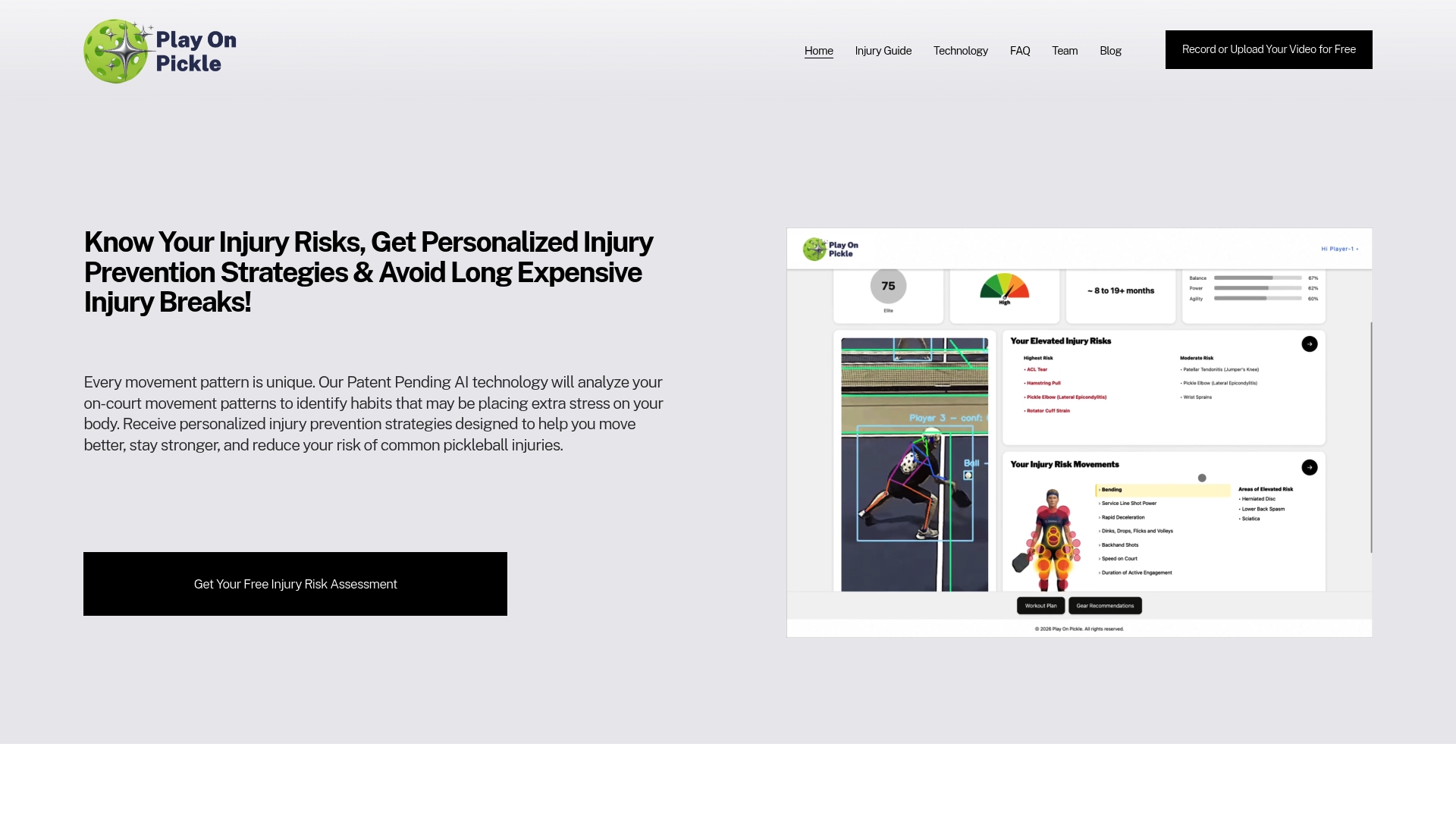
The monthly plan has also come with a free tripod or selfie stick, which makes filming your game easy. Check that page for current terms.
FAQ
Should I foam roll before or after pickleball?
Either can work, but they do different jobs. Before play, roll briefly and follow with an active warm-up so your muscles are ready to move. After play, a gentle roll may help with comfort. If you only have time for one, pick the warm-up movement before play and roll afterward.
How often should I foam roll?
Roll when it feels helpful, such as after harder sessions or when an area feels tight. There is no required daily dose. If you find you need to roll every day just to get through your normal play, that is a cue to look for the underlying cause with a physical therapist or sports medicine doctor.
Can foam rolling prevent pickleball injuries?
Research shows foam rolling can temporarily improve flexibility and reduce the sensation of soreness, but its effects on performance and recovery are generally small. Injury prevention comes from the bigger pieces: gradual load increases, strength work, good movement patterns and enough sleep. Use the roller as a supporting tool alongside those.
How much sleep do I need to recover from pickleball?
The CDC recommends at least 7 hours for adults 18 to 60, 7 to 9 hours for ages 61 to 64, and 7 to 8 hours for 65 and older. A consistent bedtime, limited late caffeine and a cool, dark, quiet bedroom make it easier to hit those numbers.
Sources
- A Meta-Analysis of the Effects of Foam Rolling on Performance and Recovery
- Foam Rolling and Self-Myofascial Release: What Actually Works
- Fundamentals or Icing on Top of the Cake? A Narrative Review of Recovery Strategies
- CDC NIOSH: Shiftwork, Long Work Hours, Fatigue
- ACSM: The Hidden Cost of Sleep Loss Webinar Q&A
- Flexibility Training for Climbers to Boost Performance
- Compression Boots Contraindications: Who Should Not Use Them