
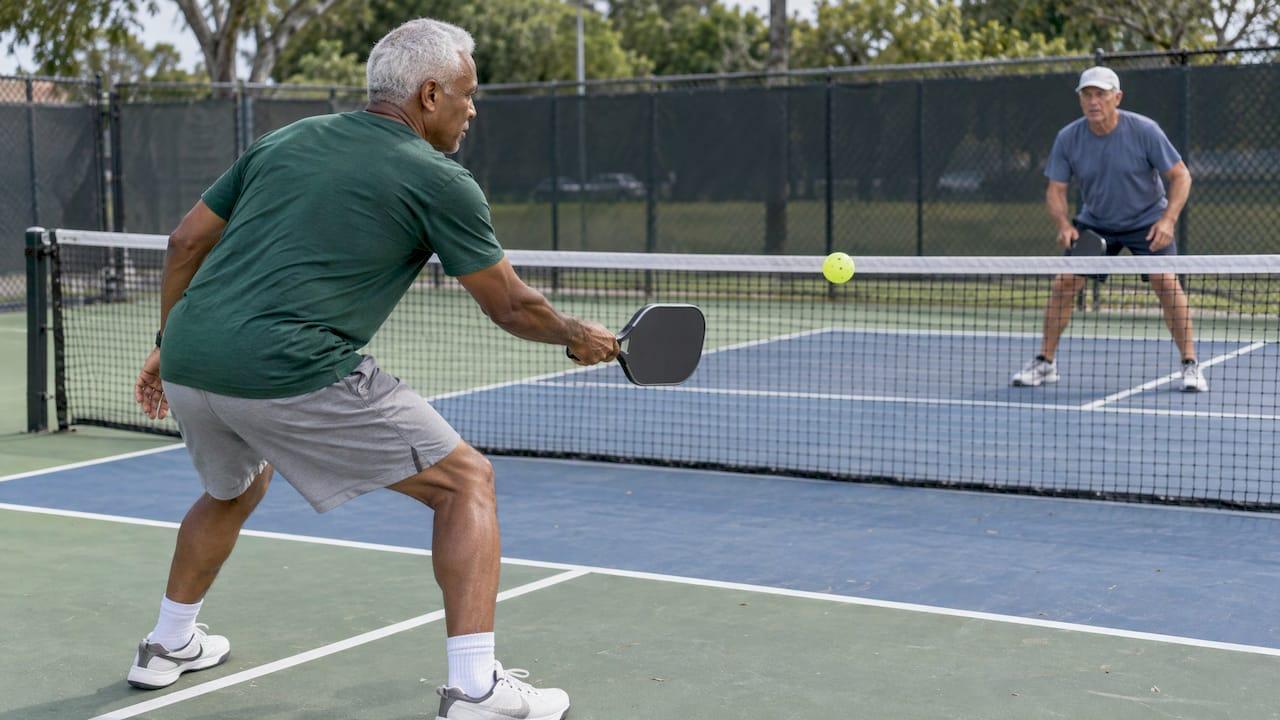
Grip strength matters in pickleball, but not the way most players think. A strong hand and forearm give you the capacity to hold the paddle steady. The skill is using only as much of that force as each shot needs. Squeezing hard all the time costs you touch and can load your elbow and wrist. The plan below pairs a little forearm conditioning with better pressure control, and we also show how video analysis on Play On Pickle can point to where your own swing is loading your arm.
TL;DR
- Grip strength is the capacity to produce force. Grip control is choosing how much to use on each shot. You need both.
- A 2025 survey of 253 recreational players found a tight baseline grip was linked to a 2.67 relative risk of acute injury, though the grip tightness was self-reported.
- Aim for roughly 4 to 5 out of 10 on dinks, 6 to 7 on volleys and blocks, and 7 to 8 on drives and overheads. Go looser on resets.
- Build capacity with crushing, pinching and supporting holds, plus light wrist and forearm work done most days. Start with no weight or very light weight.
- Stop and get medical care if soreness is prolonged or moderate to severe.
Table of Contents
- Grip strength and grip control are not the same thing
- What research says about a tight grip and injury
- How tight to hold the paddle on each shot
- How to check your own grip
- Building grip strength the safe way
- Older players and anyone with pain or a past injury
- Put your own grip on video
- FAQ
- Sources
Grip strength and grip control are not the same thing
Grip strength is the amount of force your hand and forearm can produce. Grip control is using only the force the shot requires. One explainer on grip strength describes the hand and forearm as stabilizers of the paddle: little force for a soft dink, more for a hard volley or drive, and never the same tightness through a whole rally.

Think of strength as the size of your fuel tank and control as your foot on the pedal. A bigger tank does not help if the pedal is pinned to the floor. That is why the top-ranking advice for this keyword is mostly about how hard to squeeze, not how to train a stronger squeeze.
Most recreational players grip too hard without noticing. The Dink Pickleball reports that most hold the paddle at a 7 or 8 on a 1-to-10 scale and recommends a baseline of 4, adding pressure only in the last few inches before contact. A tight hold stiffens the wrist and forearm, which is the opposite of what you want on soft shots at the kitchen line.
What research says about a tight grip and injury
Pickleball has grown fast, and so have its injuries. A 2024 review in the Journal of the American Academy of Orthopaedic Surgeons reported that US players rose from 3.3 million to 4.8 million between 2019 and 2021, and that muscle strains, joint sprains and fractures were the most common injuries seen in emergency departments.
The closest study to your question is a 2025 paper by Hanks and Myers. It surveyed 253 recreational players: 41% reported at least one upper-extremity injury, 10% acute and 37.5% chronic. A tight baseline grip was associated with a relative risk of 2.67 for acute injury. The injuries and the grip tightness were both self-reported, and the authors say more research is needed to explain the link. Treat it as a strong reason to check your habits, not as a diagnosis.

The mechanism is easy to follow. Pickleball Science explains that squeezing the handle too tightly can stiffen the swing and lead to poor shots, fatigue, or irritation of forearm muscles and tendons, including tennis elbow. A 2020 review in Current Sports Medicine Reports adds that many novices grip too tightly and risk flare-ups of pickleball elbow. It recommends starting with the continental, neutral grip rather than Eastern or Western grips to protect the wrist and the elbow's outer tendon.
Paddle weight plays in too. The same review notes that many beginners pick a paddle that is too heavy, and that even the gap between an 8.5 oz paddle and a 7.2 oz one may quickly lead to epicondylitis (irritation of the tendon on the outside of the elbow), because the paddle does not easily allow a two-handed stroke. If your elbow already complains, our guide to paddles for tennis elbow relief walks through the choices.
How tight to hold the paddle on each shot
A 1-to-10 scale works like this: 10 is the hardest you could possibly squeeze, and 1 is barely holding on. PickleTip offers a shot-by-shot guide, and USA Pickleball coach Andrea Fogarty advises a very loose 2 or 3 on resets so the paddle absorbs the incoming pace.
| Shot | Grip pressure (1 to 10) | What it does for you |
|---|---|---|
| Reset | 2 to 3 | Paddle absorbs pace, ball drops softly into the kitchen |
| Dink and soft shots | 4 to 5 | Keeps touch and avoids pop-ups |
| Volley and block | 6 to 7 | Firm enough to stay stable against pace |
| Drive and overhead | 7 to 8 | Transfers power, then relaxes |
| Anything at 10 | Avoid | Restricts movement and raises injury risk |
The numbers are guides, not laws. What they show is a range: you should be able to move up and down it within a single rally. The Dink Pickleball describes late pressure, adding firmness only in the last few inches before contact, as the way to keep both soft and fast options open. For a fuller walkthrough, see our posts on grip pressure and loose-first grip technique.
How to check your own grip
You do not need equipment for a first audit. Use these tells.
- Watch your off hand. The Dink Pickleball notes that if your non-paddle hand is clenched during a dink rally, your paddle hand probably is too.
- Read your results. Dinks and serves that keep popping up, and resets that bounce too high, point to a death grip.
- Notice the next day. Forearm soreness after casual play is another sign.
- Check the handle size. The NCOA, citing physical therapy professor Colleen Hergott, describes a simple measure: lay a ruler along your ring finger with its end on the second palm line. The distance from that line to the tip of the ring finger is your grip size, typically 4 to 5 inches.
- Leave space in the palm. Your fingers do the work, so you want a little room between palm and handle rather than a fist wrapped tight.
Self-checks have a limit: you cannot watch your own forearm mid-rally. A short video can. On Play On Pickle you upload video of your play, and our movement analysis looks for biomechanical stress points and returns a personalized injury risk assessment with exercise and equipment recommendations. Our patent-pending approach is described on our technology page.
Building grip strength the safe way
Once your pressure habits improve, a bit of conditioning gives you more capacity so rallies tire you less. The National Strength and Conditioning Association (NSCA) notes in its guide to grip strength development that grip is not a primary goal in many programs, yet including it can improve athletic performance, and that in rotational power sports a stronger grip on an implement can improve energy transfer. A paddle swing fits that description.
The NSCA names three holds to train:
- Crushing: squeezing something, such as a soft ball or putty, between fingers and palm.
- Pinching: holding an object between thumb and fingertips, such as a light weight plate.
- Supporting: holding on for time, such as carrying a bag or hanging from a bar.
It also advises training the hand and forearm flexors to improve gripping force and the forearm extensors to improve hand and wrist endurance and stability. That second part matters for pickleball: the extensors are the muscles on top of the forearm that tend to complain first when a tight grip lasts for hours.
A simple starting progression
Dr. David Lintner suggests progressing forearm strengthening from no weight to 1-, 2- and 3-pound dumbbells, starting with the arm supported and moving to unsupported, with wrist extension and flexion for 30 reps a day, 5 to 7 days a week. A sensible way to apply that:
- Begin with no weight, forearm resting on a table, palm down for extension and palm up for flexion.
- Move to a 1-pound dumbbell once 30 smooth reps feel easy and pain-free.
- Step up to 2 and then 3 pounds over the following weeks, then try the unsupported position.
- Add one crushing, one pinching and one supporting exercise a few times a week.
Keep every rep slow and controlled. Pain that sharpens, or soreness that lingers, is a signal to back off. Our three-move prehab routine is a short option for recreational and senior players who want something that fits around a normal week, and our elbow prevention plan covers low-equipment habits.
Do not train strength to fix a technique problem
If your dinks pop up, a stronger squeeze will not help. Soft-hand shots depend on posture and swing path as much as on the hand. Our posts on dinking mechanics and volley mechanics show what to change, and our wrist pain guide explains a safe return to play.
Older players and anyone with pain or a past injury
Older players gain a lot from conditioning, and the evidence is encouraging. A 2025 study by Myers and Hanks tested a 10-week multi-faceted training program for pickleball players aged 55 and over. Change-of-direction time improved by 0.7 seconds, fear of falling dropped, and at five months 25% of the training group had fallen during play versus 44% of the control group. The program was broader than grip work, which is the point: hands, legs and balance work together.

For safe participation, a 2023 narrative review in PMC advises older players to be realistic about fitness, take breaks when fatigued and stop play when joints or muscles feel uncomfortable. It also says prolonged or moderate to severe soreness calls for medical attention. If you have that kind of pain, see your doctor before adding grip work. The same review recommends rest days, cross-training and listening to your body, and pairing forearm work with balance training for seniors follows that advice.
For coaches and facilities, the practical takeaway is simple: teach a pressure range, not a single grip firmness, and keep a few light forearm moves in warm-ups.
Our view on grip strength
Most grip problems we see described in pickleball are really habits. Players clamp down because gripping feels like control. It is the opposite: a loose hand keeps touch, and strength is what lets you stay loose late in a long match.
That is why we treat grip as one piece of a whole movement picture. The hand is where the paddle meets you, but the load travels through the wrist, elbow, shoulder and hips. A tight hand can be a symptom of a swing or stance that is asking too much of the arm.
Our service is built around that idea. You upload video, our computer vision looks for stress points in your movement, and you get a personalized plan with simple exercises that fit a recreational player's week. We believe a few minutes of targeted work beats a big program nobody follows.
The goal is not a stronger squeeze. It is a hand that is strong enough to relax.
Drona
Put your own grip on video
If you want to know whether your grip habits are loading your elbow or wrist, Play On Pickle turns a video of your play into a personalized injury risk assessment and tailored exercise and equipment recommendations. It starts with a free trial. After that, the monthly plan is $9.99 per month and the annual plan is $99 per year, both on our pricing page. The monthly plan also comes with a free tripod or selfie stick so you can film from a steady spot.
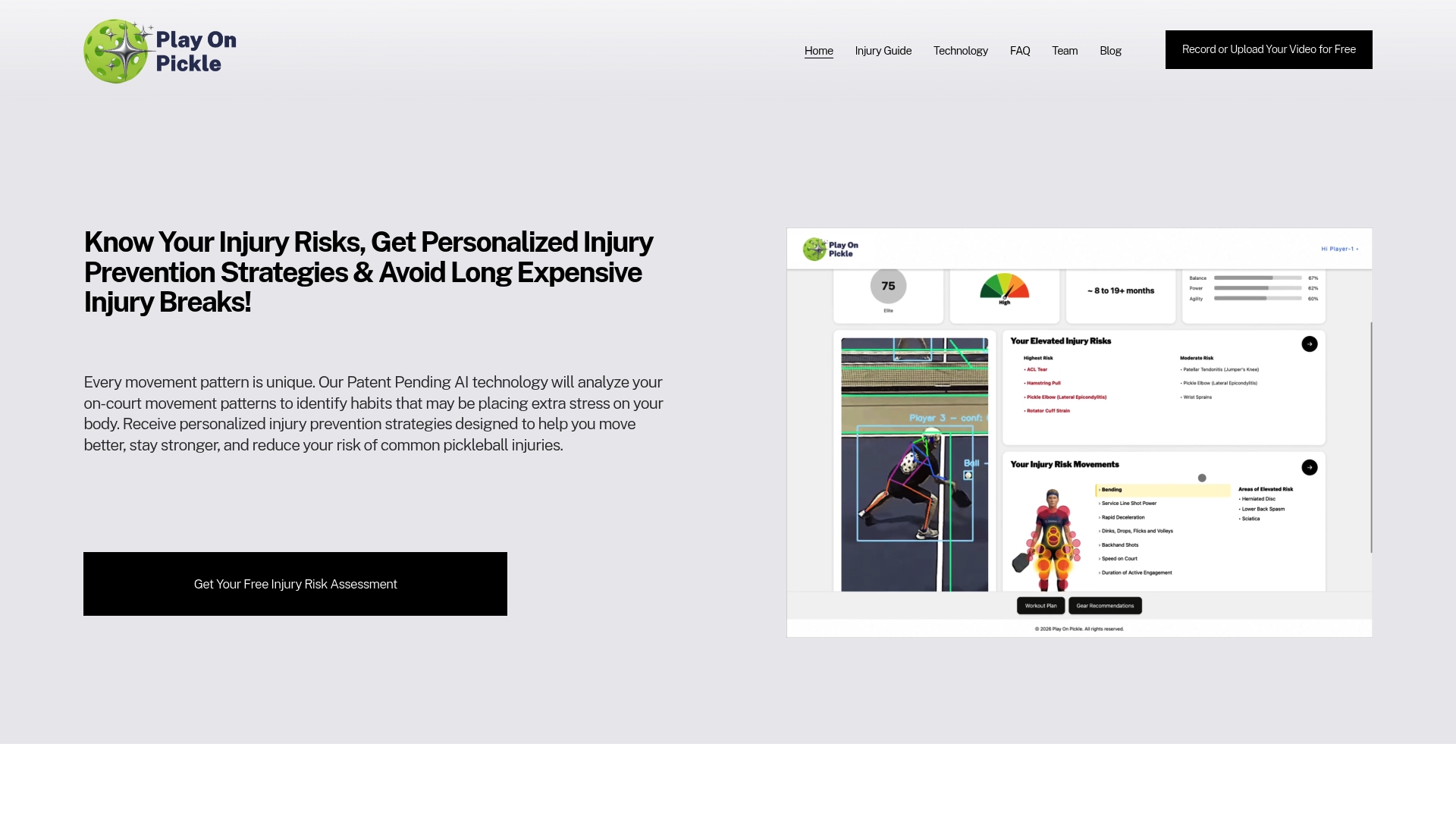
Film a few minutes of dinking and volleying, upload it, and use the results to decide where your grip work should start.
FAQ
Does a stronger grip make me better at pickleball?
It can help you stay steady and tire less, but control matters more than raw strength. The NSCA says grip training can improve athletic performance and energy transfer in rotational sports. Pair it with relaxed pressure on soft shots.
How tight should I grip my pickleball paddle?
Use about 4 to 5 out of 10 for dinks, 6 to 7 for volleys and blocks, and 7 to 8 for drives and overheads. Resets go looser, around 2 or 3. Adding pressure only just before contact keeps your options open.
What exercises build grip strength for pickleball?
Train crushing, pinching and supporting holds, plus wrist flexion and extension. Start with no weight, then move to 1, 2 and 3 pounds as reps stay pain-free. Short sessions most days work better than occasional long ones.
Can a tight grip cause pickleball elbow?
A tight grip is linked to higher injury risk. A 2025 survey of recreational players found a tight baseline grip tied to a 2.67 relative risk of acute injury, and reviews describe tight gripping as a factor in elbow flare-ups. If elbow pain lingers, see a doctor.
Should older players do grip training?
Yes, in a measured way. Use light loads, take rest days and stop if joints or muscles feel uncomfortable. Seek medical attention for prolonged or moderate to severe soreness.
Sources
- What Grip Strength Says About Your Health
- Pickleball Grip Pressure: The One Fix That Adds Control
- Pickleball: A Standard Review of Injury Prevalence (JAAOS, 2024)
- Risk of Upper Extremity Injury in Recreational Pickleball (2025)
- Grip Enhancers, Pickleball Science
- Pickleball: Review and Clinical Recommendations (2020)
- Pickleball Grip Pressure: Don't Squeeze It
- Pickleball Reset Technique, USA Pickleball
- How to Prevent Injuries When Playing Pickleball, NCOA
- Effective Methods of Grip Strength Development, NSCA
- Exercises and Stretches to Relieve Forearm Tightness
- Effect of a Multi-Faceted Training Program on Falls in Senior Pickleball Players
- Treating Geriatric Sports Injury Among Pickleball Players